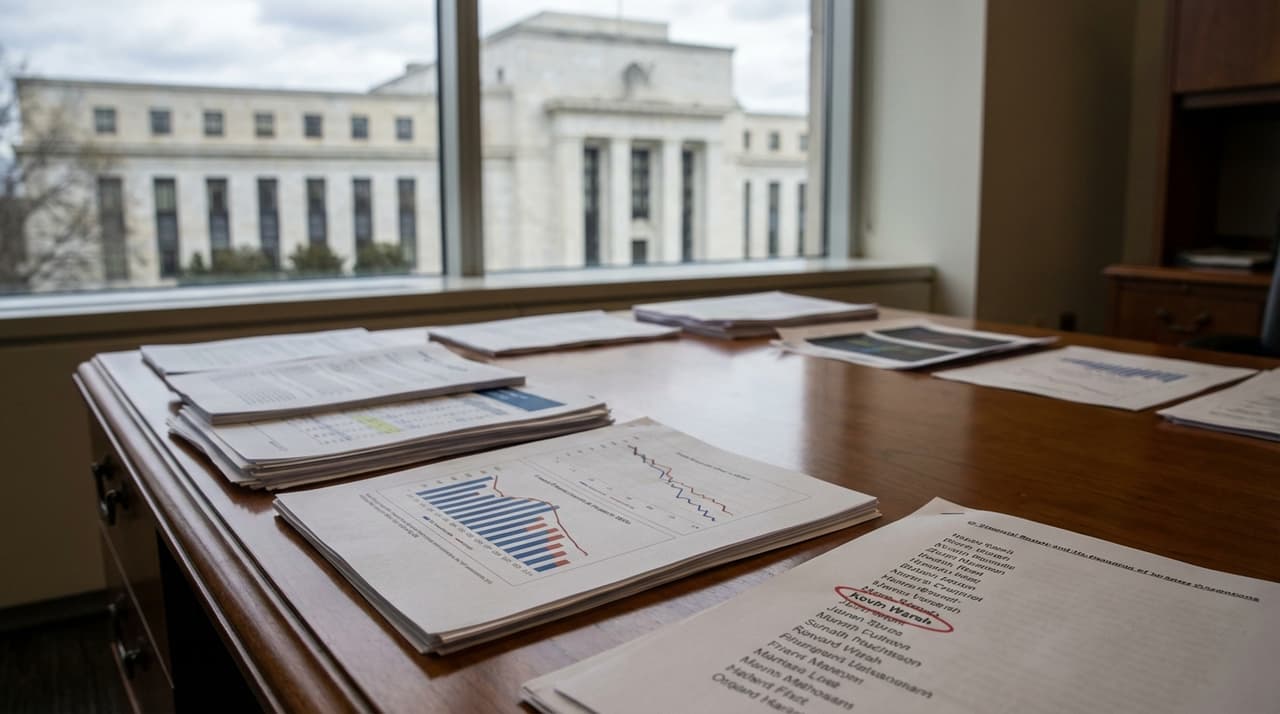
- Treasury Secretary Scott Bessent says President Trump could announce his pick for Federal Reserve chair as early as next week, with Kevin Warsh emerging as the leading candidate.
- Bessent criticized current Chair Jerome Powell for ethical lapses and the Fed's $100 billion annual losses from poorly timed asset purchases.
- Markets are reacting cautiously, with a hawkish appointment potentially delaying interest rate cuts and affecting borrowing costs across sectors.
A Swift Decision Looms
President Trump is expected to announce his pick for the next Federal Reserve chair by the end of January 2026, according to people familiar with the matter, with Treasury Secretary Scott Bessent indicating an announcement could come as soon as next week. Bessent cited four strong candidates in recent remarks, though sources point to Kevin Warsh as the frontrunner, a move that would signal a hawkish shift in monetary policy.
Efforts to restructure the Fed's leadership have hit a snag, with Bessent openly criticizing Chair Jerome Powell for what he called ethical lapses, including Powell's attendance at a Supreme Court hearing involving a Fed official, which Bessent labeled "a mistake." Without a deal to install a new chair aligned with Trump's pro-growth goals, the administration risks continued friction with the central bank. Bessent also raised concerns about the Fed losing approximately $100 billion annually due to poorly timed asset purchases, a figure that has drawn scrutiny from market watchers.
Market Reactions and Political Hurdles
Prediction markets are already favoring Warsh, reflecting investor anticipation of a tougher stance on inflation. A hawkish chair could delay rate cuts, affecting everything from mortgage rates to corporate borrowing costs, with sectors like nuclear materials feeling the ripple effects through trade dynamics. "What institutional investors are really focused on is regulatory stability," one analyst noted, drawing parallels to broader economic trends.
Trump has long expressed frustration with Powell, whom he appointed but has since insulted as a "moron," pushing for lower interest rates to boost growth amid stabilizing economy and inflation concerns. Powell's chair term ends in May 2026, though his governor term extends to January 2028, meaning he could stay on the board, complicating Trump's push for full control. The Senate confirmation process poses additional hurdles, including GOP backlash over Powell subpoenas and Justice probes that risk Fed independence. Currently, only three to four Trump nominees sit on the 12-member Federal Open Market Committee (FOMC), limiting immediate influence.
Broader Implications and Stakeholder Views
In the short term, an announcement by late January could shift FOMC dynamics, potentially delaying cuts and influencing inflation trajectories. Powell staying on the board would make it harder for Trump to achieve a majority, as noted by experts like David Wessel, who predict limited presidential sway over FOMC consensus. Long-term, a hawkish policy under Warsh might prioritize growth but risk inflation resurgence, with analysts closely watching Senate hurdles and board vacancies.
Stakeholders are mixed in their reactions. Markets generally favor clarity, but critics fear eroded Fed independence, sparking debates on political interference. Brookings experts have highlighted these concerns, emphasizing the need for a balanced approach. Meanwhile, the EU is scrutinizing U.S. policy amid tariff threats, with the bloc eyeing its $10 trillion in U.S. debt holdings and anti-coercion tools, adding an international dimension to the Fed's leadership transition.
Attempts to reach out to the Fed for comment on the timing of the announcement were unsuccessful, but sources indicate that internal discussions are ongoing. As one industry insider put it, "It's a great country to invest in because there are a lot of very good opportunities, but the market here is not as competitive as others—you can create your own ideas." This sentiment echoes the broader uncertainty as investors brace for potential changes in monetary policy direction.
Correction: An earlier version of this article misstated the exact timeline for Powell's term; it has been updated to reflect that his chair term ends in May 2026, not January 2026.