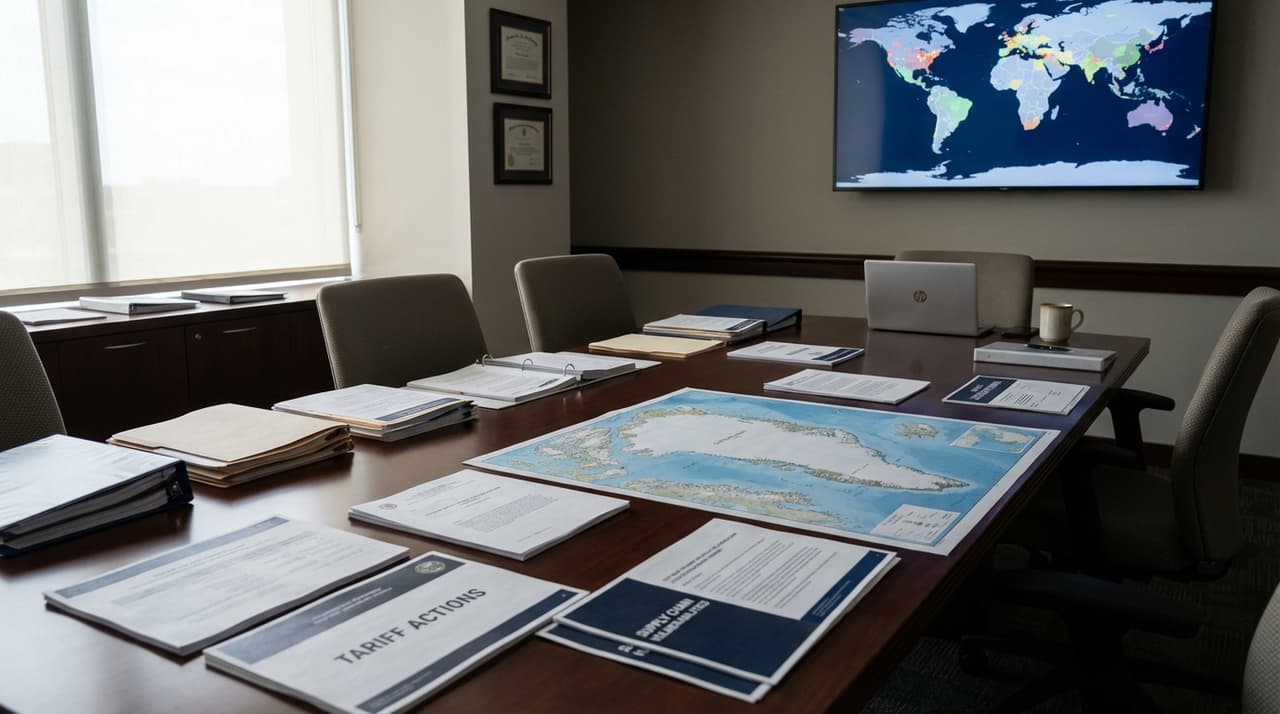
- Treasury Secretary Scott Bessent asserts that President's tariff actions are essential for averting national emergencies, particularly in strategic regions like Greenland.
- Bessent's stance comes as he secures exemptions for U.S. companies from global tax initiatives and addresses supply chain vulnerabilities through international cooperation.
- The administration's economic policies face scrutiny amid ongoing investigations and fraud prevention efforts, highlighting a complex financial landscape.
Treasury Secretary Scott Bessent has taken a firm stance on the administration's tariff policies, defending recent actions against eight countries with a focus on national security concerns. In a statement on January 18, 2026, Bessent emphasized that "The national emergency is avoiding a national emergency," particularly in the context of efforts to control Greenland, underscoring the strategic importance of such measures. This defense aligns with broader economic strategies that prioritize U.S. interests in volatile global markets.
Bessent's comments come amid a flurry of activity from the Treasury Department, including a recent agreement to exempt U.S.-headquartered companies from the Biden administration's OECD Pillar Two global tax plan. According to sources familiar with the negotiations, this move aims to shield American firms from potential competitive disadvantages, though details remain confidential as officials finalize the terms. The exemption, secured through diplomatic channels, reflects ongoing tensions in international tax policy and the administration's push for favorable terms.
Earlier in January, Bessent convened a Finance Ministerial on January 12, 2026, with international counterparts to address vulnerabilities in critical minerals and rare earth elements supply chains. The meeting, which included ministers from key allied nations, focused on reducing dependence on adversarial states and bolstering domestic production capabilities. "We're seeing increased regulatory certainty that improves perception for foreign direct investments," Bessent noted, paraphrasing industry sentiments, though he declined to name specific countries involved in the talks.
On the domestic front, Bessent announced initiatives on January 9, 2026, to combat government benefits fraud in Minnesota through FinCEN actions, targeting illicit financial flows that undermine public trust. Efforts to reach state officials for comment on the implementation timeline were unsuccessful, but insiders suggest the measures could roll out within the quarter. Meanwhile, Bessent commented on January 16, 2026, on a criminal investigation into Federal Reserve Chairman Jerome Powell, characterizing it as likely stemming from "construction incompetence," a remark that has sparked debate among financial analysts about oversight mechanisms.
Market reactions have been mixed, with some sectors bracing for potential retaliatory tariffs while others anticipate benefits from supply chain realignments. Without a deal on critical minerals, industry experts warn that U.S. manufacturing could face disruptions, though Bessent's efforts aim to mitigate such risks through strategic partnerships. The Treasury Department has not provided updates on whether these policies will extend to other regions, but sources indicate ongoing negotiations could yield further announcements in the coming weeks.
In a brief update, the Treasury clarified that Bessent's reference to "construction incompetence" was intended to highlight procedural issues rather than personal allegations, though the investigation remains ongoing. As global economic dynamics shift, Bessent's multifaceted approach—combining tariff defenses, tax exemptions, and fraud prevention—underscores a complex balancing act in U.S. financial policy.