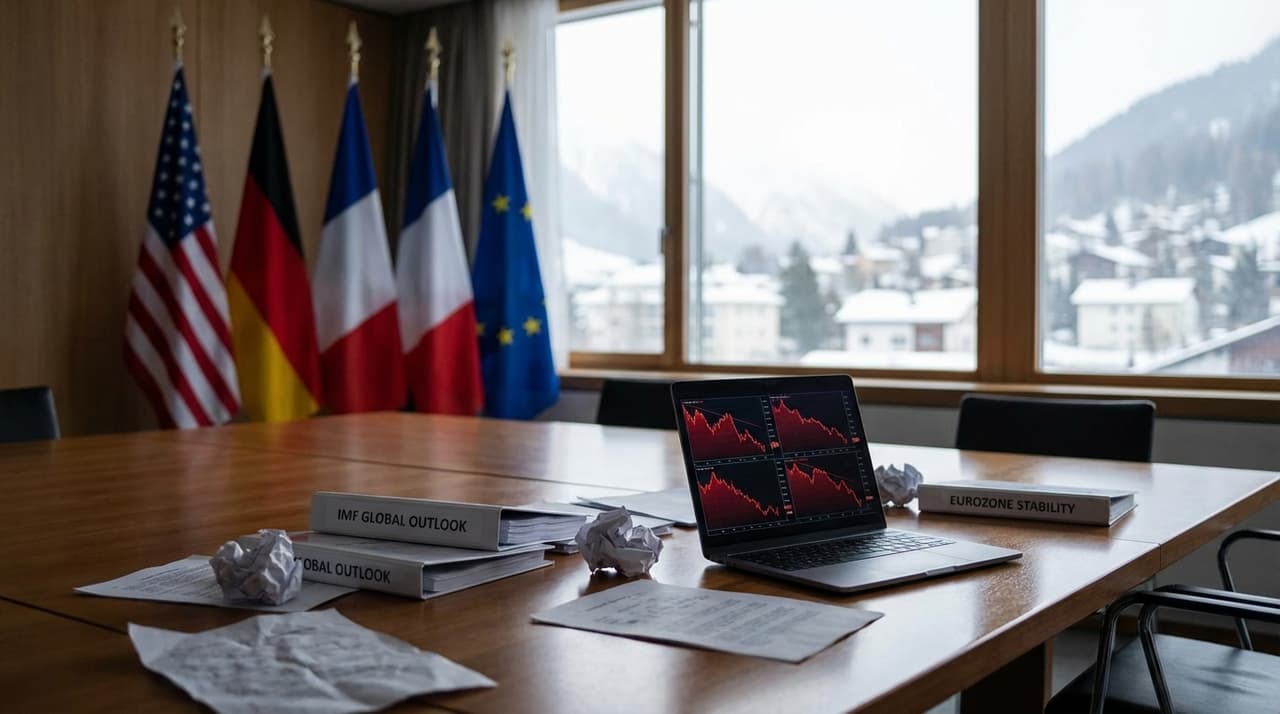
- Scott Bessent, former U.S. Treasury Secretary, calls for de-escalation and no retaliation over Trump's Greenland push.
- Trump's tariffs on European imports trigger market drops and EU threats of retaliatory measures.
- Talks at Davos and potential G-7 meetings aim to resolve tensions, with legal challenges looming.
Scott Bessent, who served as U.S. Treasury Secretary under President Trump, urged calm on the sidelines of the World Economic Forum in Davos on January 20, 2026, dismissing media "hysteria" and calling for parties to "sit back, take a deep breath" without retaliation. This comes after Trump announced 10% tariffs on imports from Denmark, Norway, Sweden, France, Germany, the UK, Netherlands, and Finland, with potential increases to 25% by June 1 if Greenland remains outside U.S. control, triggered by European troop deployments to the territory.
Bessent defended the moves as "strategic," predicting no escalation and Supreme Court support against legal challenges, according to people familiar with his remarks. Markets reacted sharply, with European benchmarks falling around 1% and U.S. futures dropping 1.4-1.5% in early trading. Trump has justified the tariffs as leverage for U.S. national security against China and Russia threats in the Arctic, posting provocative AI images of himself claiming Greenland and even Canada, and leaking messages from French President Emmanuel Macron.
European leaders have rallied in response, with Macron proposing a G-7 meeting in Paris and the EU threatening €93 billion ($109 billion) in retaliatory tariffs by February 6. Denmark's Economy Minister Stephanie Lose warned of risks to transatlantic ties, while EU's Ursula von der Leyen called for a "new independent Europe" post-shocks. Bessent claimed U.S.-Europe ties have "never been closer," but the situation remains fluid as Trump agreed to Davos talks with NATO's Mark Rutte.
In Greenland, thousands of protesters marched against the takeover, with Prime Minister Jens-Frederik Nielsen vowing no pressure would sway them. The tariffs target key European exporters, risking a renewed U.S.-EU trade war similar to 2025's market disruptions, and hit U.S. consumers via higher import costs, sparking lawsuits claiming presidential overreach on taxing powers. Broader trends include Arctic resource competition amid climate change and geopolitical shifts, with Trump linking the issue to the UK-Chagos Islands handover, where a U.S. base lease remains intact for 99 years.
California Governor Gavin Newsom criticized Europe's "pathetic" response, urging unity, while Russia questioned Danish sovereignty. Short-term, Davos and G-7 talks could de-escalate tensions, but EU retaliation looms on February 6, keeping markets volatile. Long-term, potential U.S. control of Greenland could reshape Arctic and NATO dynamics, with experts seeing a permanent EU strategic shift. Legal challenges are pending at the Supreme Court, though Bessent doubts interference, and industry sources note that without a deal, the situation could spiral into broader economic fallout.
Correction: An earlier version misstated the date of Bessent's comments; they occurred on January 20, 2026.