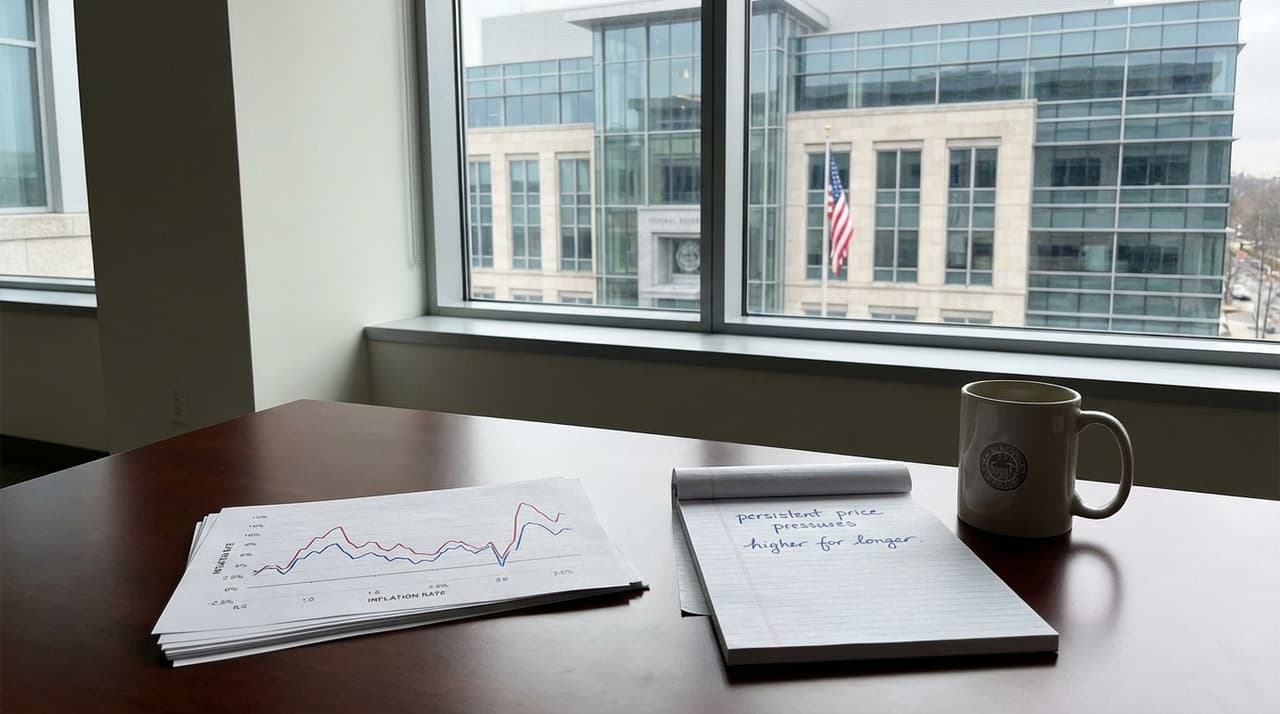
- Atlanta Fed President Raphael Bostic emphasizes persistent price pressures, urging patience on interest rate cuts amid sticky core inflation.
- Bostic projects core inflation remaining elevated, possibly exceeding 2.5% through year-end 2026, reinforcing a "higher for longer" policy stance.
- The outlook reflects his hawkish view in early 2026, prioritizing price stability over employment risks as inflation poses the "clearer and more urgent risk."
Atlanta Fed President Raphael Bostic stated it is premature to declare the inflation fight over, highlighting ongoing challenges with persistent price pressures that complicate the path toward the Federal Reserve's 2% target. In recent comments from late 2025 into early 2026, Bostic has underscored a cautious approach, arguing against rushing into interest rate cuts despite some softening in the labor market. His stance signals a commitment to maintaining restrictive monetary policy, with rates likely to hover in the 3.50%–3.75% range for an extended period.
Business surveys indicate firms are planning price hikes into 2026, and services inflation remains particularly sticky due to continued labor market tightness. Bostic views the U.S. economy as resilient, with growth potentially rebounding to around 2.5% and a "low-hire, no-fire" labor environment showing no immediate recession signals. However, he points to upside risks from factors like tariffs, which are expected to filter through and elevate prices in the first half of 2026, alongside pressures from healthcare and insurance costs. These elements tilt inflation risks higher, complicating the Fed's goals amid global trade tensions.
In this context, Bostic's outlook suggests that disinflation may be delayed until late 2026 or even 2027, reinforcing the need for a patient policy stance. He has described inflation as the "clearer and more urgent risk," a view that places him at odds with some colleagues who have advocated for more aggressive easing. For instance, the FOMC cut rates three times in 2025, totaling a 1% reduction, despite inflation remaining above target—a move Bostic has cautioned against, emphasizing data-dependence over political pressures.
The political backdrop adds another layer of complexity. Bostic recently congratulated Kevin Warsh on his nomination by President Trump as the next Fed Chair, set to replace Jerome Powell in May 2026, describing Warsh as "thoughtful" and hinting at potential shifts in FOMC leadership. Meanwhile, Powell faces a DOJ probe into his testimony on Fed HQ renovations, reflecting Trump administration pressure for lower rates—a dynamic Bostic's stance counters by stressing the importance of maintaining Fed independence and focusing on economic indicators.
For stakeholders, the implications are significant. A "higher for longer" rate environment burdens borrowers, such as those with mortgages and consumer debt, while benefiting savers. Businesses continue to face sustained cost pressures in services and wage growth, which could erode consumer confidence if inflation persists. Bostic acknowledges that employment remains stable for now, but he warns that downside risks are distant, with the priority firmly on preventing unanchored inflation expectations that could spark wage-price spirals.
Looking ahead, Bostic's baseline scenario includes no rate cuts in 2026, with policy staying "somewhat restrictive" until there is clear evidence of inflation moving sustainably toward 2%. Experts note that core inflation may "mark time" for much of 2026, advising investors to prepare for resilient portfolios amid ongoing vigilance. In a brief update, sources close to the matter clarify that Bostic's projections are based on current data and could adjust if economic conditions shift, though he remains firm on the need for patience in the near term.