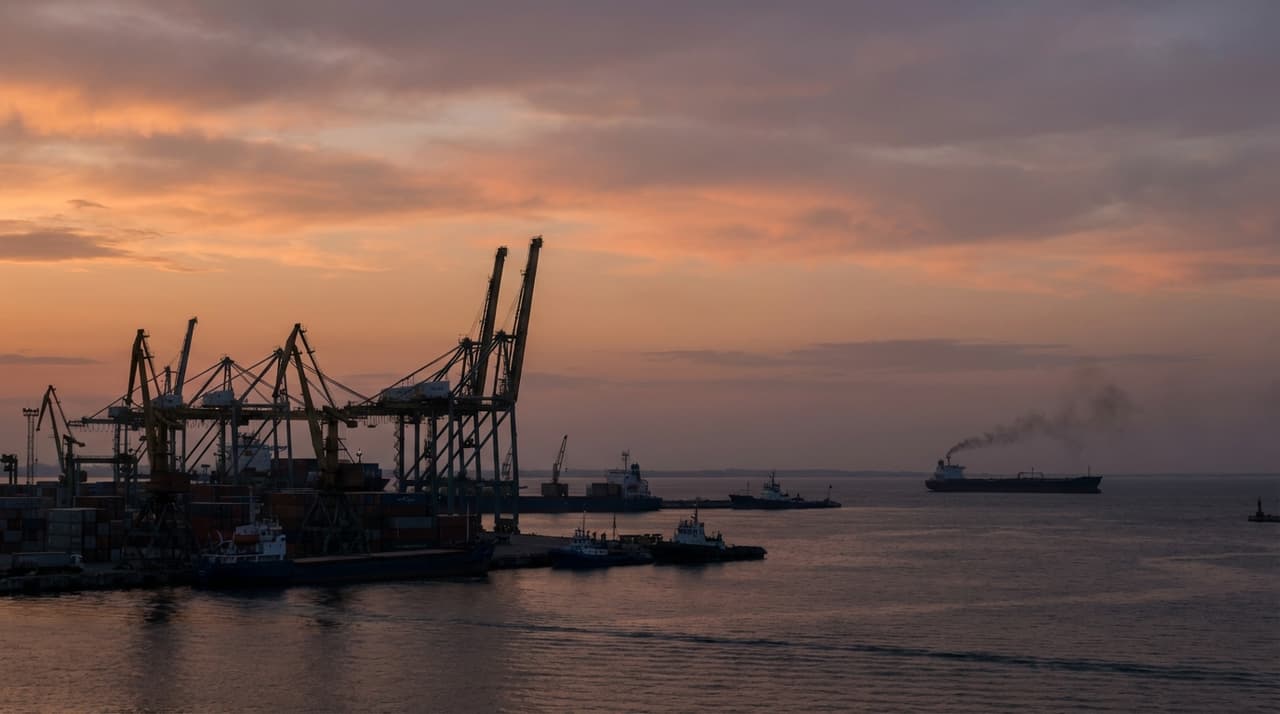
- A civilian merchant vessel was set ablaze after being struck in a Russian attack on Ukraine's Odesa region, highlighting persistent risks to shipping in the Black Sea.
- Despite ongoing missile and drone assaults, Ukraine's "Great Odesa" sea corridor remains operational, having moved about 120 million tons of cargo since its inception.
- The incident underscores the vulnerability of global food markets, as Odesa handles around 60% of Ukraine's exports, with grain shipments exceeding pre-war levels.
Escalating Threats to Maritime Trade
A civilian merchant vessel caught fire following a Russian strike on Ukraine's Odesa region, according to people familiar with the matter, in a stark reminder of the dangers facing commercial shipping in the Black Sea. This latest attack, part of a broader campaign targeting port infrastructure and vessels, comes as Ukraine's unilateral sea corridor has become a lifeline for its wartime economy, supporting foreign-exchange inflows and agricultural exports.
Efforts to secure the corridor have hit a snag with repeated incidents damaging ships and disrupting loading operations. In 2025 alone, more than 28 million tons of cargo, including over 15 million tons of grain, have transited the route, indicating that traffic persists despite security challenges. Without a stable shipping environment, Ukraine could face significant export bottlenecks, impacting global supply chains.
Economic and Strategic Implications
Ukrainian officials, who declined to comment on the specific vessel fire, emphasize that the corridor's resilience is critical for national stability. The maritime route has moved 76 million tons of agricultural products since opening, helping to mitigate price volatility in import-dependent regions like North Africa and Asia. However, attacks like this one drive up war-risk insurance and freight rates, adding costs for shippers and potentially deterring some operators.
Regulatory stability and compensation schemes for damaged infrastructure are under discussion to attract private investment, but high risk premiums remain a hurdle. The Black Sea has emerged as a central theater in European security policy, with NATO states focusing on freedom of navigation and support for Ukraine's coastal defense. As one analyst noted, "Maintaining commercial traffic here is essential for both Ukraine's survival and global food stability."
Human and Operational Toll
Seafarers and port workers face heightened physical risks, with the Odesa region recording over 800 air-raid alerts in 2024 and more than 32 days of interrupted operations. Farmers and logistics companies grapple with shipment delays and sudden route closures when attacks occur. In response, Ukraine is hardening port defenses and exploring diversification via Danube and overland corridors to preserve export revenues.
Looking ahead, expect continued episodic attacks on Odesa-area infrastructure, with temporary slowdowns in loading when damage hits. Long-term, if such incidents persist, they could discourage some shipowners, though current trends show traffic growing above pre-war volumes. Post-war, Odesa's ports are poised to be a core pillar of reconstruction, spurring investment in modern terminals provided security improves.
Correction: An earlier version misstated the total cargo moved through the corridor; it is approximately 120 million tons, not 100 million tons.