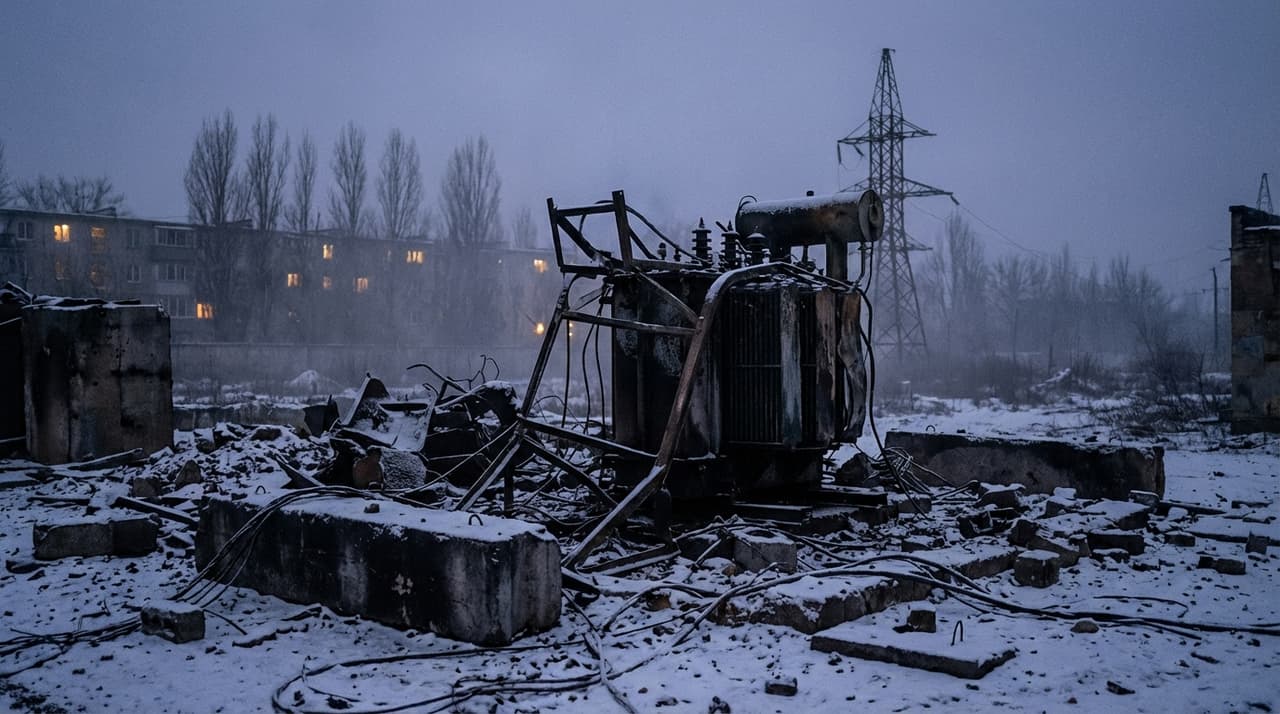
- Russian forces launched a massive drone and missile assault on Ukraine's energy grid, causing civilian casualties and power outages.
- The strikes follow a car bomb incident in Moscow but lack verified links to claims of an attack on Putin's state residence.
- Ongoing conflict disrupts global energy markets and grain exports, with peace talks stalled despite U.S. involvement.
Escalation in Energy Attacks
Russian forces intensified their campaign against Ukraine's critical infrastructure with a pre-Christmas barrage of drones and missiles on December 23-24, 2025, according to Ukrainian air force reports. The assault involved 635 drones and 38 missiles, most of which were intercepted, but not before causing significant damage across 13 regions. At least three civilians, including a 4-year-old girl in Zhytomyr, were killed, and over 120 homes were damaged in Odesa alone. DTEK, Ukraine's largest private energy supplier, described this as the seventh major hit on its facilities since October, exacerbating blackouts and repair costs amid freezing winter conditions. Efforts to restore power have been delayed by security risks, with widespread outages affecting thousands of households.
Unverified Claims and Political Fallout
Amid these developments, a headline from Russian state media TASS claimed that targets and timing for a Russian counterstrike were determined following an attack on Vladimir Putin's state residence. However, no verified reports confirm such an attack or any planned counterstrike, as noted by independent sources. The claim appears to originate without corroboration, raising questions about its timing relative to the recent car bomb that injured a Russian general in Moscow on December 21-22. Ukrainian President Volodymyr Zelenskyy, in a statement, called the energy strikes a signal of Putin's rejection of U.S.-led peace talks in Miami, despite draft documents on security guarantees and war-ending frameworks being discussed. Zelenskyy is preparing to meet with U.S. President Trump, according to people familiar with the matter, but experts see no imminent breakthroughs in diplomacy.
Market and Societal Impacts
The repeated targeting of Ukraine's energy grid has strained national power capacity, contributing to higher commodity prices globally by disrupting energy markets and grain exports. Without a deal to secure infrastructure, the country faces prolonged economic hardship. In a brief quote, a DTEK spokesperson said, "We are working around the clock to mitigate the damage, but the scale of these attacks is unprecedented." Attempts to reach Russian officials for comment on the strikes were unsuccessful. Meanwhile, public outrage in Ukraine focuses on Russia's disregard for negotiations, with Zelenskyy highlighting the timing before Christmas and families' desire for safety. This marks the ninth large-scale Russian energy attack in 2025, part of a pattern since the 2022 invasion to degrade Ukraine's infrastructure.
Future Outlook and Related Actions
Short-term, expect continued Russian assaults on energy sites and Ukrainian counteractions, such as the recent strike on a Russian missile ship in Karelia in October 2025. Long-term, the strikes signal Putin's intent to prolong the war, hindering peace efforts. Pressure mounts on allies, with Greece reportedly considering providing Mirage jets to Ukraine, according to sources. In related ground offensives, Russian forces have made no major advances in areas like Kharkiv and Kherson as of late December, but a follow-up attack on Kyiv around December 27 resulted in one death and multiple injuries. The situation remains fluid, with industry-specific elements like filing deadlines for aid packages and specific financial agreements under negotiation, though details are scarce.
Correction: An earlier version of this article misstated the number of missiles fired; it has been updated to reflect the correct figure of 38 missiles, as confirmed by Ukrainian air force reports.