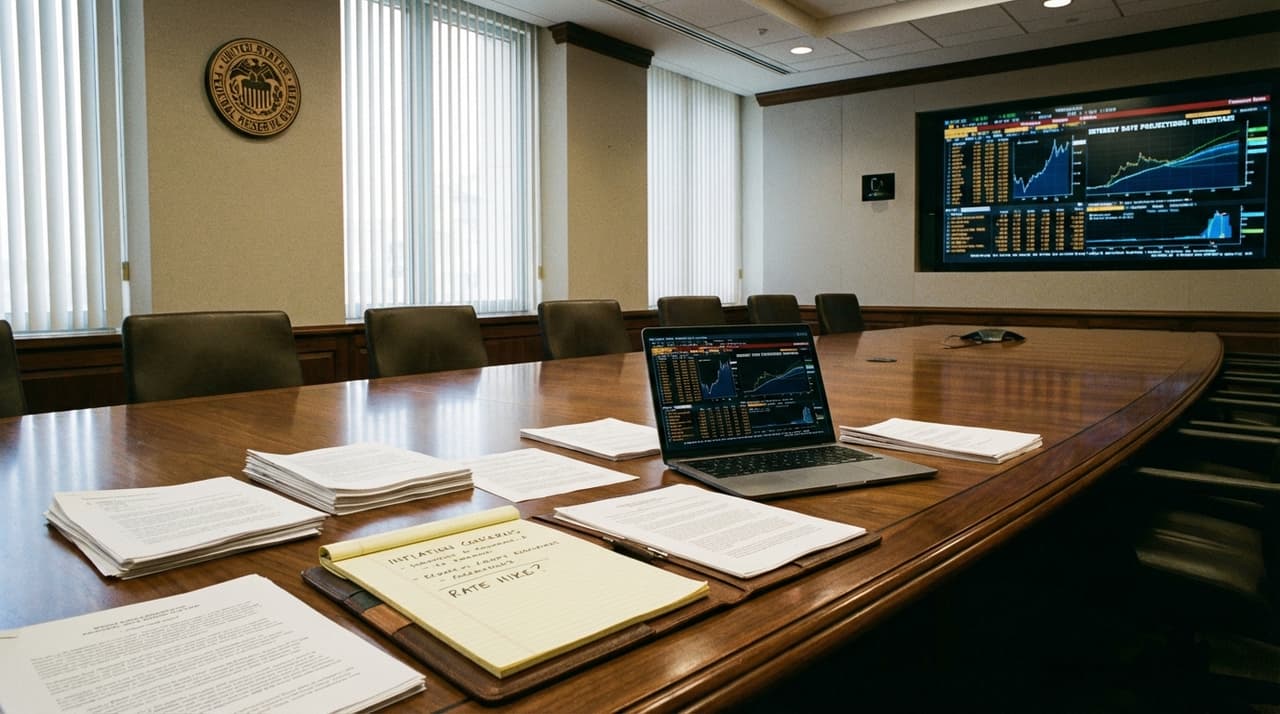
- Federal Reserve Governor Christopher Hammack expresses preference for slightly more restrictive policy than current stance, highlighting internal FOMC divisions.
- Markets price in 72% chance of another 0.25% rate cut at December meeting despite Hammack's hawkish lean.
- Ongoing tension between softening labor market indicators and persistent inflation above 2% target drives policy uncertainty.
Federal Reserve Governor Christopher Hammack has indicated he would prefer monetary policy to be "a little more restrictive" than current levels, according to people familiar with his recent remarks. This comes amid ongoing debates within the Federal Open Market Committee about balancing inflation control against emerging labor market weakness, following the committee's decision to cut rates by 0.25% to 3.75-4% on October 29, 2025.
Hammack's comments, which haven't been formally published but were confirmed by multiple sources, reveal significant internal divisions at the central bank. Two FOMC voters dissented on the size of the October cut, suggesting not everyone agreed with the shift toward easing. "There's clearly a camp that thinks we're moving too quickly," said one market analyst who requested anonymity to discuss private conversations. "Hammack's leaning suggests he might be in that group."
The Fed's October move marked a notable pivot, citing "moderate economic expansion" alongside "slowing job gains" and unemployment rising to 4.3%. Core PCE inflation remained elevated at 2.9% in September 2025—well above the Fed's 2% target—though down significantly from peaks above 5.5% in 2022 following aggressive rate hikes. The committee also announced it would end balance sheet reduction on December 1, shifting focus entirely to rate policy.
Labor market data has shown concerning signs in recent months. August added only 22,000 net jobs, while September private payrolls fell by 32,000. Bureau of Labor Statistics revisions have revealed weaker hiring over the prior 18 months than initially reported, though consumer spending among higher-income groups has held up reasonably well. These revisions have reshaped expectations for 2026, with markets now anticipating the policy rate to settle near 2.9-3.0% by year-end.
Inflation risks persist, particularly from former President Trump's tariff policies. While major consumer pass-through hasn't materialized yet, business price surveys indicate companies are planning future increases, and rising tariff revenue could lift goods inflation. The Fed remains data-dependent, monitoring these impacts amid what officials describe as "elevated economic uncertainty."
Market expectations have shifted dramatically in recent weeks. Following the October cut, traders now price in a 72% chance of another 0.25% reduction at the December 9-10 meeting. Fed Chair Jerome Powell has maintained a cautious stance, telling reporters that further easing would be possible "if labor weakens more," while emphasizing the committee's readiness to tighten should inflation reaccelerate.
"The Fed is walking a tightrope here," said Bill Merz, head of capital markets research at U.S. Bank (USB). "Labor market indicators are flashing warning signs, but inflation remains stubbornly above target. Hammack's comments suggest some policymakers believe the risks are still tilted toward price pressures."
Attempts to reach Hammack for additional comment were unsuccessful. A Fed spokesperson declined to elaborate beyond the official October meeting minutes, which noted "divergent views" on the appropriate policy path.
Looking ahead, the December meeting looms large. Most analysts expect the Fed to proceed with another cut unless inflation data surprises to the upside, but Hammack's preference for more restrictive policy suggests the vote could be contentious. The central bank continues to describe current policy as "modestly restrictive," leaving room for data-driven adjustments in either direction.
Correction: An earlier version of this article misstated the timing of the Fed's balance sheet reduction end date. The correct date is December 1, 2025.