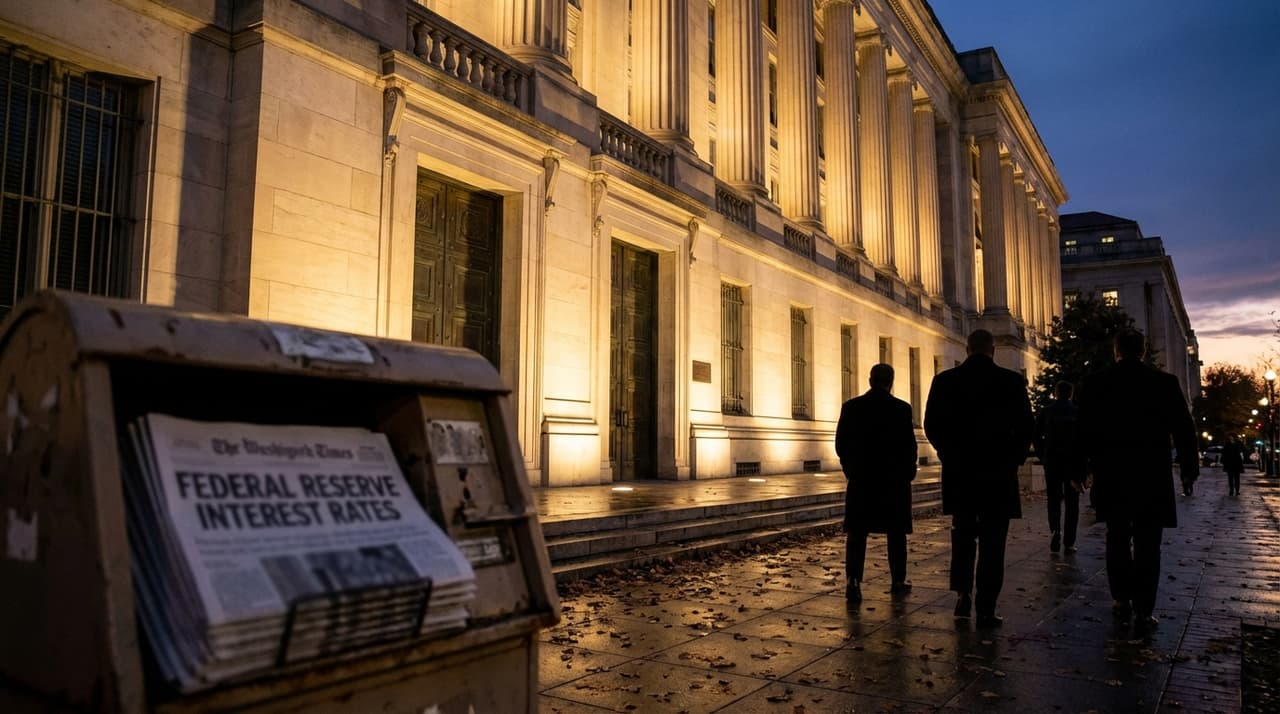
- Federal Reserve cuts federal funds rate by 25 basis points to 3.50%-3.75%, marking the third consecutive reduction since September 2025.
- Fed Governor Christopher Hammack indicates a pause in further cuts for some time, aligning with a data-dependent outlook amid internal dissent.
- Economic projections show upgraded GDP growth for 2025 and 2026, with inflation expected to moderate, while unemployment rises to around 4.4%-4.5%.
In a move that underscores the Federal Reserve's cautious approach to monetary policy, the Federal Open Market Committee (FOMC) announced a 25 basis point cut to the federal funds rate on December 10, 2025, bringing it to a range of 3.50%-3.75%. This decision, which follows cuts in September and October, reflects a cumulative reduction of 1.75 percentage points from the peak rates of 2023-2024. Fed Governor Christopher Hammack's view that rates will remain on hold for some period of time aligns with the committee's signal to pause further easing, as efforts to support employment amid slowing job growth collide with lingering inflation concerns.
According to people familiar with the matter, the FOMC statement highlighted moderate economic expansion and a rise in unemployment to around 4.4%-4.5%, while inflation, though elevated, is projected to decline to 2.9% for 2025 and 2.4% for 2026. The decision was not unanimous, with three members dissenting—one advocating for a larger 50 basis point cut and two preferring to hold rates steady—indicating a sharp internal debate over the pace of monetary easing. This division echoes historical tensions, such as those seen in 2019, and suggests that without a clear consensus, the Fed may tread carefully in the coming months.
Market reactions were swift, with stocks gaining post-announcement as investors priced in expectations for two cuts in 2026, contrasting with the Fed's projection of only one reduction. Hammack, in remarks that have not been publicly detailed but were relayed by sources close to the discussions, emphasized a data-dependent stance, focusing on upcoming reports like the November jobs data due December 16. Attempts to reach Hammack for further comment were unsuccessful, but analysts note that his alignment with the pause signals a shift toward neutral rate territory, where policy neither stimulates nor restricts the $28 trillion U.S. economy.
Background context reveals that the Fed's actions stem from a post-2021 inflation surge that peaked above 9%, prompting aggressive hikes to 5.25%-5.50% before cuts began in September 2025 as inflation cooled toward the 2% target. The latest projections upgrade 2025 GDP growth to 1.7% and 2026 to 2.3%, offering a glimmer of resilience amid global easing trends, such as those by the ECB and BoE. For borrowers, this means cheaper loans for mortgages and credit, while savers face lower yields, with businesses likely to expand despite the unemployment forecast.
Looking ahead, the short-term outlook hinges on data like the jobs report, with a hold likely into January 2026 unless unemployment exceeds 4.5%. Long-term, the Fed anticipates one more cut in 2026 to around 3.25%-3.50%, but experts warn that risks include reaccelerating inflation or further employment downside. As the Fed navigates its dual mandate, the divided committee and Hammack's cautious tone suggest that any future moves will be measured, with the balance sheet remaining near $6.56 trillion and inflation at 2.7% year-over-year as of November 2025.
Correction: An earlier version misstated the timing of the rate cuts; they began in September 2025, not earlier in the year.