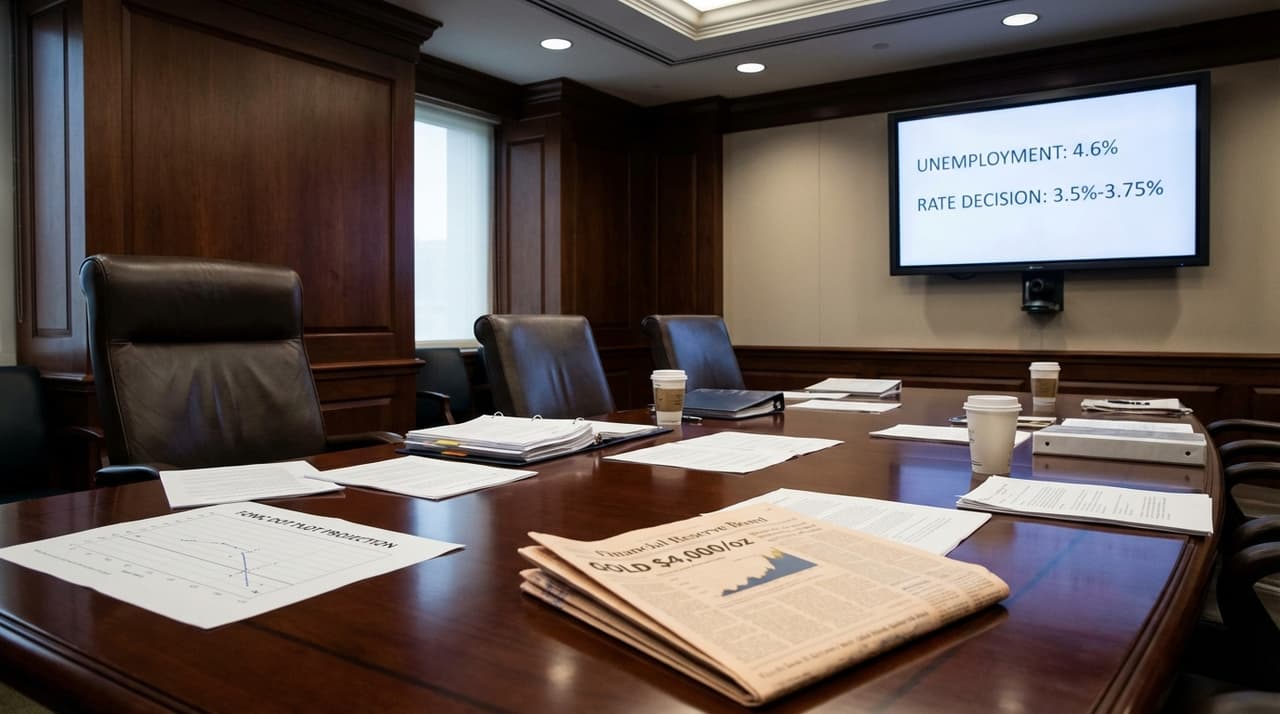
- Fed Governor Stephen Miran dissented in favor of a 50-basis-point rate cut at the December 2025 meeting, advocating for more aggressive easing as unemployment rises to 4.6%.
- Miran described gold as a 'small market' in monetary policy debates, even as analysts forecast prices exceeding $5,000/oz by late 2026 on central bank demand and rate-cut expectations.
- Divisions within the Fed, including dissent from other officials, highlight tensions over policy amid softening labor data and contained inflation, with potential implications for the dollar's safe-haven status.
Fed Governor Stephen Miran broke ranks at the central bank's December 2025 meeting, pushing for deeper interest rate reductions as the U.S. labor market shows clear signs of weakening. The Federal Reserve ultimately cut rates by only 25 basis points to a range of 3.5%-3.75%, but Miran advocated for a 50-basis-point move instead, according to people familiar with the discussions. His dissent aligns with a growing view among some policymakers that restrictive rates are exacerbating economic slowdowns, with unemployment climbing to 4.6% in November and job momentum faltering in cyclical sectors.
In the context of these debates, Miran characterized gold as a 'small market,' a remark that underscores its perceived limited role in broader monetary policy considerations. Yet this hasn't dampened bullish sentiment among investors and analysts, who see the precious metal poised for significant gains. Forecasts suggest gold could surge to $5,000 per ounce or higher by late 2026, driven by central bank purchases—which have averaged 755 tonnes annually recently—alongside ETF inflows and bar-and-coin demand. 'Gold benefits from expected rate cuts, weak growth, and dollar weakness,' one market strategist noted, speaking on condition of anonymity due to the sensitivity of Fed communications.
Efforts to ease policy have hit a snag within the Fed, with divisions laid bare in the latest 'dot plot' projections. While Miran and others like Governor Waller dissented in favor of more cuts, some regional Fed presidents, including Schmid and Goolsbee, opposed changes, reflecting a split over how to respond to deteriorating employment data. Without a more accommodative stance, analysts warn, the economy could face heightened recession risks, particularly as job losses concentrate in vulnerable industries. The Fed's recent moves resemble 'insurance' cuts similar to past cycles, but the current softening appears demand-driven, justifying quicker action according to Miran's camp.
Market reactions have been muted so far, with gold trading around $4,000 per ounce, but traders are positioning for volatility. Historical patterns show gold ETFs typically see inflows after the first rate cut, and with further reductions likely in 2026 if unemployment exceeds 4.5%, the metal could rally tactically. 'We see robust trends unexhausted,' a J.P. Morgan analyst said in a recent report, pointing to sustained demand from institutions diversifying away from U.S. assets amid trade tensions. Parallel developments, such as central banks in Brazil and Korea increasing gold reserves, reinforce this global shift.
Looking ahead, the political context adds another layer of uncertainty. Incoming policy under a potential new Fed chair—with reports suggesting Trump may announce one in January 2026—could accelerate easing, challenging the dollar's traditional safe-haven appeal. For now, Miran's dissent and his downplaying of gold's market size highlight the Fed's internal struggles as it navigates a softening economy. As one economist put it, 'This isn't just about rates; it's about calibrating policy in a world where gold's role is growing, whether policymakers acknowledge it or not.'
Correction: An earlier version misstated the timing of unemployment data; it was 4.6% in November 2025, not October.