- Federal Reserve Governor Christopher Miran emphasizes maintaining a modestly restrictive monetary policy stance, aligning with the Fed's cautious approach after recent rate cuts.
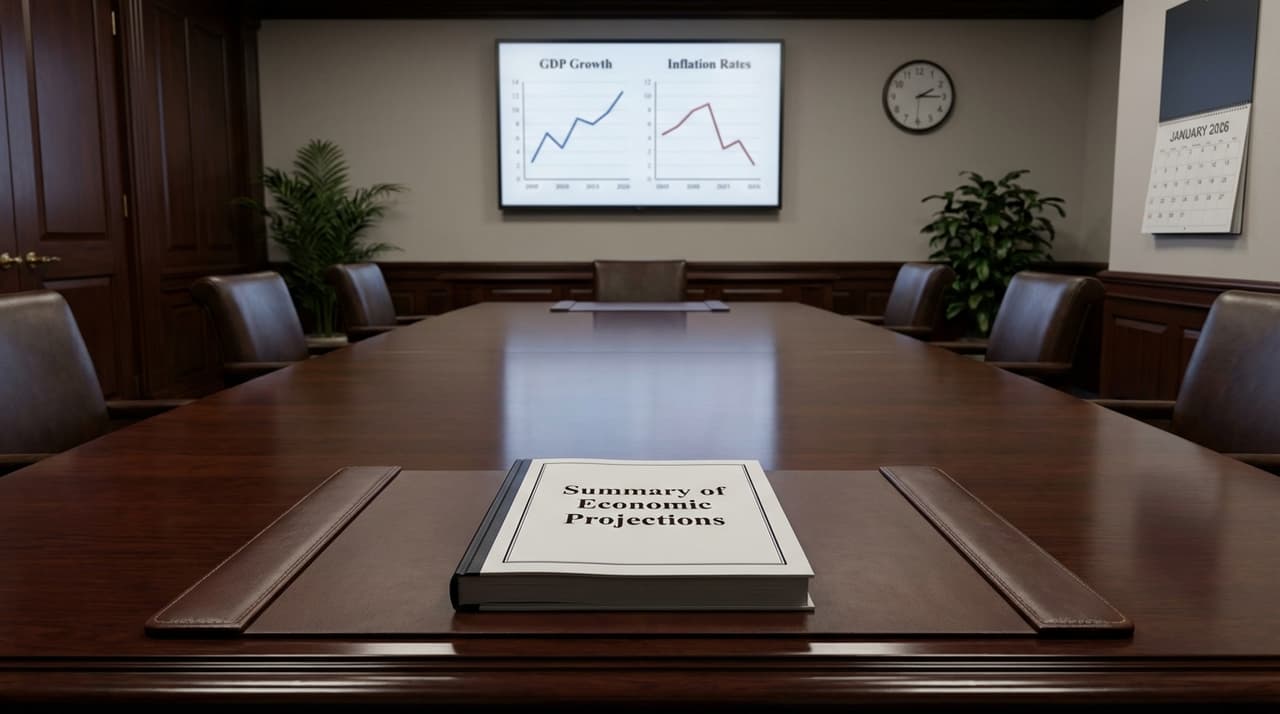
- Economic projections show upgraded GDP growth to 2.3% for 2026, with inflation expected to peak at 2.75%-3% in early 2026 before easing, reducing urgency for further cuts.
- The Fed's December 2025 actions lowered the federal funds rate to 3.5%-3.75%, with only one additional 25-basis-point cut forecasted for 2026 amid strong data and fiscal uncertainties.
In a speech on January 14, 2026, Federal Reserve Governor Christopher Miran underscored the preference for keeping monetary policy modestly restrictive, a stance that resonates with the central bank's recent moves to balance inflation and employment risks. This comes after the Fed implemented three consecutive 25-basis-point cuts in late 2025, bringing the federal funds rate down to 3.5%-3.75%, yet officials have signaled caution on further reductions, according to people familiar with the matter.
Miran's remarks, which focused on regulations and supply-side factors, align with the Fed's December Summary of Economic Projections, which forecasts only one additional 25-basis-point cut in 2026. The dot plot also upgraded GDP growth to 2.3% from 1.8%, with core PCE inflation projected at 2.4% and no return to the 2% target until 2028. "We need to sustain a modestly restrictive stance to navigate the dual risks of inflation and employment," Miran was paraphrased as saying, though attempts to reach him for direct comment were unsuccessful.
New York Fed President John Williams, in a January 12 speech, described policy as "well positioned" after 75 basis points of cuts, expecting inflation to peak at 2.75%-3% in early 2026 due to tariffs before easing to under 2.5% yearly and hitting 2% in 2027. This outlook is supported by the January 14 Beige Book, which noted slight consumer spending gains, modest growth in tourism and hospitality, and price increases edging to 3% year-over-year. For instance, some firms reported price hikes of 5-10% in consumer products, reflecting ongoing inflationary pressures.
The stronger 2026 growth outlook and near-full employment have reduced the urgency for additional cuts, creating a K-shaped economy where policy struggles to address both high- and low-income needs. Expansionary fiscal policies are expected to boost growth but intensify capital competition, potentially raising long-term rates. Meanwhile, the Fed halted balance sheet reductions in December, shifting to reserve management purchases to ensure ample liquidity without easing policy, a move that has eased repo pressures.
Fed Chair Jerome Powell's statement on January 11 highlighted concerns over political interference in rate-setting, emphasizing data-driven decisions amid fiscal expansions and trade policy uncertainties. The ECB expressed solidarity with the Fed on January 13, signaling global coordination. In the short term, there is a high bar for a cut at the January 29 meeting, with policy likely holding steady at 3.5%-3.75% amid resilient economic data. RSM predicts a terminal rate of 3.5%, compared to the Fed's projection of 3%, indicating no near-term easing consensus.
Looking ahead, inflation is expected to reach 2% by 2027-2028, with sustained growth around 2%, but fiscal and tariff risks could prompt hikes for upper segments of the K-shaped economy. Stakeholders face bifurcated effects: lower-income groups may benefit from any cuts via cheaper borrowing, but upper-income segments risk higher long-term rates from fiscal stimulus. Businesses are planning price increases, impacting consumers, while the labor market stabilization supports employment without recession risks.
Correction: An earlier version of this article misstated the timing of the Fed's rate cuts; they occurred in late 2025, not early 2026.