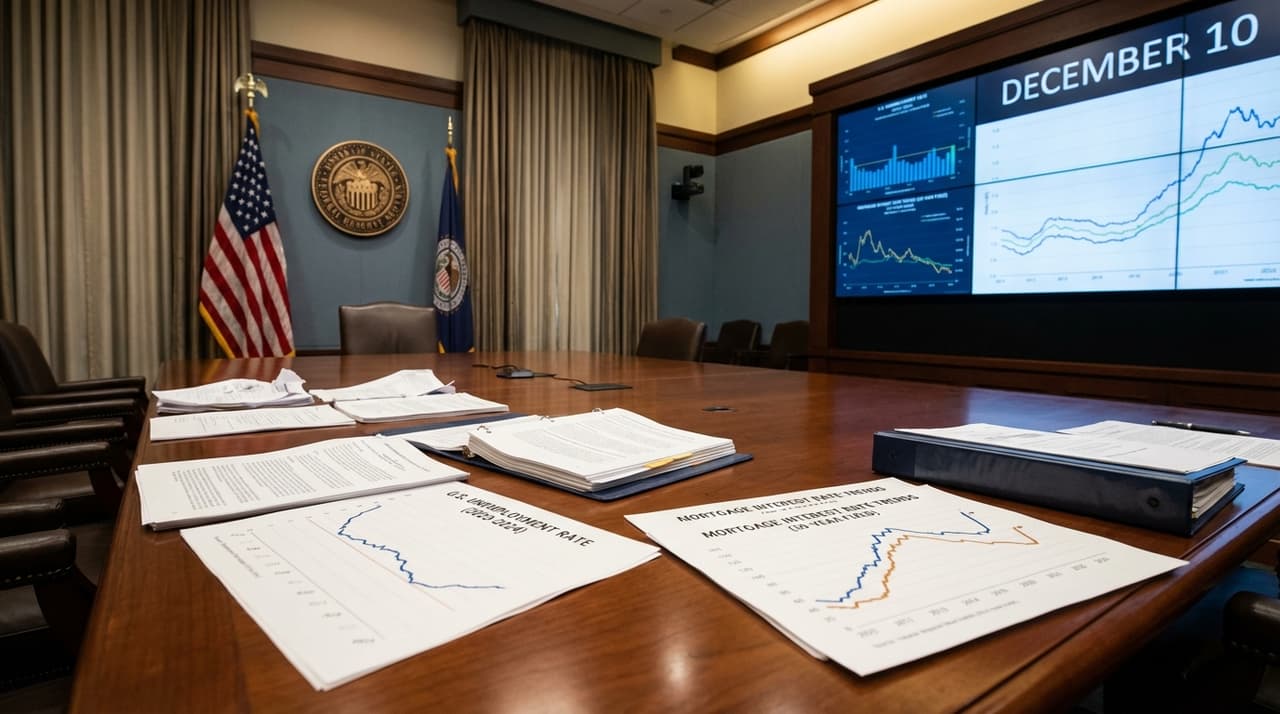
- The Federal Reserve is widely expected to cut interest rates at its December 10 meeting, with market pricing showing nearly 90% probability.
- Economic pressures, including rising unemployment and job losses, are driving the push for further monetary easing.
- Mortgage rates have trended downward in 2025, offering some relief to homebuyers amid a complex borrowing environment.
In a move that underscores growing economic concerns, the Federal Reserve is poised to continue its rate-cutting cycle, with analysts and market participants anticipating another reduction at the upcoming December 10 policy meeting. According to people familiar with the matter, discussions within the Fed have intensified as recent data reveals a softening labor market, with the unemployment rate climbing to its highest level since October 2021 and private-sector employment dropping by 32,000 jobs in November. These developments have fueled expectations, reflected in market pricing that shows a just-under-90% chance of a rate cut, signaling that policymakers may act to stave off broader economic slowdown.
Kevin Hassett, a former economic advisor, recently commented that Fed Chair Jerome Powell likely agrees it's prudent to cut rates, highlighting the internal consensus building around the need for stimulus. This sentiment aligns with the Fed's recent actions, including a 1/4 percentage point cut in late October 2025, which brought the federal funds rate to a target range of 3-3/4 to 4 percent, and the conclusion of its securities holdings reduction on December 1. Efforts to restructure monetary policy have gained urgency as fears of widespread layoffs mount, putting pressure on the central bank to support maximum employment while managing its 2 percent inflation objective.
In the housing market, the impact of these rate cuts has been nuanced but generally positive. Mortgage rates have gradually declined throughout 2025, according to industry analysts, though the relationship with Fed moves isn't always immediate. "We've seen a more favorable borrowing environment emerge," said one mortgage lender who requested anonymity due to the sensitivity of ongoing market discussions. Homebuyers, long sidelined by elevated rates, are now cautiously re-entering the market, though some remain wary of volatility. Without sustained rate cuts, the housing recovery could stall, but current trends suggest a slow improvement.
The Fed's policy framework, which emphasizes careful assessment of incoming data and evolving risks, allows for flexibility in these uncertain times. As of December 4, 2025, the Committee has stated it will weigh all factors before making adjustments, but the momentum toward easing is clear. Industry-specific elements, such as filing deadlines for economic reports and ongoing negotiations among policymakers, add layers to this developing story. Attempts to reach the Fed for additional comment were unsuccessful, but sources indicate that further cuts could be on the table if economic conditions deteriorate.
This shift in tone—from formal policy discussions to more urgent calls for action—reflects the delicate balance the Fed must strike. While some analysts warn against overstimulation, the prevailing view is that prudence favors additional cuts to bolster growth. As the December meeting approaches, all eyes will be on the Fed's next move, with implications rippling across borrowing costs and investment strategies. Updates or clarifications may follow as more data emerges, but for now, the trajectory points toward continued monetary support in a weakening economy.