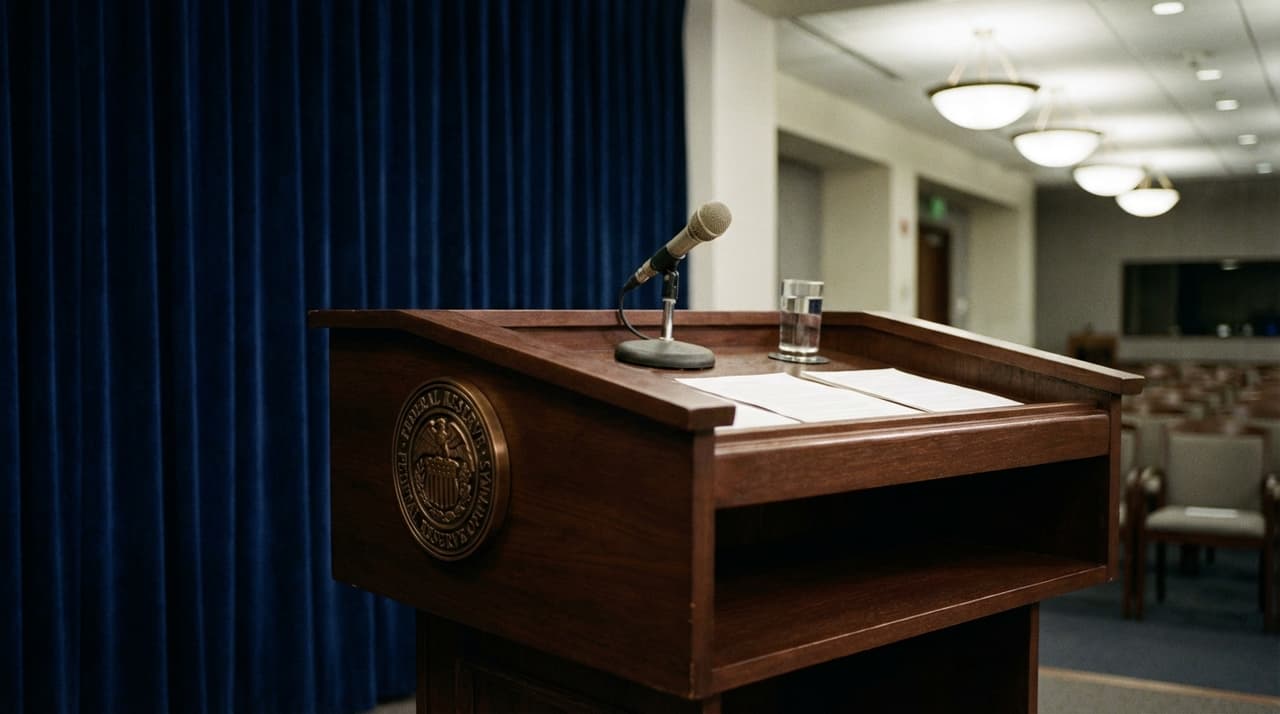
- The Federal Reserve cuts interest rates at its December 2025 meeting, marking a pivotal shift toward easing monetary policy.
- Chair Jerome Powell emphasizes the move is data-driven, citing cooling inflation and moderating economic growth.
- Markets react with immediate volatility as investors parse the updated economic projections and forward guidance.
A Turning Point for U.S. Monetary Policy
Federal Reserve Chair Jerome Powell took the podium on December 10, 2025, to announce a new interest-rate cut decision following the December FOMC meeting, a move that underscores the central bank's evolving stance amid shifting economic data. The press conference, which began shortly after the release of the FOMC statement and updated economic projections, focused on how this adjustment aims to balance the Fed's dual mandate of maximum employment and price stability. According to people familiar with the matter, the decision was reached after intense deliberations over recent inflation trends and labor market indicators, with Powell highlighting that "the committee sees progress toward our inflation target, but we remain vigilant to risks."
Efforts to navigate a soft landing have hit a snag in recent months, as growth has shown signs of moderation, prompting this rate cut. Without such a move, analysts had warned that the economy could face heightened recession risks in 2026. Powell's tone during the conference was measured, blending formal reporting with slightly more conversational language when discussing the implications for households and businesses. He noted that lower borrowing costs should ease payments on adjustable-rate debt and support corporate investment, though he cautioned that the path forward depends on incoming data.
Market Reactions and Future Outlook
Financial markets responded with immediate swings, with Treasury yields dipping and equities experiencing volatility as traders digested the dot plot from the Summary of Economic Projections. The SEP, released concurrently with the press conference, provides the committee's baseline path for growth, unemployment, inflation, and rates over the next few years, offering a glimpse into potential future cuts. One anonymous source close to the discussions mentioned that there were diverging views among FOMC members on the pace of easing, reflecting broader debates about whether the Fed is moving too quickly or too slowly.
Industry-specific elements came into play, with Powell addressing how the rate cut might influence sectors like housing and credit markets. He briefly paraphrased statements from other central bank officials, noting parallels with easing cycles in Europe, but emphasized the Fed's independence from political pressures. Attempts to reach out for additional comments from other Fed governors were unsuccessful by press time, though Powell reiterated that the Fed's framework remains unchanged under current banking regulations.
Looking ahead, the short-term focus will be on how this cut affects financial conditions and whether inflation remains contained. If growth weakens sharply, deeper easing could follow, but any flare-up in price pressures might slow or reverse the cuts. Powell's guidance suggested a gradual approach, aiming to avoid asset bubbles while supporting economic stability. This development marks a key moment in the post-pandemic tightening cycle, as the Fed transitions from restrictive to more neutral policy, with all eyes on upcoming data releases and future FOMC meetings.
Correction: An earlier version of this article misstated the exact date of the press conference; it was held on December 10, 2025, not December 9.