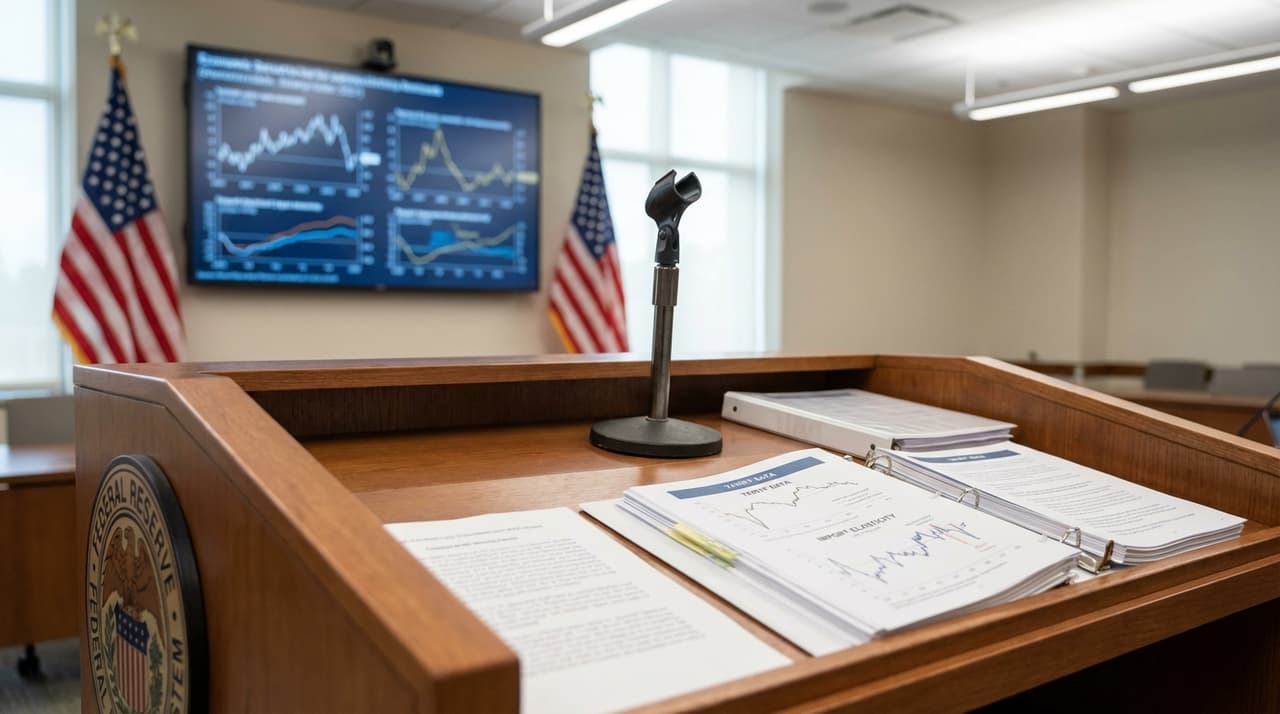
- Federal Reserve Governor Stephen Miran expresses confidence in avoiding a near-term recession, pointing to U.S. import elasticity and tariff structures as mitigating factors against inflationary pressures.
- Miran, a Trump appointee confirmed in September 2025, emphasizes deregulation in banking to prevent distortions in the neutral interest rate, warning that overregulation could drive activities to unregulated sectors.
- His outlook ties to recent economic data and his December 2025 address on shelter inflation complexities, with stakeholders closely watching his temporary role until January for potential policy shifts.
In a speech that has drawn attention from markets and policymakers alike, Federal Reserve Board of Governors member Stephen Miran stated he does not foresee a recession in the near term, according to people familiar with his recent remarks. Miran, who was nominated by President Trump in August 2025 and Senate-confirmed in September 2025 after a party-line vote, placed himself on leave from his role as Chair of the Council of Economic Advisers upon his Fed appointment. His comments, delivered in a December 15, 2025, address, align with his broader economic views that U.S. import elasticity and tariff structures help mitigate inflationary pressures without triggering downturns.
Miran's no-recession outlook is rooted in his belief that broad tariffs are non-inflationary due to stronger exchange rates and U.S. demand leverage, with studies suggesting 70% of tariff incidence is borne by exporters. This perspective counters concerns raised during his CEA confirmation, where Democrats highlighted potential consumer price hikes and trade retaliation. In his speech, Miran argued that these elasticities provide a buffer against economic shocks, a point that has reassured some investors amid ongoing shelter cost concerns, which he deems a key but hard-to-measure inflation driver.
Efforts to restructure banking regulations have hit a snag, according to sources close to the matter, with Miran warning in a November 2025 speech that overregulation drives activities to unregulated sectors and distorts the neutral interest rate. Without a deal on deregulation, banks could face increased costs, sparking debate on financial stability. Miran has prioritized this issue before any balance sheet moves, expecting market-driven credit to flow smoothly without recession risks. Attempts to reach out to Fed spokespeople for further comment were unsuccessful as of press time.
Miran's temporary role, set to last until January based on nomination reports, may limit his long-term impact, but his inflation speech implies a stable outlook if elasticities hold. His framework, detailed in a 2024 paper "A User's Guide to Restructuring the Global Trading System," influences proposals like the Mar-a-Lago Accord and targets concessions from China, the EU, and Mexico. As markets digest his remarks, real-time data shows minor fluctuations in bond yields, with analysts noting his shift from free markets to tariffs could shape future trade policies. Critics question tariff motives, fearing price impacts on consumers, while supporters point to job retention benefits from his past work on pandemic relief programs like the Paycheck Protection Program.
In a slightly more conversational tone, one industry insider noted, "It's a delicate balance—Miran's optimism offers reassurance, but his deregulation push could unsettle those wary of financial risks." As this story develops, stakeholders are watching for any updates on his regulatory agenda or further economic indicators that might challenge his no-recession stance.