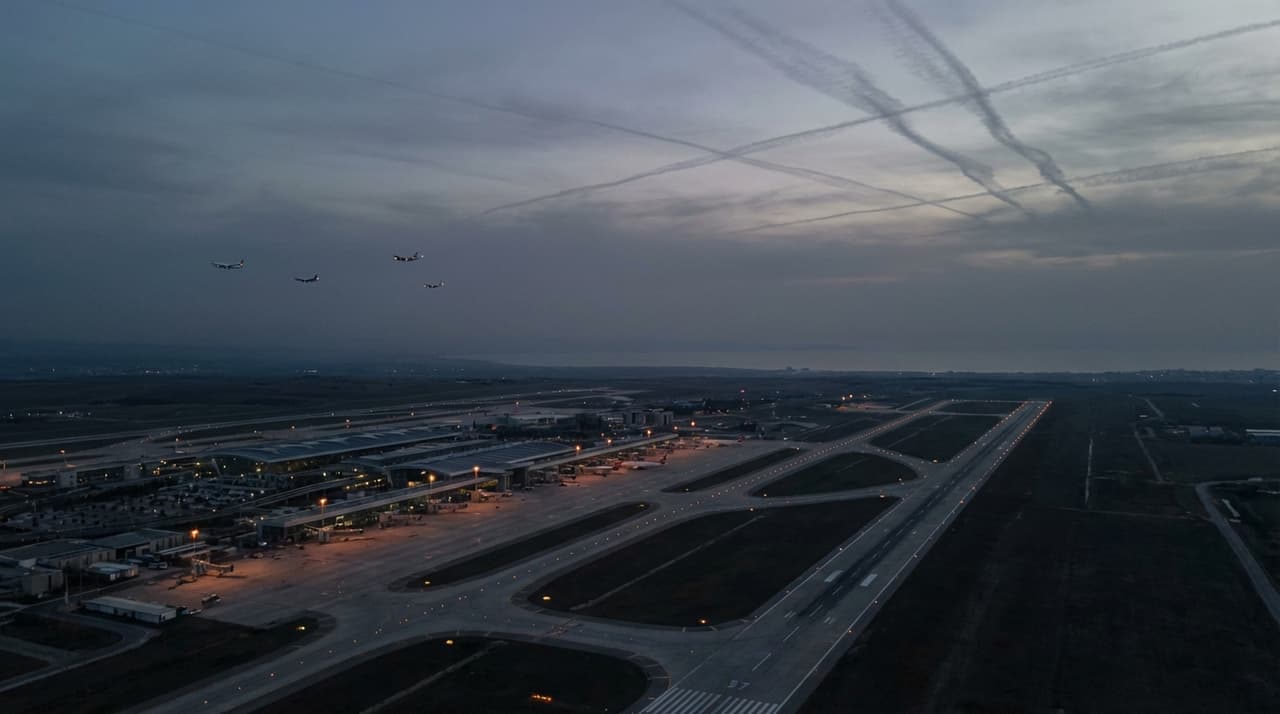
- Four passenger aircraft were temporarily diverted from Ankara Esenboğa Airport to Konya Airport on December 15, 2025, as a precaution during a military operation.
- Turkish F-16s shot down an unidentified drone near Cankiri after it entered Turkish airspace over the Black Sea, escalating regional tensions.
- The incident highlights ongoing security challenges in the Black Sea, with Turkey warning against turning the area into a conflict zone.
Temporary Disruption at Ankara Airport
Flight tracking data revealed a brief but significant disruption at Ankara Esenboğa Airport (LTAC) on December 15, 2025, when four passenger aircraft were diverted to Konya Airport. According to people familiar with the matter, this was a precautionary measure during a Turkish Air Force operation to intercept an unidentified drone that had entered Turkish airspace. The airport remained operational throughout, with the diversions lasting only for the duration of the military engagement, underscoring the swift response to an airspace threat.
Drone Interception and Security Response
The unidentified unmanned aerial vehicle (UAV) was first detected by Turkish radar as it approached via the Kastamonu corridor over the Black Sea. Due to its small radar cross-section and meteorological conditions, it created an intermittent trace that initially resembled a meteorological aircraft, complicating early identification. Turkish F-16s on Quick Reaction Alert were scrambled to intercept the target. After confirming it was a drone that had lost command and control link—traveling in a steady, unchanging trajectory—pilots waited for it to reach a safe location away from residential areas before engaging. The drone was successfully shot down near Cankiri with an AIM-9X Sidewinder missile, and debris recovery operations followed immediately.
Efforts to restructure regional security dynamics have hit a snag, with this incident occurring amid escalating Black Sea tensions. On December 12, three Turkish-flagged ships were damaged in attacks on Ukrainian ports, which Ukraine attributed to Russian drones, though Moscow denied responsibility. President Recep Tayyip Erdoğan subsequently warned on December 13 that "the Black Sea should not be turned into a conflict zone," emphasizing the delicate balance in the region. Following the drone interception, Turkey denied claims of air defense weakness while issuing warnings to both Russia and Ukraine about airspace security violations, according to sources close to the matter.
Implications and Market Context
The flight diversions, while temporary, underscore the broader geopolitical risks affecting aviation and regional stability. Without such security measures, the potential for more severe disruptions looms, though analysts note that this was a targeted response rather than a systemic issue. The incident has drawn attention to the increasing use of drones in conflict zones and the challenges they pose to air defense systems. In a brief statement, a Turkish official emphasized that the operation was conducted with precision to minimize civilian impact, but attempts to reach airport authorities for further comment were unsuccessful at press time.
Looking ahead, the focus shifts to how such events might influence investor sentiment in sectors like aviation and defense. The quick resolution may mitigate long-term effects, but it serves as a reminder of the volatile security environment in the Black Sea. As one industry observer put it, "These incidents test the resilience of infrastructure and international relations alike." The situation remains fluid, with ongoing monitoring of airspace and diplomatic channels to prevent escalation.