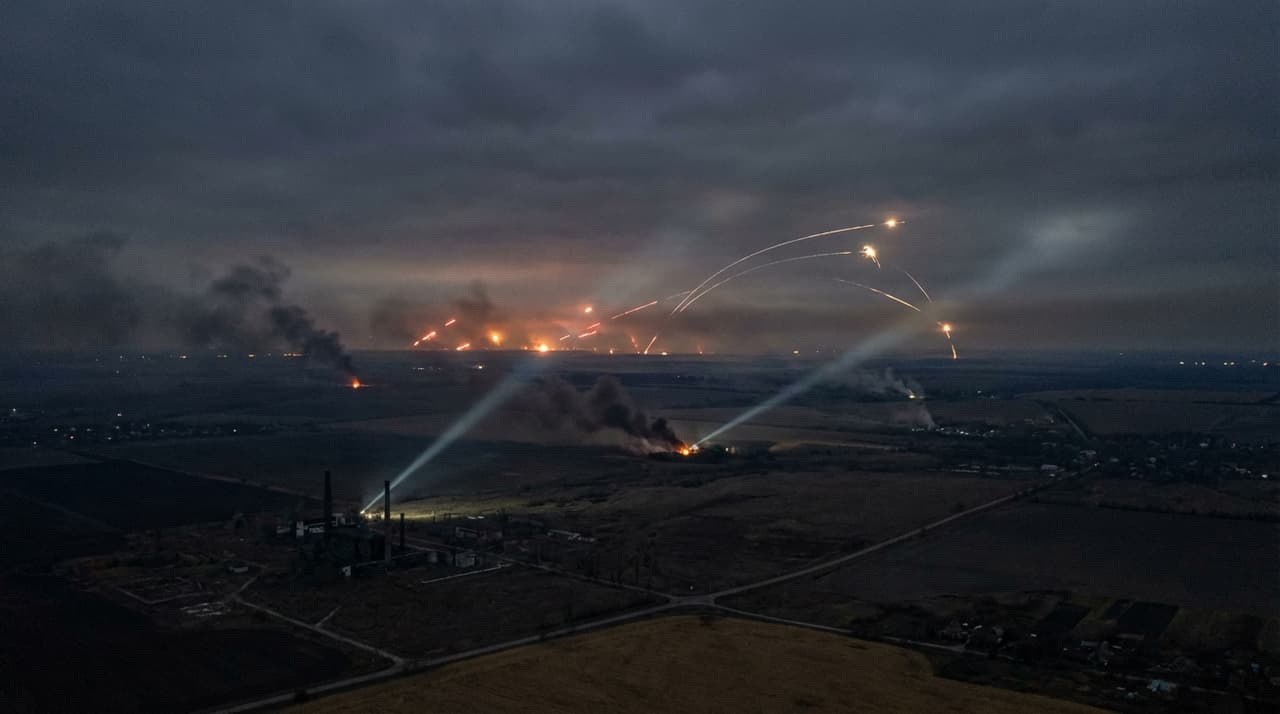
- Ukrainian forces launched widespread drone strikes targeting multiple Russian regions, including Novgorod, with no verified link to President Putin's residence as claimed in some reports.
- Russian air defenses intercepted 89 drones overnight on December 28-29, causing localized damage but no casualties in the latest incidents.
- The escalation reflects Ukraine's strategy to signal resolve amid geopolitical tensions, disrupting civilian infrastructure and prompting Russian defiance narratives.
Escalating Aerial Assaults
Ukraine has ramped up its long-range drone campaign, with recent mass barrages targeting regions across Russia, including Novgorod, where defenses intercepted drones overnight on December 28-29. According to people familiar with the matter, these strikes are part of a broader effort to apply pressure deep into Russian territory, though no verified reports confirm an attack specifically aimed at Vladimir Putin's residence in the Novgorod region, as suggested by an IFX headline. Instead, the operations have focused on infrastructure and civilian areas, with damage reported in places like Kushchevskaya and Krasnodar, where houses were hit but no injuries occurred, per regional officials.
In the latest developments, Russian air defenses downed 89 Ukrainian drones across regions such as Adygea, Krasnodar Krai, Rostov Oblast, Bryansk, Novgorod, Oryol, and Smolensk, plus one over the Sea of Azov. Earlier on December 28, 21 more drones were intercepted over Rostov, the Sea of Azov, and Krasnodar. Efforts to reach Ukrainian authorities for comment on the targeting specifics were unsuccessful, but sources indicate these strikes align with a pattern of escalating aerial assaults since 2024, including a 287-drone barrage on December 11-12 that injured seven in Tver and forced temporary airport closures from Sochi to Kaluga.
Political and Societal Repercussions
Russia has accused Ukraine of deliberately targeting civilians, with diplomat Rodion Mashnik claiming the strikes demonstrate defiance toward Washington and NATO demands for compromise. Without a de-escalation, the conflict risks further retaliation and strained energy grids, especially as winter vulnerabilities increase. In affected areas, strikes have disrupted power, heating, and flights, forcing evacuations and hospitalizations, though no casualties were reported in the latest Novgorod-linked intercepts. Regional head Murat Kumpilov noted no injuries in Adygea, but the societal impact includes economic ripple effects from industrial hits, such as unconfirmed targets at sites like the TolyattiAzot ammonia plant in Samara.
Looking ahead, experts suggest these surges may be Ukraine's way of signaling resolve pre-negotiations, potentially prolonging the conflict without quick resolution. The historical context shows this fits into ongoing drone campaigns targeting energy and infrastructure deep in Russia, following earlier incidents like a general's killing in Moscow. As air defenses remain active and flight restrictions persist, the short-term outlook involves continued repairs and heightened tensions, with no specific government policies or international reactions tied solely to Novgorod detailed yet.