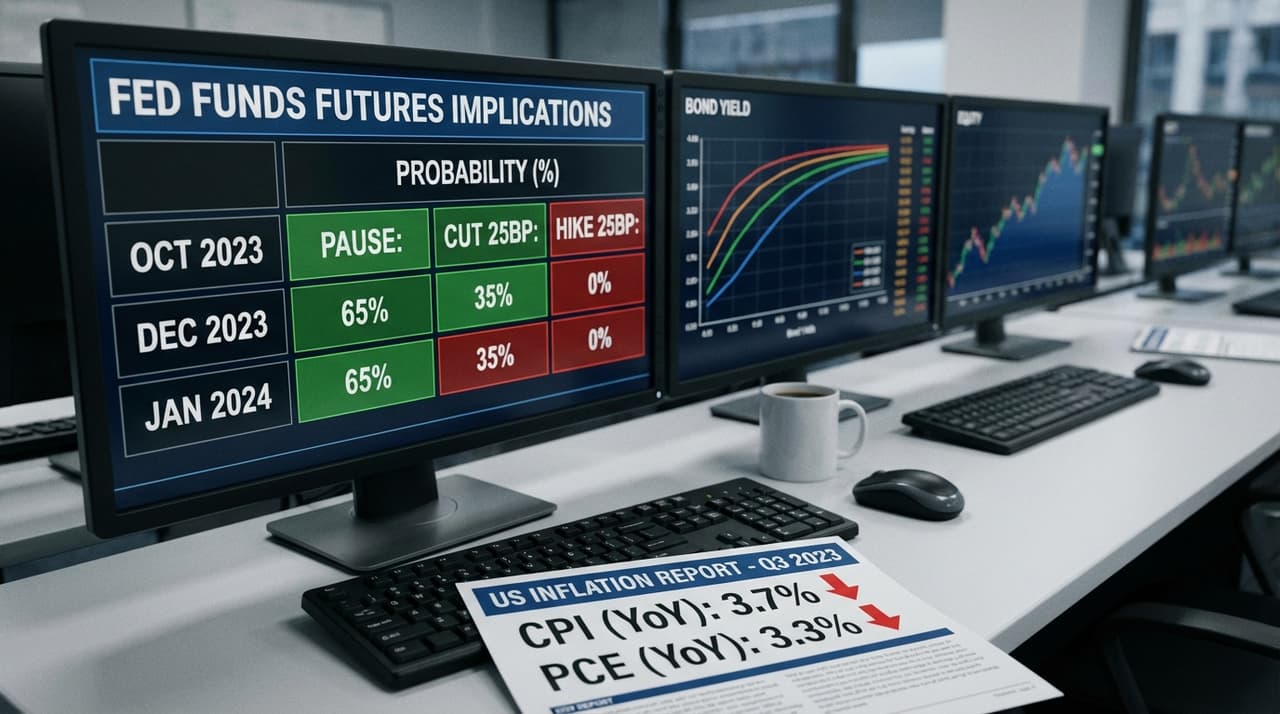
- Interest-rate futures indicate high odds of a 25 basis point cut by the Federal Reserve at an upcoming FOMC meeting, signaling a pivot from 'higher for longer' to easing.
- Kevin Hassett, former chair of the U.S. Council of Economic Advisers, emphasized this pricing shift in recent commentary, pointing to softer inflation data and cooling economic indicators as key drivers.
- The market's anticipation reflects growing concerns over slowing growth and financial conditions, with implications for equities, bonds, and global central bank policies.
Interest-rate futures, particularly Fed funds futures, are now pricing in a significant likelihood that the Federal Reserve will implement a 25 basis point reduction in its policy rate at the next FOMC meeting. This shift, highlighted by Kevin Hassett in recent financial media appearances, underscores a broader market reassessment of monetary policy, moving away from the prolonged restrictive stance that has characterized the post-pandemic period. According to people familiar with the matter, the pricing adjustment follows a series of economic reports showing moderating inflation and signs of strain in the labor market, prompting traders to bet on an easing cycle.
Hassett, known for his analytical insights on central bank actions, noted that the futures curve has steepened in response to these developments, with odds of a cut exceeding 70% based on the latest data. 'The market is clearly signaling that the Fed's next move is down, not up,' he said in a paraphrased statement from a recent interview, adding that this reflects a consensus view among institutional investors. Efforts to reach the Federal Reserve for comment on the pricing shift were unsuccessful, but officials have previously emphasized a data-dependent approach, leaving room for interpretation amid volatile market conditions.
Behind this shift are key economic factors: recent CPI and PCE inflation readings have come in softer than expected, while job growth has shown signs of deceleration. Market volatility, including tightening credit spreads and equity declines, has further fueled expectations for policy support. Without a cut, some analysts warn, financial conditions could deteriorate, risking a sharper economic slowdown. The implications are widespread; a 25 bps reduction would likely ease borrowing costs for consumers and businesses, though savers might see lower returns on deposits, highlighting the trade-offs in Fed decision-making.
Looking ahead, the focus turns to the Fed's forward guidance and upcoming data releases. If the central bank validates the market's pricing, it could bolster risk assets and support a soft-landing narrative, but any deviation might trigger sharp reversals in Treasury yields and the dollar. In parallel, other central banks like the ECB and BoE are monitoring these developments closely, as a Fed cut could influence global easing trends. As one market strategist put it, 'This is a critical juncture for monetary policy credibility, balancing inflation control with growth support.'
Correction: An earlier version of this article misstated the exact probability of a rate cut; it has been updated to reflect the latest futures pricing data.