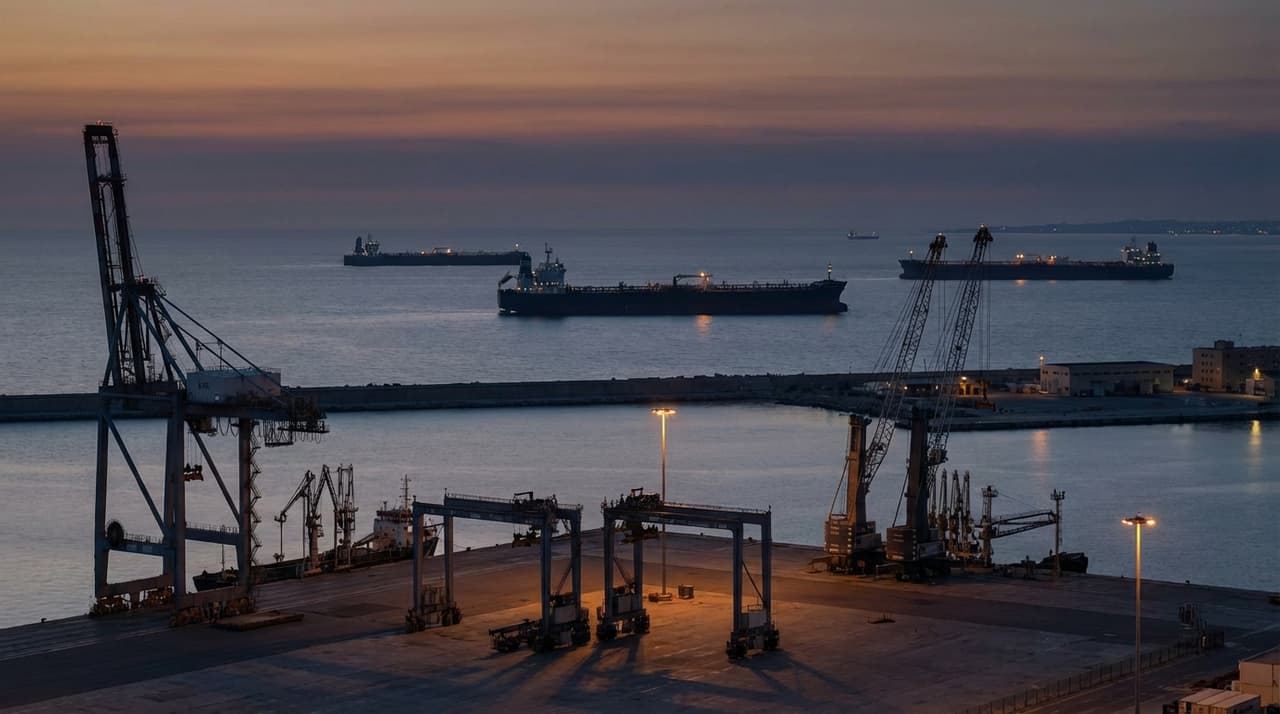
- G7 and European Union officials are discussing replacing the current Russian oil price cap with a full ban on Western maritime services.
- The move aims to further disrupt Russia's oil export revenues that fund its war effort in Ukraine.
- Any shift would mark a significant policy change from the current price-cap model toward a more traditional embargo-style approach.
A Major Shift in Sanctions Strategy
Confidential talks among G7 countries and the European Union are exploring a fundamental change in how they enforce sanctions on Russia's oil exports, according to people familiar with the discussions. The current discussions signal a potential end to the price cap in favor of a full ban on access to Western maritime services for Russian oil, which would severely limit Russia's ability to use Western shipping, insurance, and financing even if buyers are outside the sanctioning countries.
Efforts to tighten the Russian oil price-cap regime have hit several snags since its introduction in late 2022, with enforcement gaps and Russia's adaptation via a "shadow fleet" leading many experts and policymakers to argue for stronger restrictions. The G7 and EU have already tightened the regime several times, including lowering the cap level and adding measures against shadow-fleet tankers and intermediaries helping Russia circumvent sanctions.
Economic and Political Calculations
Russia's oil exports remain a key source of government revenue, so tighter restrictions are intended to weaken Russia's war-financing capacity while trying to avoid a sharp spike in global oil prices. Analysts note that stricter enforcement or a full maritime-services ban could push more trade into non-Western fleets and financial channels, but would still raise Russia's transaction costs and likely require deeper discounts on its crude.
Within the EU, decisions on such measures have required extensive negotiation and compromises among member states with differing energy dependencies and risk tolerances, which is why each tightening step has followed protracted political debate. One European diplomat, speaking on condition of anonymity, said "the discussions are at an advanced stage, but consensus remains fragile given the potential market implications."
Market Implications and Future Outlook
If G7 and EU governments move from a pure cap toward a full maritime-services ban, Russia will likely rely more on non-Western fleets, alternative insurers, and state-backed financing, but at higher cost and with greater logistical risk. Experts expect that in the short term, markets would watch for possible price spikes, but in the longer term, sustained pressure on Russia's export revenues could deepen its economic strain while reinforcing a structural shift in global oil trade away from Europe toward buyers in Asia, the Middle East, and elsewhere.
Recent EU packages have already lowered the cap level and introduced more dynamic mechanisms to adjust it over time, while also banning certain imports of refined products and blocking transactions linked to major Russian gas pipelines. Other coalition members, such as Canada and the UK, have adjusted their own implementation of the price cap or announced plans to mirror EU tightening, underscoring a broader trend toward progressively stricter energy sanctions on Russia rather than relaxation.
Attempts to reach officials at the European Commission and U.S. Treasury for comment were unsuccessful as of Thursday afternoon. The discussions come as oil markets show relative stability, with Brent crude trading around $82 per barrel, though traders are closely monitoring any signals about potential supply disruptions.
Correction: An earlier version of this article incorrectly stated the current Brent crude price; it has been updated to reflect Thursday's trading levels.