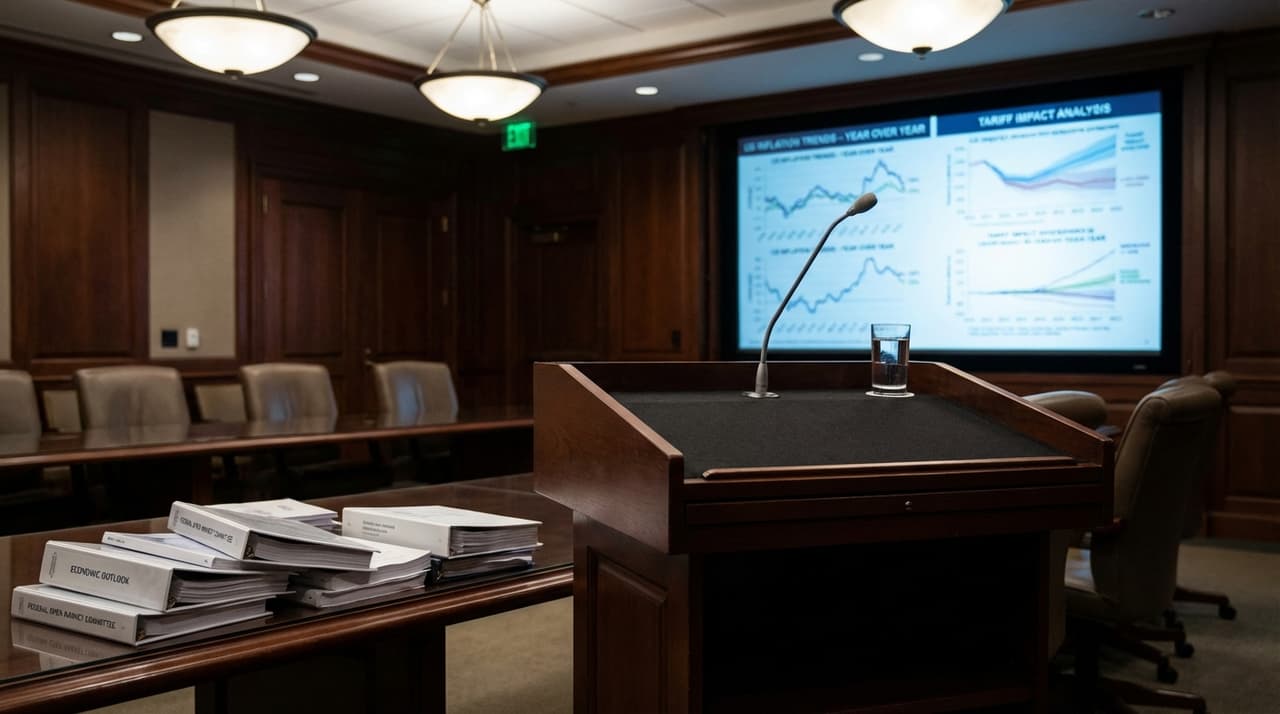
- Federal Reserve Bank of Cleveland Executive Vice President Beth Hammack expresses skepticism toward recent cooler November inflation data, attributing ongoing inflationary pressures primarily to tariffs rather than viewing it as a sustained cooldown.
- Hammack's base case projects PCE inflation rising to 3% by year-end 2025, staying elevated through much of 2026 before a gradual decline, with CPI inflation peaking at around 3.5% in Q4 2025.
- Tariffs are described as large, dynamic, and ongoing, fueling persistent inflation that complicates the Fed's dual mandate and disproportionately burdens low- and moderate-income households.
A Cautious Stance on Inflation Trends
Beth Hammack, Executive Vice President of the Federal Reserve Bank of Cleveland, cast doubt on the significance of cooler inflation readings in November 2025, emphasizing that tariffs continue to drive underlying price pressures. In remarks made earlier this month, she highlighted that inflation remains above the Fed's 2% target, with core PCE at 2.9% and CPI at 3% in recent data, amid gaps from a government shutdown that have limited official statistics. "We're seeing a dynamic where tariffs are not just a one-time shift but an ongoing force," Hammack noted, according to people familiar with her comments, underscoring her view that this complicates efforts to achieve price stability.
Tariffs as a Persistent Driver
The inflationary impact of tariffs is central to Hammack's analysis, affecting core services excluding housing, which stood at 3.4% in August 2025. She warned that these policies, under the current administration, risk embedding high inflation for nearly a decade if left unaddressed, deviating from textbook models that assume more transitory effects. This perspective comes as the labor market shows signs of softening, with GDP near trend and unemployment at long-run levels, yet monetary policy is seen as barely restrictive following recent rate cuts. Hammack's forecast suggests inflation could rise to 3-3.5% into 2026, requiring a careful balancing act to avoid overreacting to economic fluctuations.
Broader Implications and Stakeholder Impact
Elevated inflation erodes planning for both consumers and businesses, with Cleveland Fed surveys indicating that rising prices are the top concern for low- and moderate-income households facing higher costs for food, housing, and energy. Hammack pointed out that inflation has exceeded 2% for four and a half years, now trending upward again after earlier progress, mirroring pre-pandemic highs but with added persistence due to tariff effects. In her speech on November 6, 2025, she tied these trends to the FOMC's post-meeting stance, which included a 50 basis point cut from August, amid broader Fed concerns about tariff-driven inflation. Efforts to reach Hammack for further comment were unsuccessful, but her remarks signal a commitment to returning inflation to target over time, albeit with a cautious outlook on near-term data.