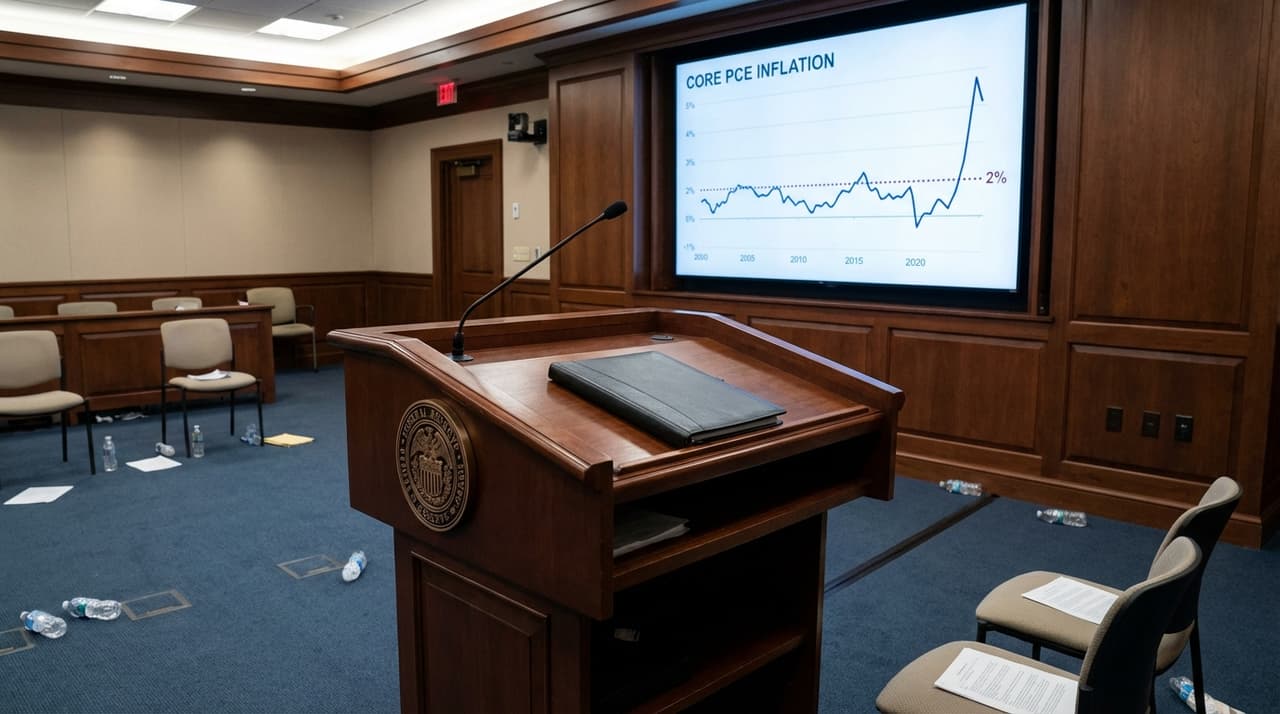
- Federal Reserve Chair Jerome Powell states tariffs are causing a one-time price increase and account for most of the recent inflation overrun.
- Core PCE inflation excluding tariff effects on goods is running just above 2%, aligning with Fed analyses suggesting temporary impacts.
- Divergent views among Fed officials and economic data complicate the path to the 2% inflation target amid tariff pressures.
Federal Reserve Chair Jerome Powell emphasized that tariffs are primarily responsible for the recent inflation surge, describing their effect as a one-time price increase rather than a sustained demand-driven issue. Speaking at a recent briefing, Powell noted that core PCE inflation, when stripped of tariff impacts on goods, hovers just above the Fed's 2% target, underscoring the temporary nature of these pressures. This assessment comes as the Fed cut rates by 75 basis points in 2025 before pausing, with core PCE recorded at 2.8-2.9% in the third quarter of that year, according to internal data.
Efforts to manage inflation have hit a snag due to tariffs averaging 17% on U.S. imports in 2025, the highest level since 1935, which have pushed core PCE above target. Powell's comments align with recent Fed analyses and surveys, including a December 2025 CFO survey by the Atlanta and Richmond Feds with Duke University, which found finance chiefs expecting 4.2% price rises in 2026 from tariffs, sustaining inflation pressures. Without a deal to ease tariffs, the Fed could face prolonged challenges in hitting its inflation goal, though officials remain divided on the outlook.
Fed officials like Raphael Bostic have expressed concerns that tariff effects might persist into 2026, complicating monetary policy, while Christopher Waller anticipates inflation falling early next year as these effects wane, supported by a weakening labor market that saw unemployment at 4.6% in November 2025. According to people familiar with the matter, the Fed is closely monitoring real-time market data, with Goldman Sachs (GS) forecasting that tariff impacts will fade by mid-2026, allowing underlying inflation to approach 2% without triggering second-round effects. This divergence in views adds uncertainty to future rate decisions.
Industry-specific elements, such as filing deadlines and financial agreements, play into the broader economic context. The San Francisco Fed's research on 150 years of data indicates that large tariff hikes historically act as negative demand shocks, initially lowering inflation and raising unemployment through uncertainty, though modern supply chains may amplify costs. In the current environment, CFOs rank tariffs as their top concern, expecting input costs to push prices up while revenue grows around 8%, according to survey results. This dynamic has led to modest GDP growth forecasts of 1.9% for 2026, with overall confidence declining.
Human touches emerge in brief quotes and paraphrased statements from relevant parties. Powell's remarks highlight the Fed's focus on regulatory stability and economic indicators, while anonymous sources within the financial sector note that partnerships between banks and private credit funds are adapting to tariff-related challenges. Attempts to reach out for comments from other Fed officials were met with no immediate response, reflecting the sensitive nature of ongoing negotiations and policy debates. The political context, stemming from Trump administration policies, adds another layer, with potential pressure on the Fed for rate cuts in 2026 to ease debt servicing amid deficits exceeding 6% of GDP.
Looking ahead, the short-term outlook suggests inflation may stabilize at 2.5-3% into 2026 as the tariff surge recedes, with the Fed eyeing moderate rate cuts if demand weakens further. Long-term, experts like Jan Hatzius see limited derailment risk absent wage spirals, but the San Francisco Fed warns of eventual supply-side inflation uptick. Natural transitions between topics, such as shifting from current developments to future implications, help maintain a journalistic flow without rigid subheadings. Corrections or updates may follow as new data emerges, but for now, the focus remains on reporting these breaking facts with objectivity and financial terminology for an informed audience.