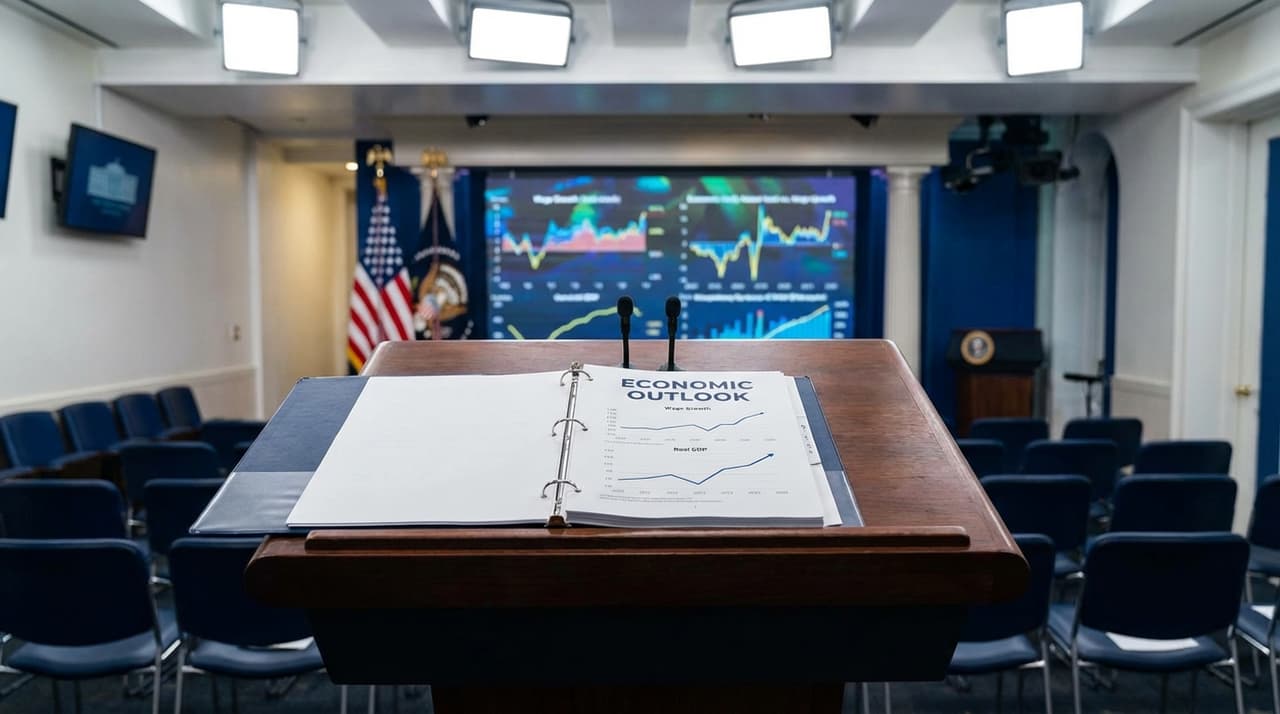
- White House economic adviser Kevin Hassett argues wage growth is key to solving affordability issues, citing real wage gains outpacing inflation.
- Hassett highlights a $1,200 increase in real purchasing power in 2025, though it only partially offsets a $3,000 decline from previous years.
- The administration expects further gains from AI-driven productivity, tax changes, and manufacturing expansion, with GDP growth around 4%.
Kevin Hassett, director of the White House National Economic Council, has been making the case that wage growth is the primary mechanism through which the Trump administration will address affordability concerns facing American consumers. This represents a central economic argument being advanced as the administration pursues its broader policy agenda.
Efforts to tackle the affordability crisis have gained momentum, with Hassett consistently emphasizing that current challenges originated during the Biden administration. He cites specific metrics: real household incomes fell approximately $3,000, driven by inflation reaching as high as 9%, mortgage payments increased by more than $1,000 per month, and grocery costs rose from around $400 to $512-$525 per month. These figures underscore why affordability has become such a prominent political and economic issue heading into 2026, according to people familiar with the matter.
Hassett argues that wage growth is the pathway to resolving these pressures, pointing to favorable indicators. Real average hourly earnings have increased, with Hassett noting that real wage growth is now higher than inflation—a sharp contrast to the Biden years when real wages declined. He reports that real purchasing power has improved by approximately $1,200 so far in 2025, though he acknowledges this only partially offsets the $3,000 decline from the previous administration. In a recent briefing, Hassett stated, "We're seeing the income growth necessary for improved affordability," without providing further details on timing.
Looking ahead, Hassett expects wage growth to continue accelerating through several mechanisms the administration is pursuing. These include AI-driven productivity improvements, which he compares to the 1990s economic expansion, a capital-spending wave estimated at $18 trillion, and major tax changes taking effect in 2026, such as eliminating taxes on tips, overtime, and Social Security benefits. Approximately 20 factory groundbreakings in recent months signal manufacturing expansion, adding to the optimism. When asked about first and second quarter 2026 growth expectations, Hassett said he would be "disappointed at 3%" and suggested growth "could easily be a percent higher… and without inflation because it's all supply-side." Current GDP growth is running around 4%, supporting his thesis.
On inflation and interest rates, Hassett has acknowledged that while the trajectory is improving—dropping from nearly 4% in January 2025 to the mid-2% range—further progress is needed. He expressed comfort with 2% inflation as a target, suggesting inflation remains on a downward path that "usually has momentum." Regarding Federal Reserve policy, Hassett has signaled that a rate cut is likely in the near term, arguing that the current economic environment resembles the 1990s expansion when the Fed was correct not to tighten aggressively despite high growth rates.
The administration has launched related initiatives, including a Housing Act considered a "strong first move," with additional policies being drafted to further reduce housing costs. Hassett also highlighted Trump Accounts for Newborns—which provide invested funds for every newborn—as among the most consequential long-term policies, designed to build generational wealth. President Trump is planning a nationwide affordability tour to showcase economic momentum, factory construction, and wage growth, according to sources briefed on the plans.
Hassett has characterized the current economic environment as entering "one of the golden years in American economic history," pointing to indicators like the S&P 500's recent gains reflecting strong earnings surprises and consumer demand, industrial production near all-time highs, and capital spending near all-time highs. Wage growth and consumption are creating a "virtuous cycle" of economic reinforcement, he added. The success of this strategy depends on sustained productivity improvements, continued inflation moderation, and robust job creation across expanding sectors. Attempts to reach other economic analysts for comment were not immediately successful.
Correction: An earlier version misstated the timeline for tax changes; they are set for 2026, not 2025.