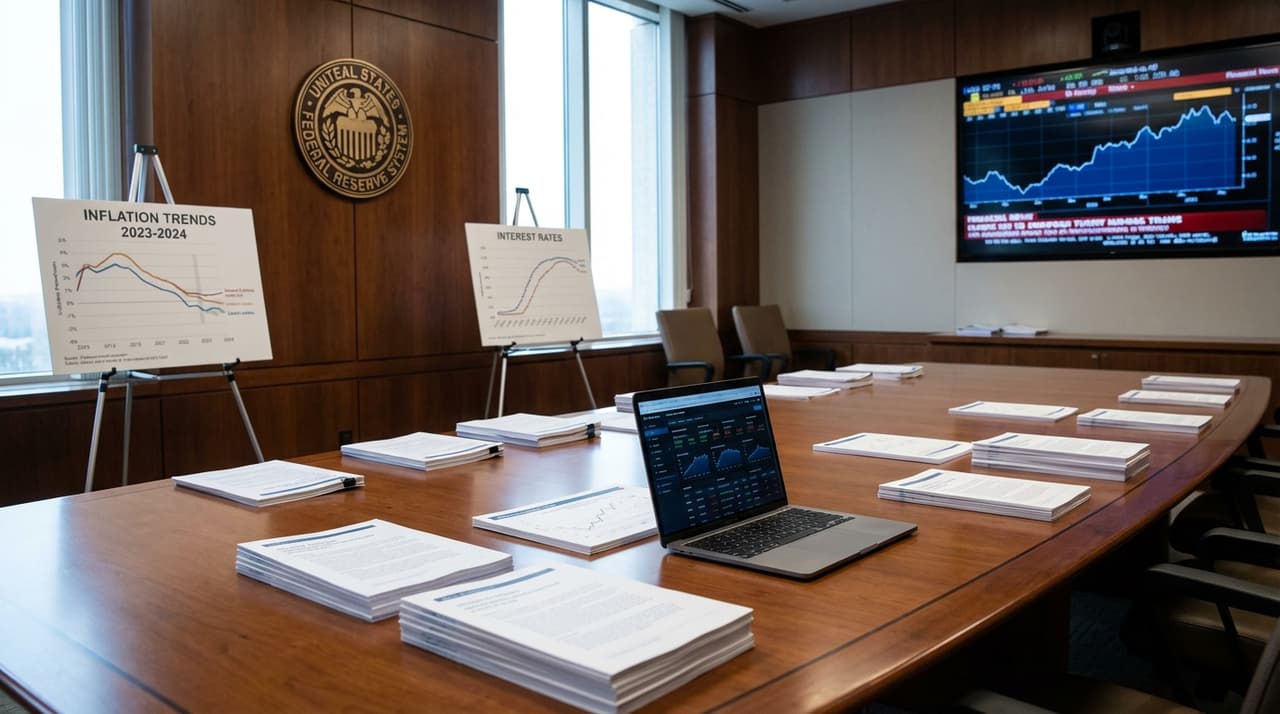
- Kevin Hassett, a frontrunner for Federal Reserve Chair under President Trump, stated he would present Trump's views to the Fed if they align with sound policy, while pushing for a major overhaul to refocus the central bank on monetary policy and reduce political involvement.
- The Fed faces ongoing tensions as it meets for its December rate decision, with Hassett noting room for further cuts due to supply boosts from AI and new factories, contrasting resistance from some regional presidents.
- Broader political dynamics include Trump's efforts to replace Jerome Powell, early reappointments of regional presidents seen as "Trump-proofing," and proposals to shift regulatory powers, raising debates over Fed independence.
Kevin Hassett, a top contender to lead the Federal Reserve if President Trump wins re-election, has outlined a vision that could reshape the central bank's operations and priorities. In a recent interview, Hassett emphasized that while he would advocate for Trump's perspectives within the Fed when they coincide with sound economic policy, his primary focus is on a sweeping overhaul to streamline the institution. This includes reducing non-core activities like extensive research and scrutinizing staffing to refocus on monetary policy, aiming to minimize political influence—a move that comes as the Fed grapples with its imminent December rate decision, announced post-interview on Wednesday.
According to people familiar with the matter, Hassett, who previously served as National Economic Council director, pointed to aggregate supply increases from AI productivity and an estimated $18 trillion in new factories as key factors easing inflation pressures, supporting the case for additional rate cuts. This stance puts him at odds with some Fed regional presidents, who have resisted aggressive cuts, highlighting the evolving dynamics within the Federal Open Market Committee (FOMC). Bond markets have reacted to recent Fed moves, with 10-year Treasury yields rising, signaling fewer expected cuts ahead.
Efforts to restructure the Fed's governance have hit a snag amid broader political maneuvers. Trump has long criticized current Chair Jerome Powell, whose term ends in May 2026, for perceived policy errors and slow rate adjustments, and is eyeing a replacement early in 2026, with Hassett and Kevin Warsh as leading candidates. In response, the Fed preemptively reappointed 11 of 12 regional presidents early, a unanimous decision that included Trump appointees—a move interpreted by some analysts as "Trump-proofing" to safeguard independence against potential overhaul risks. University of Michigan economist Justin Wolfers noted this could reduce disruption risks in 2026, while former Atlanta Fed researcher Robert Eisenbeis saw it as a buffer against political interference.
Without a deal to balance these competing forces, the central bank could face heightened politicization. Treasury Secretary Scott Bessent has endorsed residency requirements for Fed presidents, and prior advisor Stephen Miran pushed for granting the president firing powers over board members and shifting budget oversight to Congress—ideas that experts warn pose an "existential threat" to the Federal Reserve Act. Deutsche Bank (DB)'s Jim Reid observed that markets are pricing in stability, but the underlying tensions persist.
In a brief statement, Hassett emphasized the need for data-driven focus and nonpartisanship, though attempts to reach other potential nominees for comment were unsuccessful. The short-term outlook hinges on the Fed's upcoming rate decision, with more cuts possible if supply growth continues, while long-term reforms could involve cutting non-core research and replacing underperformers. As stakeholders from markets to consumers watch closely, the debate over accountability versus independence in Fed operations remains central, mirroring broader global trends in central bank governance.
Correction: An earlier version misstated the timing of Hassett's interview; it occurred before the December rate decision announcement.