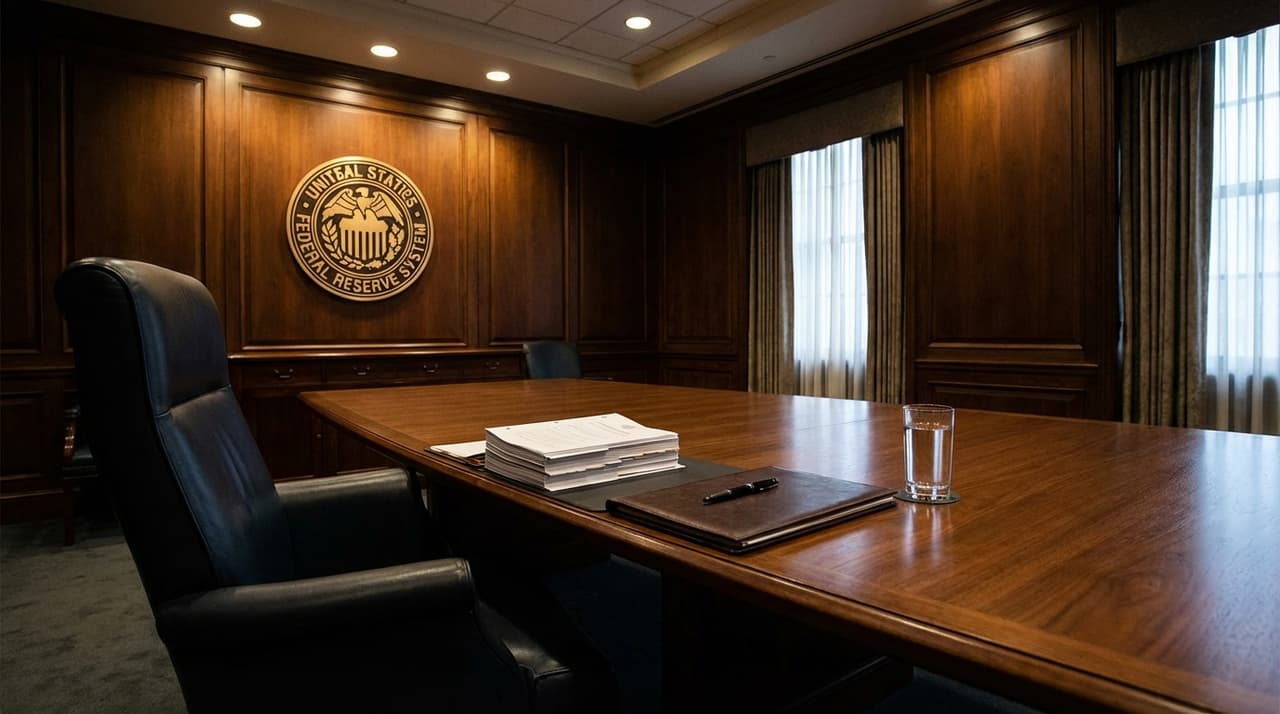
- Kevin Hassett emerges as leading candidate for Federal Reserve chair, with prediction markets pricing him at ~86% probability.
- Trump pushes for more aggressive rate-cutting leadership, criticizing current Fed caution.
- Recent appointment of Stephen Miran to Fed Board signals broader effort to reshape monetary policy direction.
Kevin Hassett, the former Trump White House economic adviser now heading the National Economic Council, has become the clear front-runner to succeed Jerome Powell as Federal Reserve chair when Powell's term ends in May 2026. According to people familiar with the matter, Trump has been privately vetting finalists and plans to announce his choice in early 2026, with Hassett consistently emerging as the preferred candidate.
"The President has lots of good choices for this important position," a White House official said on background, echoing Trump's public comments about wanting leadership that will "lower interest rates more quickly." Efforts to reach Hassett for comment were unsuccessful, but sources close to the process indicate he's been actively preparing for the role.
This leadership transition comes amid Trump's broader push to install a more dovish Fed leadership. The recent appointment of Stephen Miran to the Federal Reserve Board—confirmed by the Senate in a narrow 48-47 vote on September 15, 2025, and sworn in the following day—provides early evidence of this shift. Miran, a Harvard-trained economist who served as a senior advisor at Treasury during the pandemic, has been a vocal advocate for lower interest rates and aligns with Trump's tariff policies.
Market participants are already adjusting their expectations. Prediction market Kalshi recently priced Hassett with an approximately 86% probability of becoming the next Fed chair, far ahead of other potential candidates including Christopher Waller, Michelle Bowman, Kevin Warsh, and Rick Rieder. This reflects growing consensus among traders that Trump wants a chair who will prioritize growth over inflation concerns.
Without a more aggressive rate-cutting approach, Trump has argued, the economic recovery could stall. The President has repeatedly criticized Powell as too cautious, creating tension between the White House and the traditionally independent central bank. This pressure has intensified discussions about Fed independence, with some economists warning about the risks of politicized monetary policy.
Meanwhile, the White House continues to navigate litigation over Trump's attempted dismissal of Fed Governor Lisa Cook, highlighting ongoing tensions. Miran's appointment to complete Adriana Kugler's term through January 31, 2026, represents one piece of this broader reshaping effort, but the chair position remains the ultimate prize in Trump's push for a more accommodative Fed.
As the early-2026 announcement date approaches, markets will be watching for any signals from Hassett or other finalists about their preferred pace and scale of rate cuts. The narrow Senate confirmation vote for Miran suggests future appointments could face similar partisan battles, particularly if Trump nominates candidates perceived as prioritizing political alignment over traditional central banking expertise.
Correction: An earlier version of this article incorrectly stated the timing of Miran's Senate confirmation vote. It occurred on September 15, 2025, not September 16.