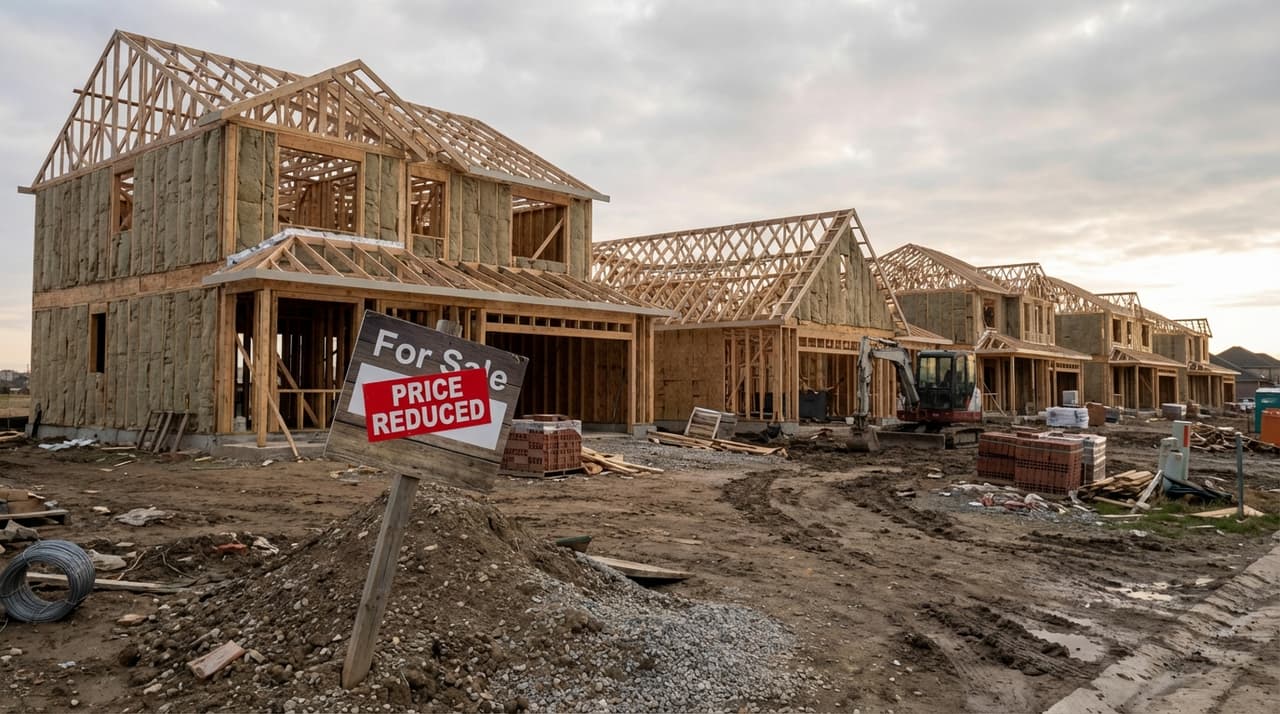
- The NAHB/Wells Fargo Housing Market Index for January 2026 registered at 40, falling short of analyst expectations and marking the 21st consecutive month below the 50 breakeven point.
- Builder sentiment remains constrained by aggressive discounting, with 40% of builders cutting prices in December and 67% offering sales incentives, the highest share in the post-COVID period.
- Regional disparities persist, with the West at 34 and the Northeast at 47, while future sales expectations above 50 offer a glimmer of hope amid economic and tariff uncertainty.
A Slight Setback in Builder Optimism
Homebuilder confidence took a modest step back in January, with the closely watched NAHB/Wells Fargo Housing Market Index coming in at 40, according to data released this week. This reading missed analyst projections and represents a decline from December's 39, underscoring the fragile state of the housing market as it enters 2026. The index has now lingered below the 50 threshold—where more builders view conditions as good than poor—for 21 straight months, a streak that highlights the depth of the challenges facing the sector.
Builders are grappling with a perfect storm of affordability constraints and stubbornly high construction costs. "We're seeing buyers remain on the sidelines due to pricing," said one industry executive familiar with the matter, who spoke on condition of anonymity. Efforts to stimulate demand through discounts have become widespread, with average price cuts of 5% reported in December, yet these measures have done little to lift overall sentiment. The persistent supply-side headwinds, including elevated regulatory costs and material prices, continue to squeeze margins, making it difficult for builders to compete effectively.
Mixed Signals in Market Components
Digging into the index components reveals a nuanced picture. Current sales conditions remain weak, reflecting tepid immediate demand, while prospective buyer traffic languishes at very low levels, indicating limited showroom activity. However, sales expectations for the next six months have held above the 50 breakeven point for three consecutive months, suggesting builders anticipate some improvement ahead. This divergence points to a market in transition, where short-term pain may give way to cautious optimism if conditions align.
Regional performance adds another layer of complexity. In December, three-month moving averages showed the Northeast at 47, the closest to breakeven, while the West struggled at 34. This disparity suggests that coastal and colder-climate markets are faring relatively better than Sun Belt regions, which have experienced notable price depreciation. Analysts note that these variations reflect local economic factors and inventory levels, with some areas facing more intense competition from existing home sales.
The Affordability Crisis and Recovery Prospects
At the heart of the market's woes is an affordability crisis that has kept many potential buyers out of the new construction segment. Year-over-year price growth slowed to just 1.0% in November 2025, hitting a 14-year low, yet this has not been enough to restore balance. "Without more significant price adjustments, demand may remain subdued," one analyst observed, pointing to constrained housing supply in many regions as a limiting factor. Builders have responded with incentives, but the effectiveness of these strategies is being tested as inventory levels remain elevated.
Looking ahead, the recent easing of monetary policy offers a potential lifeline. Lower mortgage rates could unleash pent-up demand, particularly during the spring buying season, which serves as a critical test for the market. However, economic and tariff uncertainty persists, clouding the outlook. Industry sources indicate that builders are closely monitoring rate trends and inventory availability, with some expressing concern that recovery may be slower than hoped if these headwinds do not abate. The coming months will reveal whether the modest optimism in future sales expectations translates into tangible improvements on the ground.
Correction: An earlier version of this article misstated the January index reading; it has been updated to reflect the correct figure of 40.