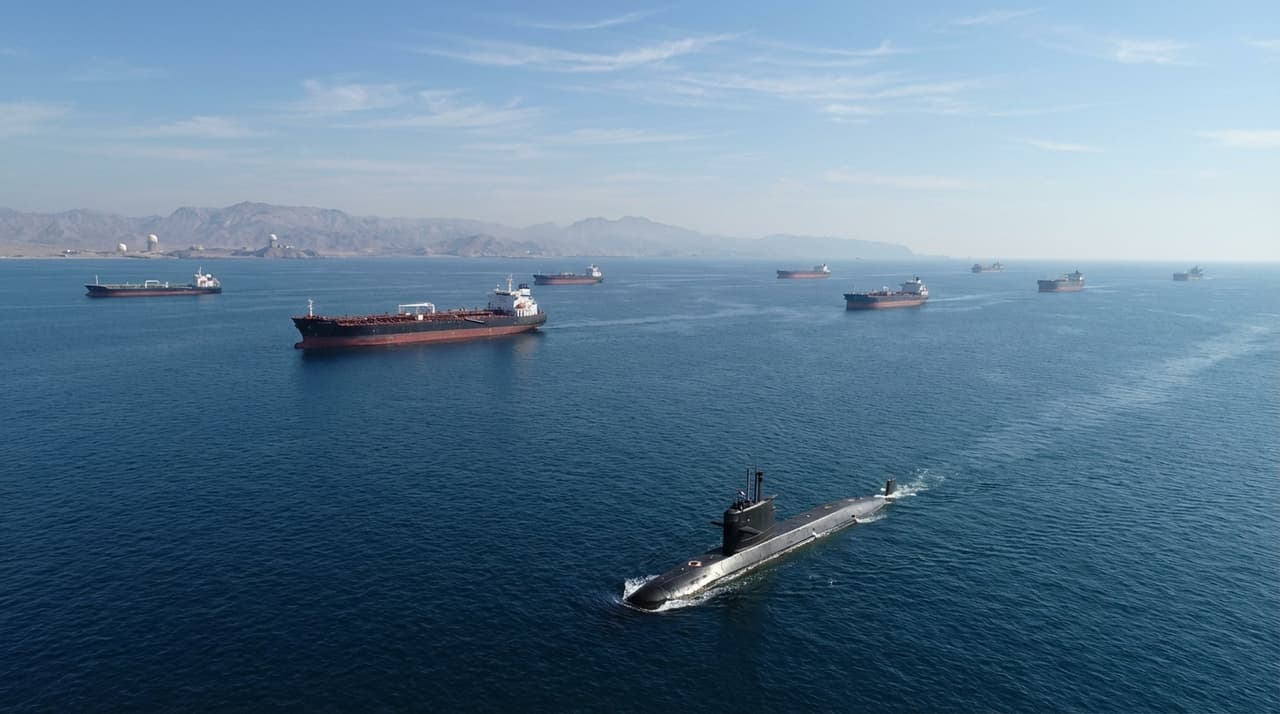
- Iran's IRGC naval forces will conduct live-fire exercises in the Strait of Hormuz from January 27-29, 2026, issuing a Notice to Airmen (NOTAM) restricting airspace up to 25,000 feet within a five-nautical-mile radius.
- The drills come amid escalating US-Iran tensions following US military deployments, including an aircraft carrier and warships, to the region, with Iran describing these moves as a naval siege.
- The Strait handles one-third of global seaborne crude oil and significant LNG, raising concerns over potential disruptions that could trigger a global energy crisis and market shocks.
Heightened Military Posturing
Iran's Islamic Revolutionary Guard Corps (IRGC) naval forces have announced live-fire exercises scheduled for next week in the Strait of Hormuz, a critical chokepoint for global oil shipments. According to people familiar with the matter, the drills will run from January 27 to 29, with a NOTAM issued to restrict airspace up to 25,000 feet within a five-nautical-mile radius. This move follows recent US military deployments to the region, including the dispatch of the USS Abraham Lincoln aircraft carrier and additional warships, which Iranian officials have characterized as a naval siege.
IRGC commanders, including Mohammad Akbarzadeh and Alireza Tangsiri, have stated that Iran holds "complete control" over the Strait's land, underwater, and airspace through intelligent surveillance systems. They emphasized capabilities to deny passage to vessels and unveiled underwater missile tunnels housing hundreds of long-range cruise missiles, such as the Qader 380 L with a range exceeding 1,000 kilometers. Efforts to reinforce Iran's southern coast with IRGC units, Basij forces, anti-ship missiles, and Ghadir-class submarines, particularly around Qeshm Island and Bandar Abbas, are ongoing to counter potential US landings.
Economic and Geopolitical Implications
The Strait of Hormuz is a linchpin for global energy markets, handling approximately 21 million barrels of crude oil daily—about one-third of global seaborne crude—and a significant portion of liquefied natural gas (LNG). Any disruptions here could send shockwaves through oil prices and exacerbate geopolitical fears, according to regional analysts. Iran has warned that it does not seek to harm the global economy but would respond decisively if attacked, potentially closing the Strait. This stance echoes past tensions, such as the 2016 detention of US sailors and threats to mine the waterway during US sanctions.
Amid fears of a US strike, Iranian officials have emphasized that they seek no war but are fully prepared, vowing no retreat and treating neighbors as hostile if their territory aids attacks. Saudi Arabia and the UAE have assured they will not allow this, according to sources. Global shipping, airlines, and energy stakeholders are already facing risks from the restricted airspace, with NOTAM alerts prompting adjustments for pilots. The US naval buildup near Bandar Abbas continues without full arrival, while Iran has reinforced its surveillance in the Hormuz area.
Outlook and Regional Dynamics
In the short term, the exercises through January 29 could spike oil prices and cause flight disruptions, with Iran promising "swift and comprehensive" responses to any US action, treating it as all-out war. Long-term risks include the potential for Strait closure or broader conflict, though experts view Iran's posture primarily as deterrence. Calls for regional dialogue excluding foreign forces have emerged, but without a deal, tensions could escalate further. IRGC media has simulated targeting US assets, recalling past incidents, and conservative outlets predict Iran might seize the Strait in response to perceived threats.
Attempts to reach out for comments from US officials were unsuccessful at the time of reporting. The situation remains fluid, with ongoing negotiations and military posturing shaping the immediate future. This article was updated to clarify the dates of the exercises and the specific NOTAM details.