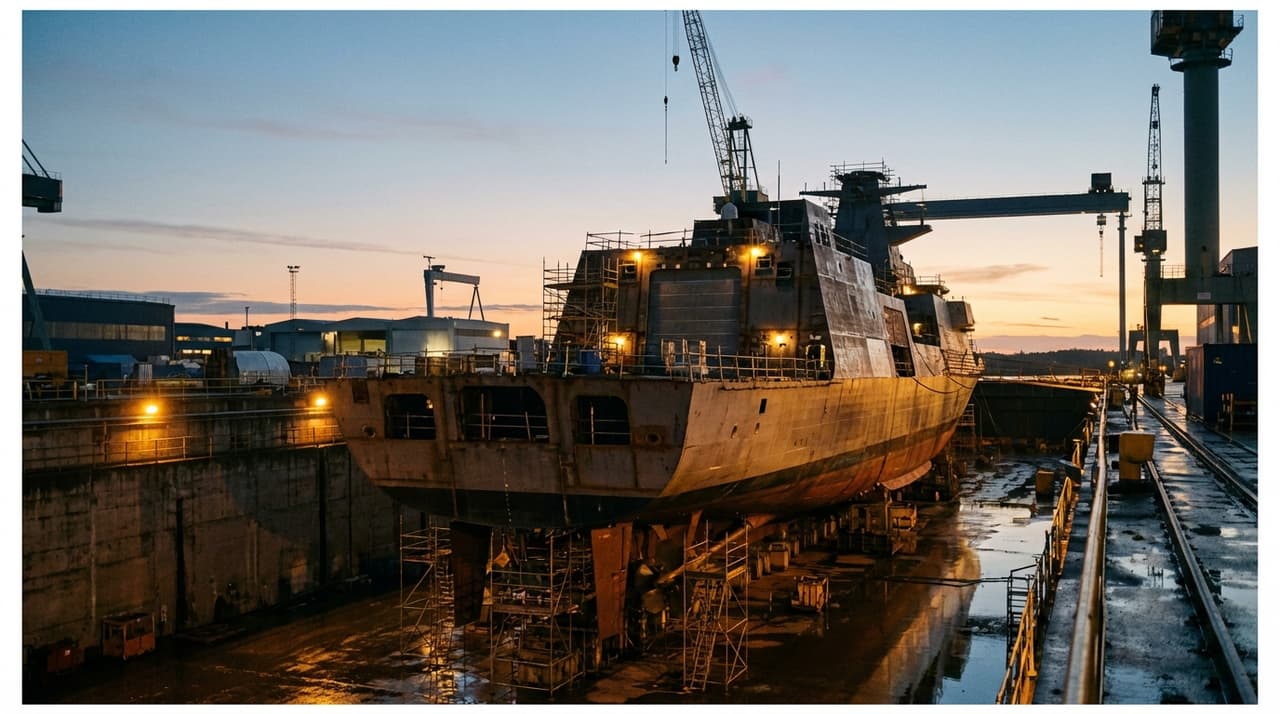
- The U.S. Navy announces a new FF(X) frigate class to replace the troubled Constellation program, aiming for faster, cost-effective production.
- Huntington Ingalls Industries (HII) selected to build the frigates based on a proven Coast Guard design, with first launch expected in 2028.
- Political backlash emerges from Wisconsin lawmakers over job losses, as the cancellation highlights broader shipbuilding challenges.
A Strategic Pivot in Naval Procurement
In a move that underscores the Navy's push for agility and reduced risk, the service unveiled plans on December 19, 2025, for a new FF(X) class of smaller, more adaptable surface combatant ships. This announcement marks a decisive shift away from the Constellation-class frigate program, which had been under construction at Fincantieri (FCT.MI) Marinette Marine in Wisconsin since 2020 but faced persistent delays and cost overruns. According to Navy officials, the decision leverages an already-proven design from Huntington Ingalls Industries' Ingalls Shipbuilding division, based on the Legend-class National Security Cutter used by the U.S. Coast Guard. Secretary of the Navy John Phelan emphasized in a video statement that this approach will "deliver at speed and scale," targeting a first hull launch by 2028 to address growing concerns over China's rapid warship production.
Political Fallout and Economic Ripples
The cancellation of the Constellation program, which saw its last four ships terminated on November 25, 2025, has ignited fierce political debate. Senator Tammy Baldwin (D-Wisconsin), a longtime champion of the program, criticized the Trump administration for "turning its back on this program and pulling the rug out from under thousands of skilled workers." Baldwin, who secured over $1 billion in funding for the Constellation-class since 2020, argued that using Navy funds allocated for that program for the new FF(X) without congressional approval would be illegal. She has called for redirecting resources to other "Made in Wisconsin ships" and urged the administration to ensure some FF(X) frigates are built in Wisconsin to preserve local jobs. Efforts to reach the White House for comment on these allegations were unsuccessful as of press time.
Broader Implications for U.S. Shipbuilding
This shift aligns with the Trump administration's "Golden Fleet" concept, which prioritizes a larger number of smaller, more lethal vessels over fewer expensive ones. Navy sources indicate that the FF(X) will feature modular payloads and command capabilities for unmanned systems, enhancing operational flexibility. However, the move also highlights chronic issues in American shipyards documented in a March 2025 Government Accountability Office report, which noted vessels often arriving years behind schedule with functional deficiencies. By adopting a lead yard approach with HII, followed by competitive multi-yard construction, the Navy aims to mirror the success of the Arleigh Burke-class destroyer program and reduce dependence on foreign supply chains. Industry insiders suggest this could streamline production, but uncertainty lingers for Wisconsin's workforce, with senators from the Great Lakes region advocating for "Maritime Prosperity Zones" to sustain shipbuilding activity.
Correction: An earlier version misstated the date of the Constellation program cancellation; it was November 25, 2025, not December.