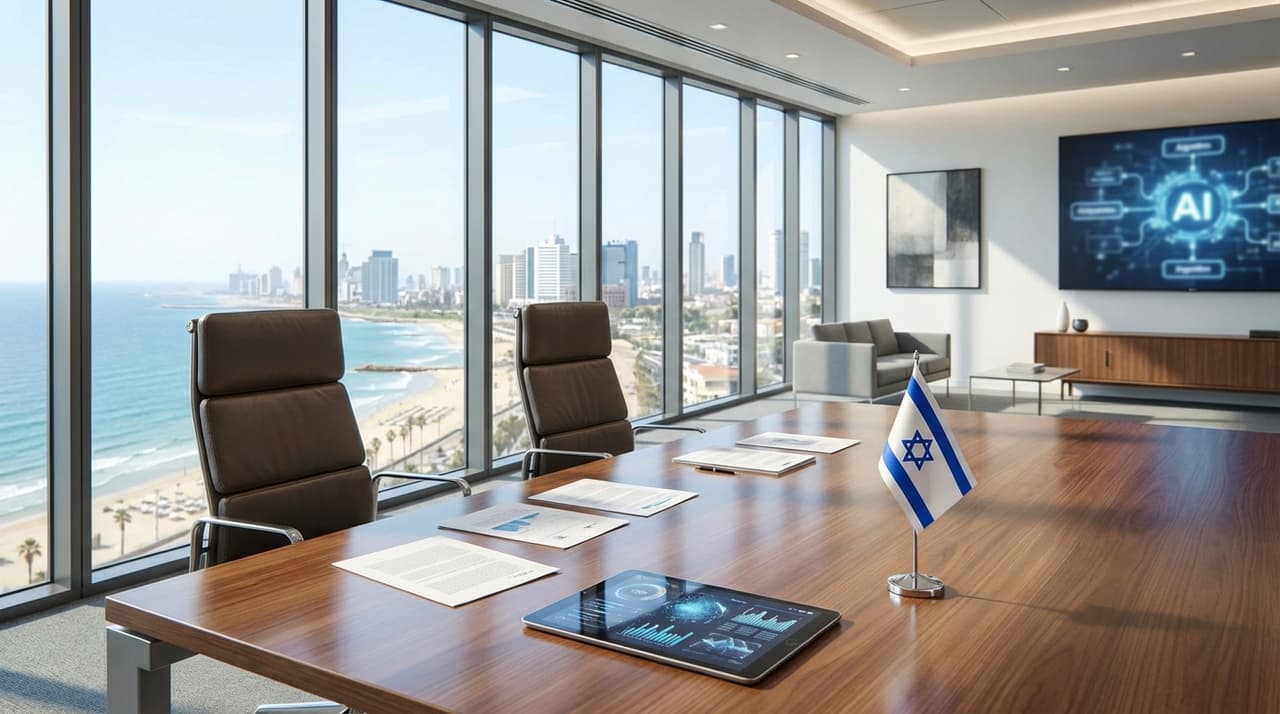
- Israeli Prime Minister Benjamin Netanyahu secured U.S.-Israel cooperation on AI with Elon Musk on February 3, 2025, aiming to position Israel as a leader in AI technologies.
- Reports link Musk's Israel visits to Tesla (TSLA)'s potential partnership or acquisition of Cortica, a Tel Aviv-based AI firm specializing in vision tech for autonomous driving compatible with Tesla's systems.
- The pact could accelerate Tesla's Full Self-Driving (FSD) rollout and boost Israel's tech sector, with Cortica having raised $70 million and holding 200 patents.
In a move that could reshape the global AI and autonomous vehicle landscape, Israeli Prime Minister Benjamin Netanyahu met with Elon Musk on February 3, 2025, to formalize U.S.-Israel cooperation on artificial intelligence. According to people familiar with the matter, the discussions centered on integrating Israeli technology into U.S. programs for AI, cybersecurity, and cryptocurrency, with Netanyahu pushing to make Israel a hub for AI innovation. This comes as Tesla, with a market cap exceeding $1 trillion as of late 2025, advances its FSD software to versions 14.1.2 and 14.2, showing human-like driving in "Mad Max" testing by October 2025.
Efforts to deepen this collaboration have focused on Cortica, a Tel Aviv-based AI firm that specializes in vision technology for autonomous driving, which is highly compatible with Tesla's systems. Sources indicate that Musk's visits to Israel are tied to a potential partnership or acquisition, building on historical ties dating back to 2018 when discussions first emerged for Tesla Autopilot 2.0. Without a deal, Tesla might face delays in refining its FSD capabilities, though the company has been rolling out FSD insurance offers and pushing for coast-to-coast autonomous plans. A Tesla spokesperson did not immediately respond to a request for comment, while Cortica executives have remained tight-lipped about ongoing negotiations.
The political context adds another layer, with Netanyahu seeking a full U.S.-Israel AI partnership through Musk, who serves as DOGE head, and David Sacks, the White House AI and Crypto czar. This aligns with broader international trends, such as the UAE President's recent meetings with Musk on AI cooperation, and comes amid concerns from some U.S. Jewish groups over Musk's political stances. Market reactions have been mixed, with Tesla shares facing pressure from Musk's robot army concerns but buoyed by FSD progress; analysts note that a Tesla-Cortica deal could enhance short-term FSD rollouts and solidify Israel's role as an AI hub in the long term.
In the background, Musk's xAI acquired X in March 2025 at a $33 billion valuation to fuse data and models for AI like Grok, though experts debate whether superintelligence will emerge by 2026. The U.S.-Israel pact positions Israel to access hundreds of billions in U.S. AI investment, potentially accelerating job shifts in the auto and AI sectors. As one industry insider put it, "This is about regulatory stability and tech convergence—Israel's steady growth trajectory in AI is now getting a major boost." The focus remains on current developments, with filing deadlines and specific financial agreements under scrutiny, and further updates are expected as talks progress.