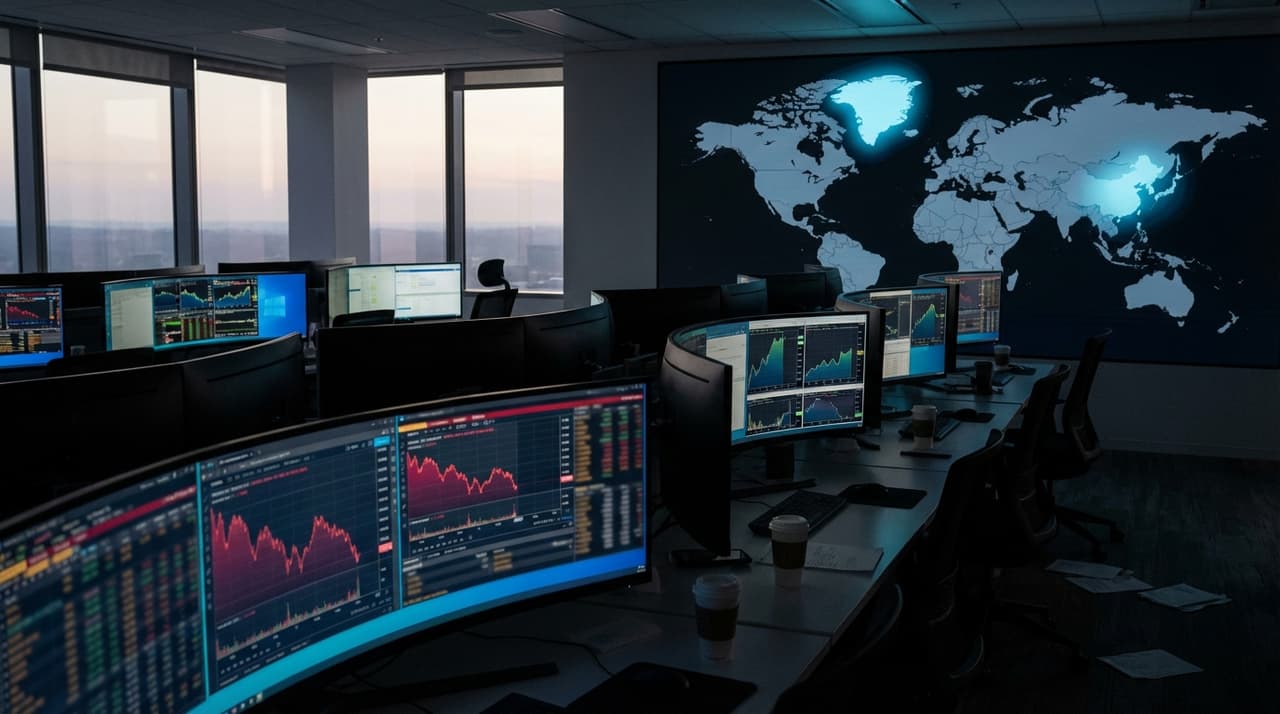
- NVIDIA (NVDA) shares fell approximately 3% in premarket trading on January 20, 2026, driven by escalating U.S.-Greenland geopolitical risks and ongoing delays in H200 chip sales to China.
- The stock decline marks its worst performance since December 17, 2025, despite NVIDIA's dominant position in AI accelerators and recent record quarterly revenue of $57 billion.
- Analysts maintain a "Strong Buy" rating with a mean price target of $255, suggesting significant upside potential, but short-term volatility is expected due to external pressures.
NVIDIA's premarket slide on January 20, 2026, reflects mounting investor concerns over geopolitical instability and regulatory hurdles in key markets. According to people familiar with the matter, heightened tensions between the U.S. and Greenland—where former President Trump is pushing for control of mineral-rich territory amid Arctic troop buildups—have introduced fresh uncertainty into global tech supply chains. Simultaneously, H200 chip sales to China remain "stuck on the China side," as one source described it, due to mixed signals in U.S.-China trade relations.
Efforts to navigate these challenges have hit a snag, with the company's shares trading around $182 in premarket activity, down from a 52-week high of $212.19. Without a resolution, the geopolitical friction could pressure NVIDIA's growth trajectory, even as demand for AI computing solutions surges. Retail sentiment on platforms like Stocktwits remains divided, with some users viewing the dip as a buying opportunity while others express panic over the stock's vulnerability.
In a brief statement, NVIDIA declined to comment on the specific geopolitical impacts but reiterated its commitment to complying with global trade regulations. Attempts to reach Chinese officials for clarification on the H200 delays were unsuccessful. The company's Q4 guidance, projecting revenue of $65 billion (±2%) with margins nearing 75%, underscores its robust fundamentals, but analysts caution that external factors could temper near-term performance.
Parallels to past market cycles are emerging, where high valuations have preceded volatility, though NVIDIA's role in the AI boom—with Moody's forecasting $3 trillion in investments over five years—suggests resilience. The semiconductor sector saw gains last week following TSMC's strong results, but NVIDIA's drop highlights the sector's sensitivity to macro risks. As one trader noted, "This is the cheapest the stock has been in over a year amid all the AI hype, but the geopolitical overhang is real."
Looking ahead, short-term volatility is likely to persist, but long-term prospects remain strong, with Blackwell chips sold out and AI demand outstripping supply. Analysts point to a potential 40% upside based on current targets, though warnings of a 2026 crash per historical patterns linger. For now, investors are weighing $3 trillion in projected data center capex against the immediate headwinds, making NVIDIA a focal point in the ongoing tech narrative.