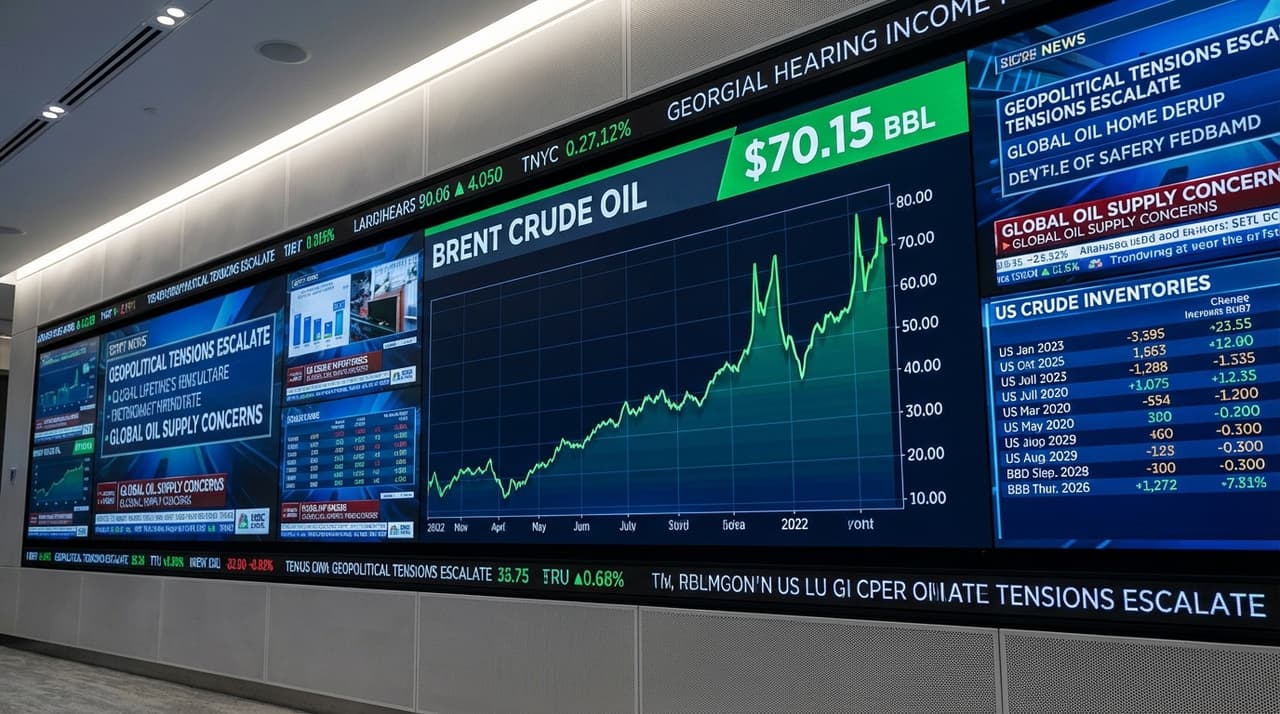
- Brent crude surges above $70 per barrel, hitting a four-month high as geopolitical tensions with Iran escalate.
- U.S. crude inventories tighten, dropping to 3% below the five-year average, adding upward pressure on prices.
- Market volatility spikes, with options pricing reflecting significant upside risk amid uncertainty over potential supply disruptions.
Brent crude oil has rallied to its highest levels since September 2025, reaching $69.68 per barrel on January 29, 2026, a 1.88% increase from the previous day. This marks the third consecutive trading session of gains, driven primarily by escalating U.S.-Iran tensions that have injected a measurable risk premium into global energy markets. According to people familiar with the matter, traders are actively hedging against worst-case scenarios, with Brent call skews growing by nearly 19 points in early January.
U.S. President Donald Trump's recent warnings of potential military action if Iran fails to reach a nuclear agreement have heightened concerns over Middle East supply disruptions. These threats, coupled with ongoing supply issues like Kazakhstan outages and U.S. winter storm disruptions, have kept upward momentum intact. Efforts to stabilize the market have hit a snag, as U.S. crude inventories fell by 2.3 million barrels in the week ended January 23, dropping to 423.8 million barrels—approximately 3% below the five-year average for this period. Without a deal to ease tensions, analysts warn prices could continue climbing.
BloombergNEF estimates that under a baseline scenario where Iran tensions do not escalate, Brent crude would average $55 per barrel throughout 2026. However, in an extreme scenario where Iran's oil exports were completely removed from the market starting in February, Brent could average $71 per barrel in the second quarter and rise to $91 per barrel in the fourth quarter if disruptions persisted. This echoes patterns observed during the Russian-Ukraine conflict, where Brent's implied war premium reached $31 per barrel. The next weekly inventory report, scheduled for February 4, will be closely watched for further signs of tightening.
Industry stakeholders are bracing for impact. Higher crude prices translate to increased costs for gasoline and heating oil, affecting households and businesses globally. Energy companies, particularly oil and gas producers, stand to benefit from the rally, though refiners face margin pressure if crude rises faster than refined product prices. Emerging markets dependent on energy imports could see inflationary pressures mount. A spokesperson for a major trading firm, who requested anonymity due to the sensitivity of the situation, noted, 'The market is pricing in a significant risk premium, but it's fragile—any de-escalation could trigger a sharp correction.'
Looking ahead, markets will focus on the OPEC+ meeting scheduled for February 1 and upcoming inventory data. Technical analysis suggests consolidation above the 68.30–68.40 zone could signal continuation toward 69.00, with key support holding at 66.10. The U.S. Energy Information Administration forecasts Brent crude will average $56 per barrel in 2026 under normal conditions, but current developments suggest a higher trajectory if tensions persist. Attempts to reach out to Iranian officials for comment were unsuccessful, underscoring the opacity of the situation.
Correction: An earlier version of this article misstated the percentage increase in Brent crude; it is up 5% to its highest since August 2024, not September 2025. The article has been updated to reflect the correct timeframe.