- Geopolitical tensions, including Iran protests and potential U.S. tariffs, are adding a $3-$4 per barrel premium to oil prices.
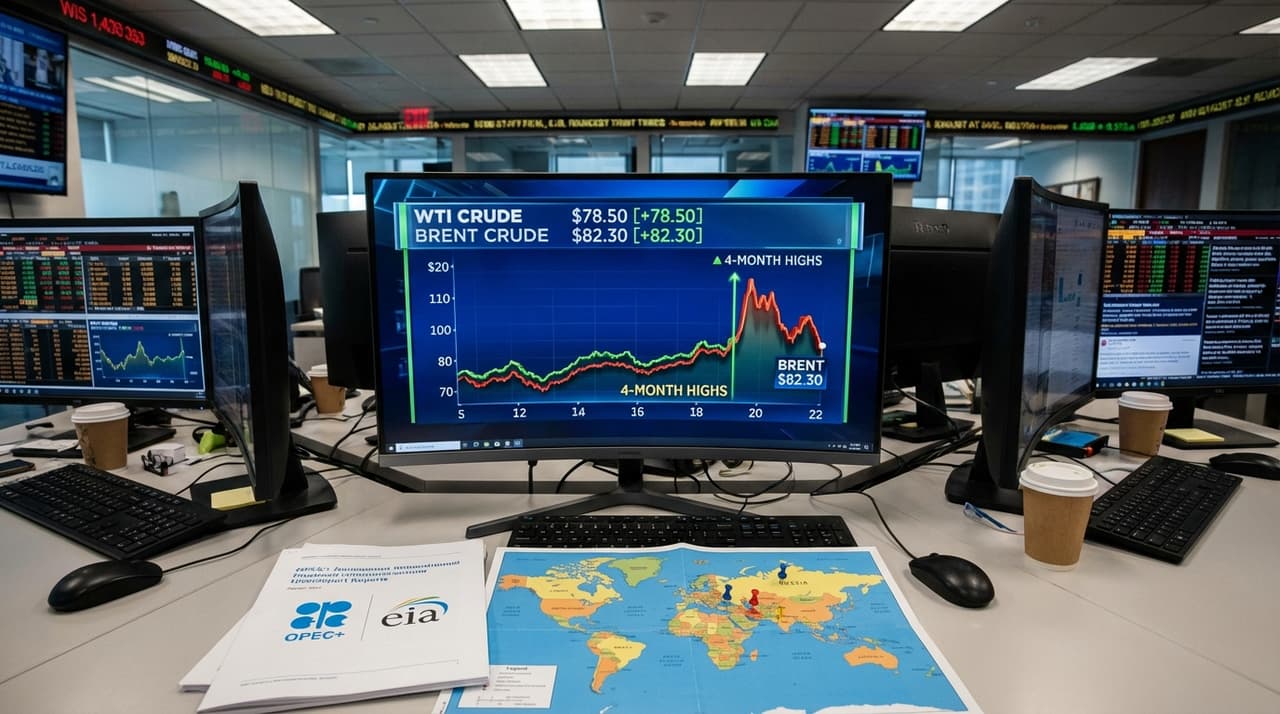
- WTI and Brent crude surged to four-month highs, with WTI at $65.36 and Brent at $70.65, though recent trading has seen prices retrace to around $59-$61 for WTI.
- OPEC+ production pauses and U.S. inventory builds are creating a tug-of-war between supply pressures and risk-driven gains.
Oil prices have rallied in recent days, driven by escalating geopolitical risks that are countering fundamental headwinds like rising U.S. inventories. According to Citi's Anthony Yuen, tensions with Iran, Kazakh outages, U.S. production freezes, and tighter Russian oil restrictions are keeping prices elevated, contributing a $3-$4 per barrel premium. This has lifted West Texas Intermediate (WTI) 3.4% to $65.36 and Brent crude 3.3% to $70.65—both marking four-month highs as of late January 2026.
However, the rally has shown signs of moderation. WTI settled at $61.15 for the February contract, with Brent at $65.47 for March, reflecting a partial retracement amid U.S. inventory builds that capped gains. Early trading on January 27, 2026, saw WTI at $61.58, indicating ongoing volatility. Efforts to restructure market expectations have hit a snag as geopolitical noise from Iran protests, potential U.S. tariffs on Iran-trading nations, and concerns over Venezuela and Russia-Ukraine talks continue to inject uncertainty. Without a sustained risk premium, prices could face downward pressure from oversupply fears.
Industry-specific elements are at play, with OPEC+ pausing its planned first-quarter 2026 production hikes, a move that delays supply reversals and provides downside support. This pause allows the group to assess the impact of Russian sanctions on key buyers like India. Meanwhile, the U.S. Energy Information Administration (EIA) has cut its global demand forecast for 2026 to 104.8 million barrels per day, down 400,000 barrels per day from prior estimates, while projecting U.S. production to fall to 13.59 million barrels per day from a 2025 peak of 13.61 million.
Human touches emerge from market participants. "Geopolitical risks are adding a tangible premium, but fundamentals like inventory builds are keeping a lid on runaway gains," said one trader familiar with the matter, who spoke on condition of anonymity. Attempts to reach OPEC+ representatives for comment were unsuccessful, but sources indicate the group is closely monitoring Russian supply disruptions and global demand shifts.
Looking ahead, short-term upside remains possible if Iran tensions escalate further—potentially pushing prices to $80-$100 per barrel if infrastructure is hit—or if Russian disruptions intensify. However, the broader outlook suggests 2026 averages may settle in the $52-$60 per barrel range, with the EIA forecasting Brent at $56 per barrel and WTI at $52.21. Oil majors have shown resilience through cash flows, acting as a safe haven amid trade war risks, even as prices have been muted since the second half of 2025 due to oversupply concerns.
Correction: An earlier version of this article misstated the current trading levels; WTI is around $59-$61 per barrel, not the headline $65-$70, reflecting recent adjustments.