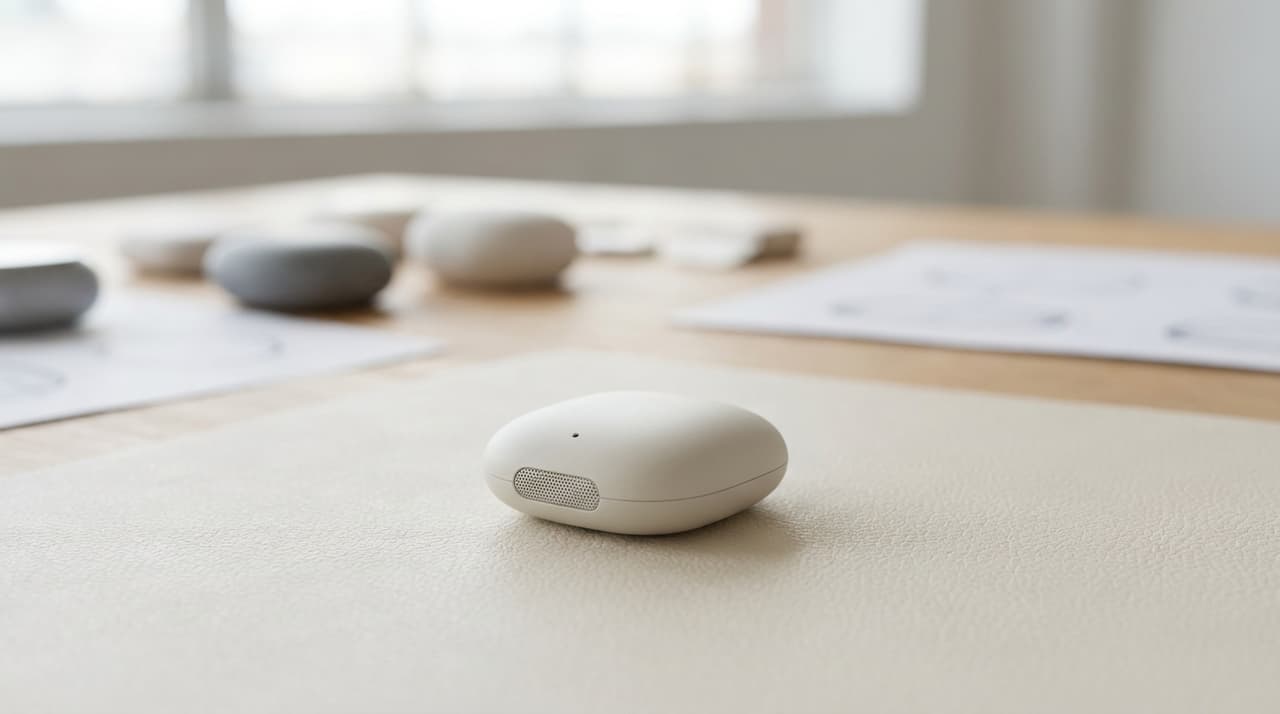
- OpenAI is on track to debut its first consumer hardware device in late 2026, a screenless, voice-first device designed by Jony Ive.
- Critical to the launch are upgraded ChatGPT audio models expected in early 2026, enabling more natural, interruptible conversations.
- The move represents OpenAI's strategic push to control AI distribution paths, with a family of audio-focused products in development.
OpenAI is targeting a late 2026 launch for its first consumer hardware device, a screenless, voice-first product designed by former Apple Chief Design Officer Jony Ive, according to policy chief Chris Lehane. The company has stated it is "on track" for this timeline, though specific sales dates remain unconfirmed, according to people familiar with the matter.
The device, described as roughly the size of an iPod Shuffle and light enough to be worn, will operate without a display screen or touch interface, relying instead on audio interaction through an advanced conversational AI model. It is being manufactured by Foxconn, and its development follows OpenAI's acquisition of Ive's hardware company, IO, for approximately $6.5 billion in 2025—the largest acquisition in OpenAI's history—which brought 55 hardware, manufacturing, and industrial design experts to the team.
A critical component of the device launch is upgraded ChatGPT audio models expected in early 2026. The new audio architecture will feature more natural and emotive-sounding responses with greater accuracy and depth, the ability to speak while a user is talking, and better interruption handling to simulate real conversation. These improvements directly address current limitations where ChatGPT's voice responses lag behind text-based interactions in accuracy and speed, according to internal testing data reviewed by sources.
OpenAI has discussed creating glasses and smart speakers without displays as part of a broader family of audio-focused products under development. A separate leak references earbuds codenamed "Sweet Pea" with high-performance AI computing chips, potentially reaching mass production by the end of 2028, though OpenAI declined to comment on unannounced products when reached for clarification.
The move represents OpenAI's strategic push to control AI distribution and access paths before competitors establish dominance in the hardware space. The screenless design deliberately bypasses traditional graphical interfaces to achieve what insiders describe as "the most natural and seamless human-machine collaboration with the minimum physical presence." OpenAI frames this hardware strategy as comparable to Apple's iPhone disruption—a fundamental shift in how users access AI daily.
Efforts to finalize the device's specifications have progressed steadily, with recent focus on battery life and audio quality benchmarks. However, without a finalized production timeline, some analysts caution that supply chain delays could impact the late 2026 target. OpenAI has not disclosed pricing details, but sources suggest it will position the device as a premium offering in the emerging AI hardware market.
Correction: An earlier version of this article misstated the acquisition year of IO; it was 2025, not 2024.