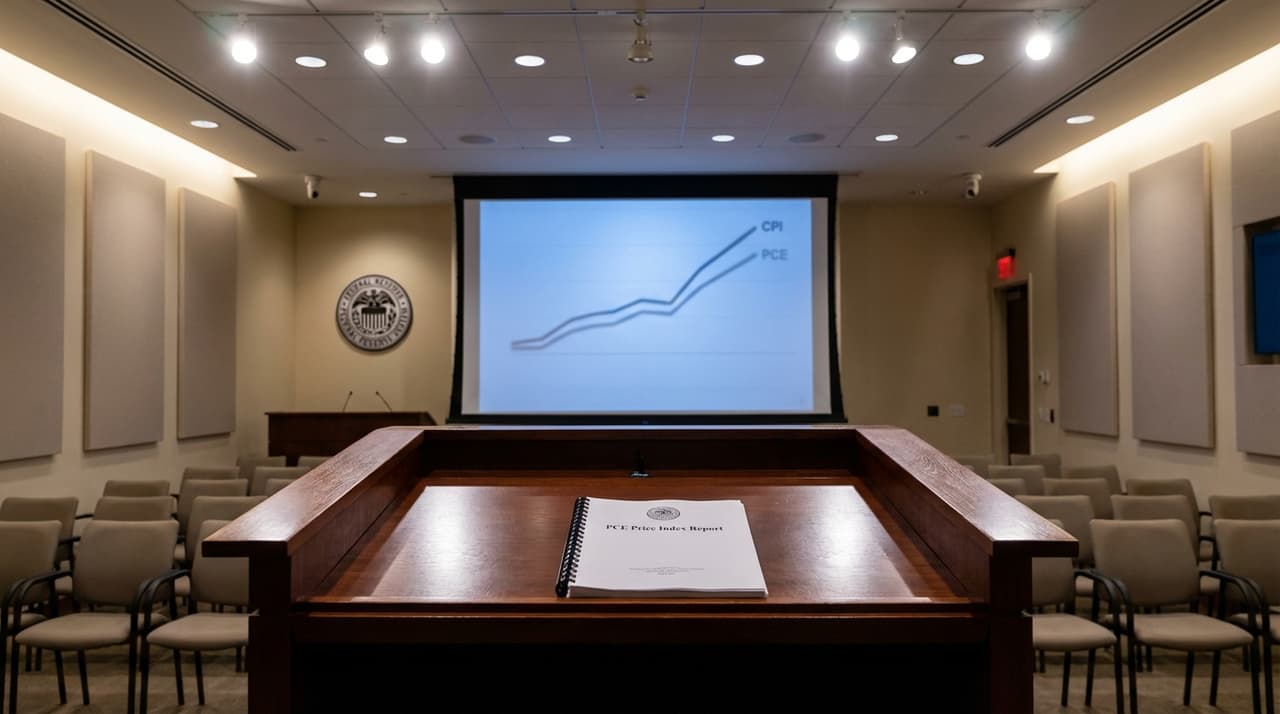
- Federal Reserve Chair Jerome Powell emphasizes that inflation measures like CPI and household surveys may be skewed by technical factors, including tariff effects and imputed prices.
- The Fed continues to prioritize the PCE price index for policy decisions, viewing it as less distorted, even as core PCE remains elevated at 2.6% in mid-2025.
- Elevated consumer inflation expectations persist above 3%, but Powell distinguishes these from longer-term anchored expectations, resisting political pressure for aggressive rate cuts.
In mid-2025, Federal Reserve Chair Jerome Powell has repeatedly highlighted the limitations of widely watched inflation indicators, noting that both the Consumer Price Index (CPI) and household surveys can be distorted by technical and structural factors. This stance comes as the Fed holds the federal funds rate steady in a 4.25–4.5% range, citing moderating inflation and slowing growth, with financial markets pricing in only modest easing for the year ahead.
Powell pointed to tariff pass-through effects from recent trade policies, which have temporarily inflated CPI but may not reflect underlying demand pressures. He also mentioned imputed prices and non-market services in the PCE index, such as owner-equivalent rent, which "don't really tell us much about ... tightness in the economy," according to people familiar with the matter. In June 2025, during a press conference, Powell acknowledged that near-term inflation expectations have risen but stressed that longer-term measures remain consistent with the Fed's 2% goal, a view supported by economists at the Cleveland Fed who monitor market-based and survey-based expectations together.
Despite headline PCE inflation at around 2.3% for the 12 months ending May 2025, short-term spikes—like a 3.4% headline and 3.1% core in June—are treated as volatile and not policy-determinative. The Fed's focus on PCE over CPI, which has a smaller housing component, helps explain its less reactive approach to housing-driven inflation spikes, even as research suggests quantitative easing contributed to post-COVID house price appreciation. A recent working paper by Bolhuis and Summers indicates that a cost-of-living index including mortgage and interest payments implies inflation closer to 9% in late 2024, far above official CPI of 2.7%, highlighting a disconnect that fuels public debate over the Fed's credibility.
Businesses cite tariffs and input cost pressures as key drivers, but note softening demand may limit pricing power over time. The Fed's commitment to data-dependent policy faces scrutiny, with critics arguing that downplaying CPI and survey data risks eroding public trust, while supporters say it prevents overreaction to transitory shocks. As the 2025 Survey of Consumer Finances rolls out, results expected in late 2026 could inform future policy, with global parallels seen in central banks like the ECB grappling with similar disconnects between official inflation and household experience.