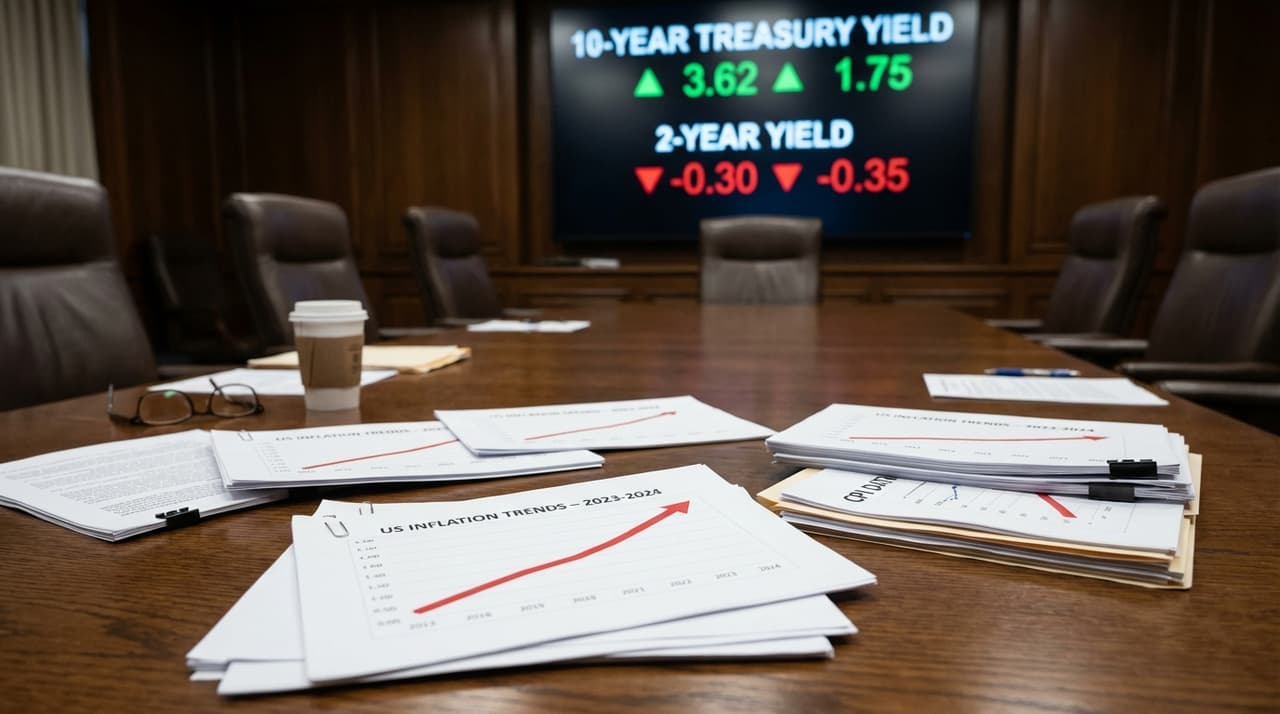
- Federal Reserve Chair Jerome Powell notes recent inflation readings have come in higher than expected, driven by a pickup in goods inflation.
- The Fed cut interest rates for the third consecutive meeting in December 2025, but internal dissent and elevated core inflation above 2% are fueling uncertainty about future policy moves.
- Market reactions include rising bond yields and volatile equities, with financial markets pricing in a slower pace of rate cuts for 2026 amid "higher for longer" inflation concerns.
In recent public remarks, Federal Reserve Chair Jerome Powell highlighted that inflation readings have been higher than anticipated, primarily due to a rebound in goods prices. This development complicates the central bank's monetary policy trajectory, even after it lowered interest rates for the third straight time in December 2025, according to people familiar with the matter. Core inflation measures remain stubbornly above the Fed's 2% target, with goods such as autos, apparel, and some durable goods showing renewed upward pressure—partly attributed to lingering supply chain adjustments and tariff-related pass-through effects.
Efforts to navigate a soft landing have hit a snag as goods inflation picks up, casting doubt on the pace and timing of future rate cuts. Without a clearer disinflation trend, the Fed might be forced to pause or slow its easing cycle, risking a deeper economic slowdown. The December FOMC meeting resulted in a 25-basis-point cut to a 3.5–3.75% target range, but three members dissented—two favoring no cut and one advocating for a more aggressive 50-basis-point reduction—highlighting internal divisions over how to balance inflation risks against a softening labor market.
Cleveland Fed nowcasts for December 2025 show month-over-month CPI inflation at 0.29% and Core CPI at 0.24%, with annual figures at 2.92% and 2.99%, respectively. PCE inflation is nowcast at 2.85% for headline and 2.93% for core in the same period, indicating persistent price pressures. These data points, coupled with the New York Fed's November 2025 Survey of Consumer Expectations showing median one-year inflation expectations steady at 3.2%, suggest households remain wary, particularly regarding medical care, rent, and food costs.
Market trends reflect this uncertainty: bond yields have edged higher in response to stronger inflation data, and the yield curve, while less inverted than in previous years, signals ongoing caution. Equity markets have been volatile, with interest-rate-sensitive sectors like tech and housing under pressure. Analysts now predict only 50–75 basis points of additional rate cuts in 2026, down from earlier forecasts of 100–150 basis points, as the Fed grapples with what some describe as a "stagflation-lite" scenario.
Powell emphasized that regulatory stability and fiscal policy expansions, including continued federal spending and elevated deficits, are complicating disinflation efforts. Tariff-related policies on imports have also contributed to goods price increases, filtering through to consumers. In a brief statement, a Fed spokesperson noted, "We are closely monitoring inflation dynamics and remain data-dependent," though attempts to reach other officials for further comment were unsuccessful.
Looking ahead, the Fed faces a delicate balancing act. If inflation expectations become unanchored, it may need to tighten again, risking a hard landing. Conversely, labor market weakness—with job gains slowing and unemployment rising modestly—could eventually bring inflation down without aggressive hikes. Parallel situations in the euro area and UK, where central banks are cutting rates cautiously amid sticky inflation, underscore the global nature of these challenges. For now, the focus remains on real-time developments, with the next FOMC meeting in early 2026 likely to provide more clarity on the policy path.
Correction: An earlier version of this article misstated the core CPI nowcast figure; it has been updated to reflect the correct 2.99% annual rate for December 2025.