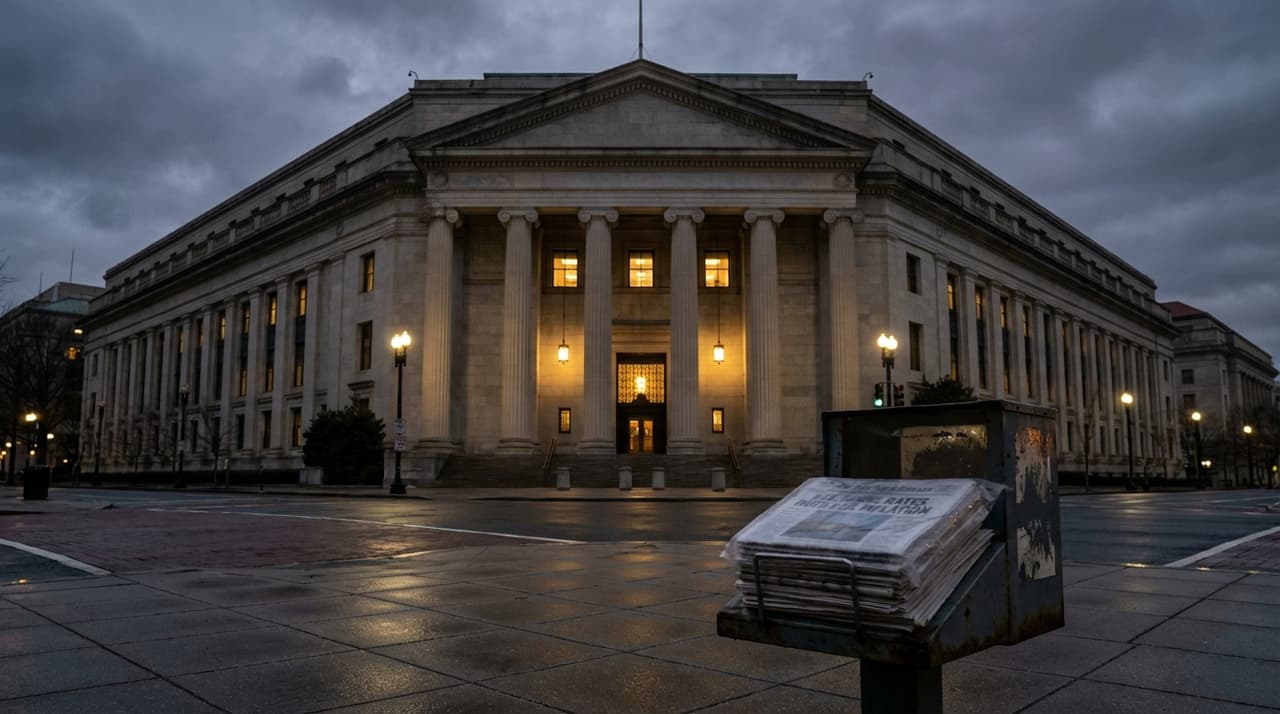
- Federal Reserve Chair Jerome Powell states inflation persists above the 2% target, with core inflation at 2.6-2.7% in December 2025.
- The FOMC holds the federal funds rate steady at 3.5-3.75% in its first 2026 meeting, following three cuts in 2025.
- Political pressures mount as Powell faces DOJ subpoenas over Fed renovations and a term ending in May 2026, with internal FOMC divisions on future rate moves.
Federal Reserve Chair Jerome Powell emphasized on January 28, 2026, that inflation remains somewhat elevated relative to the central bank's 2% goal, a stance that comes after the Federal Open Market Committee decided to keep the federal funds rate unchanged at 3.5-3.75%—about 3.6%—in its first meeting of the year. This pause follows three rate cuts in 2025, as the Fed navigates a delicate balance between solid economic expansion and persistently high price pressures.
Core inflation held at 2.6-2.7% in December 2025, according to recent data, underscoring Powell's cautious tone. In a statement, he noted that economic activity is expanding solidly, but job gains have been low and unemployment is stabilizing, factors that complicate the path toward the Fed's dual mandate of maximum employment and price stability. "We're monitoring labor and inflation pressures closely, along with global developments," Powell said, according to people familiar with the matter. Efforts to temper inflation have hit a snag, with higher borrowing costs continuing to affect mortgages, auto loans, and credit cards, delaying relief for consumers.
The political backdrop adds another layer of complexity. Powell, appointed by former President Trump in 2017, faces a term ending in May 2026, and Trump has yet to name a replacement. Meanwhile, the Justice Department has served the Fed with subpoenas over a $2.5 billion headquarters renovation, a move Powell has called a pretext for not cutting rates faster. In a blunt video rebuttal, he defended the Fed's independence, saying, "This investigation threatens to undermine our policy decisions." Without a clear resolution, uncertainty looms over future rate adjustments.
Internally, the FOMC appears divided on the timing of potential cuts. Economists forecast two reductions in 2026, likely in June or later, contingent on incoming data such as January inflation figures due on February 11, which are forecast to hold at 2.7%. Business inflation expectations fell to 2.0% in January, according to the Atlanta Fed, suggesting some easing in price pressures ahead. However, weaker hiring impacts workers amid the expansion, and larger tax refunds expected this year could boost spending and hiring, further complicating the Fed's calculus.
Looking ahead, the next FOMC meetings are scheduled for March 17-18 and April 28-29, with inflation projected to decline to 2.6% this quarter, 2.2% in 2027, and 2.1% in 2028. Powell reiterated the Fed's commitment to its 2% goal, stating readiness to adjust policy as needed. In related developments, the Supreme Court is set to rule on a case involving Trump's attempt to fire Fed Governor Lisa Cook over alleged mortgage fraud, a move that could set precedents for central bank governance. As of now, the Fed maintains its stance, with rates steady as reflected in the H.15 release on January 27, keeping markets on edge for any shifts in this high-stakes environment.