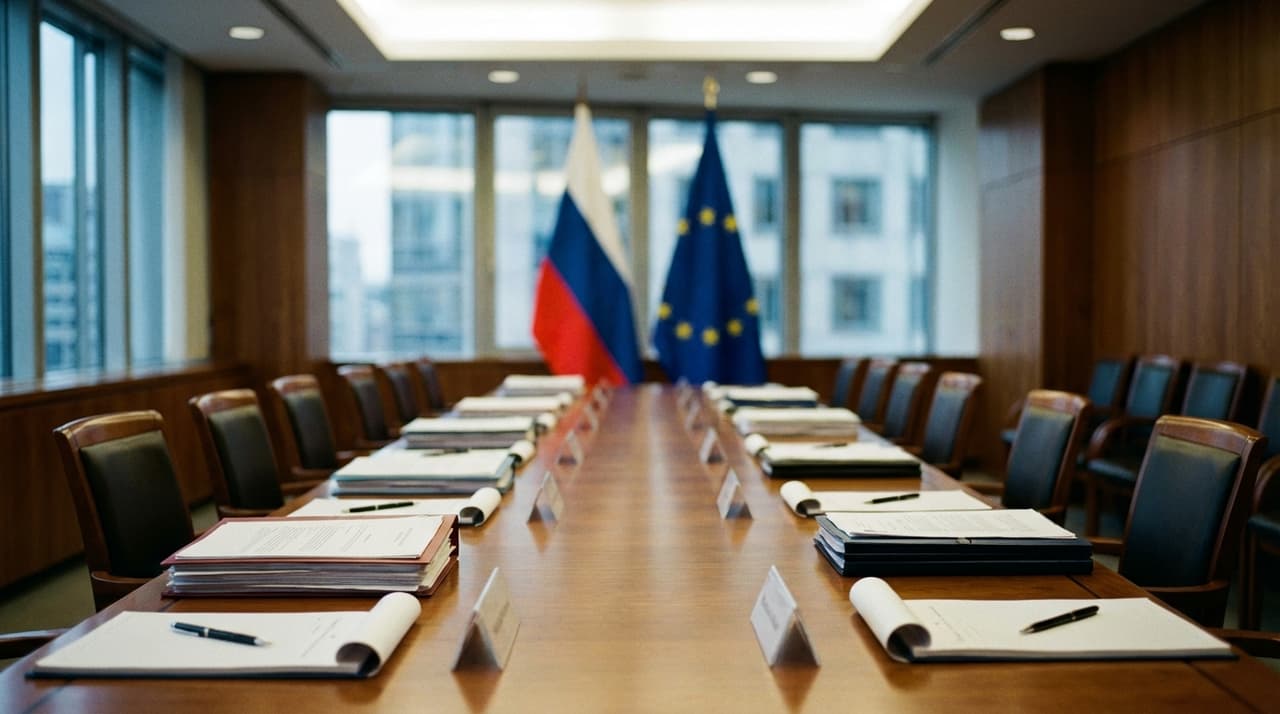
- Russia's Deputy Foreign Minister Sergei Ryabkov states willingness to formalize non-aggression assurance toward EU and NATO in legal document.
- Moscow rejects Western security guarantees for Ukraine, insisting on retaining control over five annexed regions with no compromise on territorial claims.
- Peace negotiations remain deadlocked as Russia dismisses NATO involvement in Ukraine and Western leaders push military support amid ongoing sanctions pressure.
Diplomatic Maneuvers Amid Stalemate
Russian Deputy Foreign Minister Sergei Ryabkov told RIA Novosti on Monday that Russia is "not planning to attack the EU or NATO" and is prepared to put this assurance in a legal document, according to people familiar with the discussions. This overture comes as peace talks over Ukraine have hit another impasse, with Moscow flatly rejecting what it calls "NATO-like" security guarantees proposed by Western nations.
"We are ready to formalize this position legally if there is interest from the other side," Ryabkov said, though he immediately added that Russia "will not accept NATO troops in Ukraine under any guise." The statement appears calculated to test Western unity while maintaining Russia's core demands: retaining control over Crimea, Donetsk, Luhansk, Zaporizhia, and Kherson—regions it illegally annexed in 2022.
Western Pushback and Military Realities
The Council of the European Union affirmed just days earlier, on December 15, that the U.S. and European countries would provide Ukraine with "robust" security guarantees including military support, a European-led multinational force, and U.S.-led ceasefire monitoring as part of any peace deal. Russia rejected these provisions outright, with Ryabkov telling ABC News that Moscow views the war's end as dependent on Ukraine's supporters recognizing Russia's "inevitable" success.
Kremlin spokesperson Dmitry Peskov reiterated on December 16 that Russia seeks to achieve its goals—which analysts assess as decapitating Ukraine's government, destroying its military, and undermining Western unity—while rejecting proposals for a Christmas truce. "Our position remains unchanged," Peskov said, according to transcripts reviewed by this outlet. Efforts to reach Ukrainian officials for immediate comment were unsuccessful.
Economic Pressure and Diplomatic Calculus
Western sanctions on Russia continue, coordinated by the U.S. and Europe to pressure Moscow's economy, alongside ongoing arms flows to Ukraine funded by allies. NATO allies including Norway, Netherlands, Denmark, Lithuania, and Czechia are boosting Ukraine's defense through initiatives like ammunition supplies and industrial investments, sustaining economic pressure on Russia while supporting Ukraine's resilience.
NATO Secretary General Mark Rutte, speaking on December 3, emphasized keeping Ukraine strong during peace talks through weapons, sanctions, and support, dismissing direct reactions to Russian rhetoric while noting progress in Geneva, Miami, and Moscow meetings. "We must maintain our strategic patience," Rutte said at a Brussels briefing.
What Comes Next
Short-term prospects appear bleak. Without Russian concessions on territorial claims, the stalemate will likely persist with continued arms shipments to Ukraine and sanctions pressuring Moscow. No Christmas truce is expected despite proposals from Western leaders like German Chancellor Friedrich Merz. Russia's offer of a legal non-aggression document—while rejecting NATO security guarantees for Ukraine—creates what one European diplomat called "an asymmetrical proposal designed to fracture Western consensus."
Longer-term, analysts assess Russia's "theory of victory" relies on outlasting Western support, but NATO pledges aim to strengthen Ukraine's negotiating position. Experts predict talks may drag if territorial demands hold, potentially escalating if security guarantees proceed without Russia's approval. The coming weeks will test whether Ryabkov's legal assurance offer represents genuine diplomatic movement or merely tactical positioning ahead of winter military operations.
Correction: An earlier version misstated the date of the EU Council statement; it was December 15, not December 14.