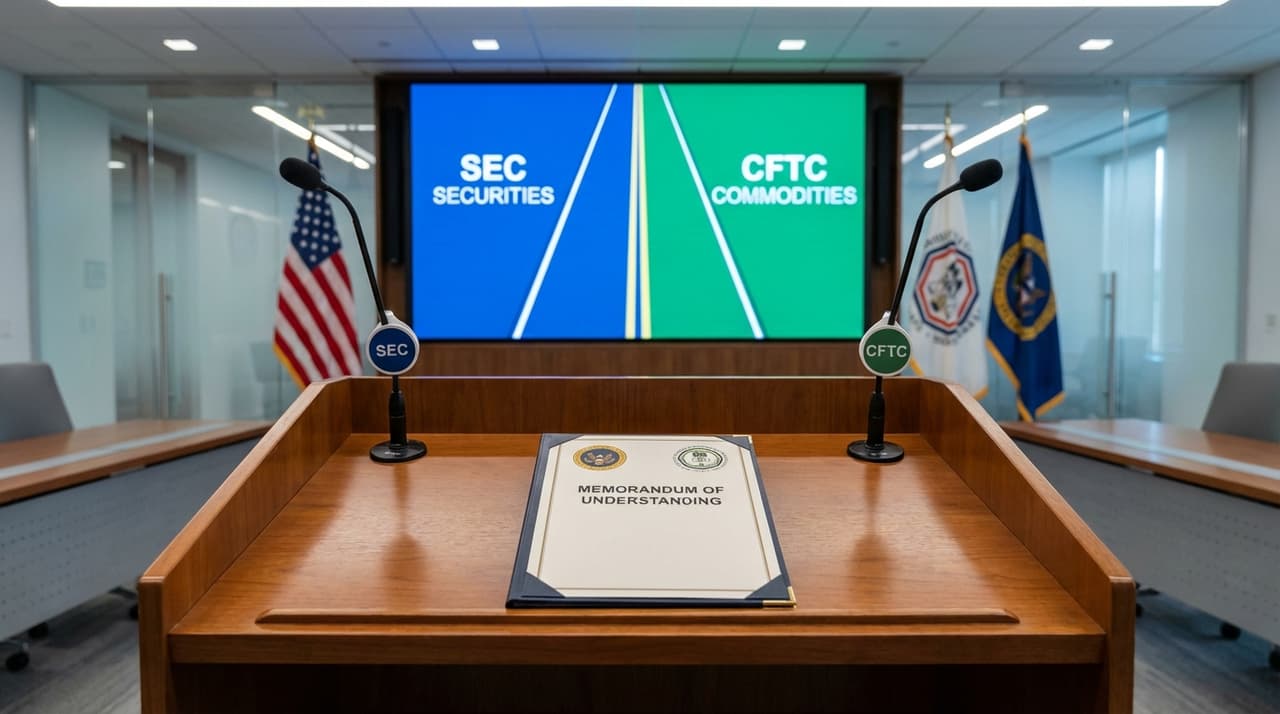
- Regulators are moving to establish crypto rules through agency action after legislative setbacks.
- A forthcoming SEC-CFTC Memorandum of Understanding aims to eliminate oversight gaps.
- Joint efforts focus on a "two-lane highway" approach dividing digital securities and commodities.
In a significant development for the crypto industry, Securities and Exchange Commission Chair Paul Atkins and Commodity Futures Trading Commission Chair Michael Selig are advancing coordinated regulatory frameworks despite stalled congressional action. According to people familiar with the matter, the agencies are preparing to outline rules and finalize a Memorandum of Understanding on oversight, signaling a shift toward administrative solutions amid legislative delays.
Atkins recently stated that regulators are ready to lay out rules for crypto, emphasizing the need to prevent markets from shifting abroad. This push aligns with a joint public event scheduled for January 29, 2026, at CFTC headquarters—rescheduled from January 27—where Atkins and Selig are expected to discuss harmonizing approaches for trading venues, custody, and intermediaries. The event, part of the relaunched Project Crypto initiative, aims to modernize regulations with a focus on precise, non-punitive measures.
Efforts to restructure the regulatory landscape have gained momentum under the current administration's priority to establish the U.S. as a "crypto capital." The proposed "two-lane highway" framework would designate digital securities under SEC jurisdiction and digital commodities under CFTC oversight, addressing long-standing jurisdictional overlaps. Legislative updates, such as the Senate Agriculture Committee's Clarity Act, refine definitions to include memecoins and network tokens as digital commodities and mandate joint rulemaking within 18 months of enactment.
"What institutional investors are really focused on is regulatory stability," a source close to the discussions said, paraphrasing industry sentiment. "This coordinated approach could reduce compliance burdens and foster innovation." Attempts to reach spokespeople for both agencies for additional comment were unsuccessful as of press time.
In the short term, the anticipated MOU and expedited CFTC registrations for exchanges, brokers, and dealers could enable trading activities even before full rulemaking is complete. Banking regulators' recent withdrawal of restrictive guidance has already expanded bank engagement with digital assets, while the GENIUS Act creates a stablecoin framework under OCC and Federal Reserve oversight. These moves are seen as countering prior enforcement-heavy approaches and supporting blockchain growth amid trends like tokenized assets and 24/7 trading.
Without a deal on legislation, the agencies risk leaving gaps that could undermine U.S. leadership in the crypto space. However, the joint efforts aim to provide clarity for stakeholders—from exchanges facing streamlined disclosures to investors benefiting from delisting processes—while maintaining a balance between retail protections and innovation. As one industry insider noted, "It's much more of a convergence between solutions rather than competition."
Looking ahead, experts predict that full regulatory frameworks could be established within 18 to 270 days post-enactment of pending legislation, including provisions for 24/7 trading and tokenization exemptions. The January 29 event may offer further details on the MOU and signal next steps, with long-term implications for sustaining U.S. dominance in the global crypto ecosystem.
Correction: An earlier version misstated the rescheduled date of the joint event; it is January 29, 2026, not January 27.