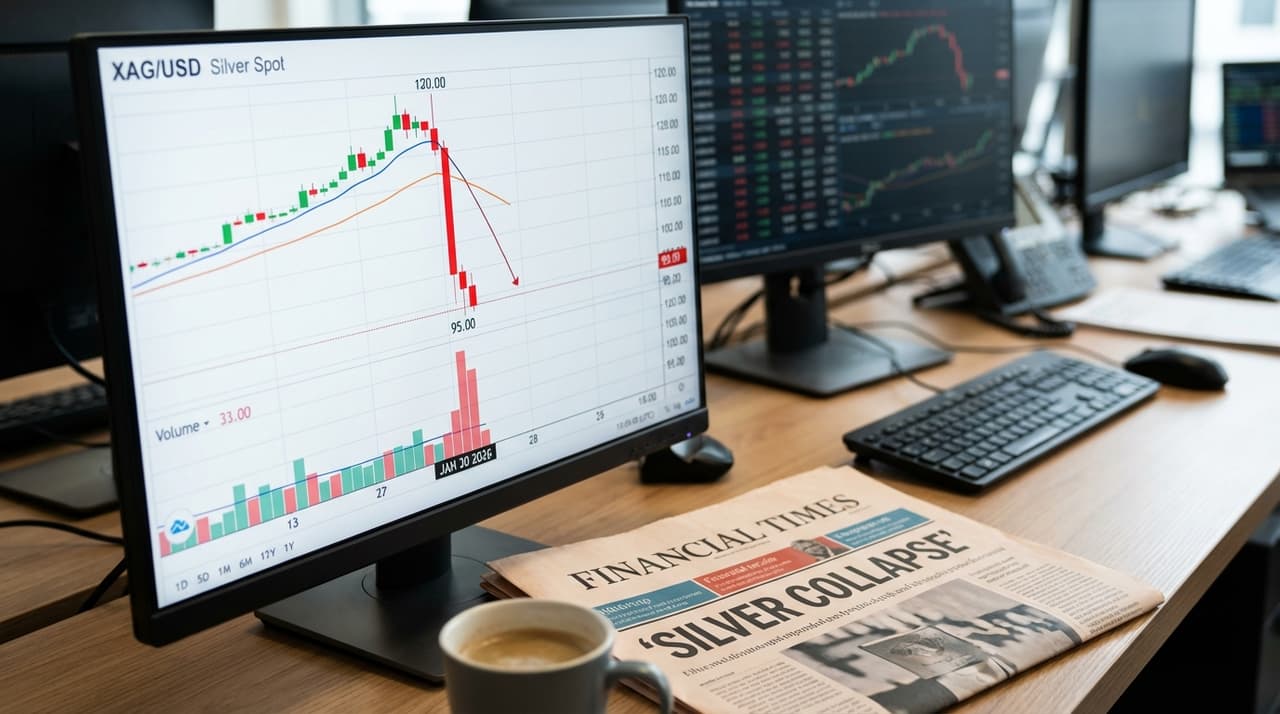
- Silver experienced a dramatic 17% intraday collapse on January 30, 2026, plunging from Thursday's peak of $120 to $95 per ounce, marking the worst single-day decline since 2013.
- The collapse erased year-to-date gains of approximately 50-64% in a matter of hours, following an unsustainable parabolic price spike that had seen silver surge nearly 300% over the past 12 months.
- Analysts attribute the crash to profit-taking after record highs, heavy speculative positioning in futures, and the volatility characteristic of smaller commodity markets, with most expecting consolidation rather than a complete crash.
Silver's breathtaking rally came to a screeching halt on January 30, 2026, as prices plummeted 20% in the biggest intraday decline since 2008. The metal, which had reached an all-time high of $120.45 just a day earlier, collapsed to $95 per ounce by early trading hours. By 8:30 a.m. Eastern Time, it had recovered slightly to $99.04, still representing a $20.43 drop from the previous day's close.
The rapid reversal caught many investors off guard, wiping out gains that had built over months. According to people familiar with the matter, the sell-off was triggered by a combination of profit-taking and unwinding of speculative positions that had grown increasingly stretched. Futures positioning had spiked to 81,000 contracts in recent weeks, creating what one analyst described as "a powder keg waiting for a spark."
Efforts to stabilize the market have hit a snag as traders grapple with whether this represents a temporary correction or the beginning of a more sustained downturn. Without a clear catalyst for recovery, some fear further declines could pressure mining operations and physical demand. A spokesperson for a major bullion dealer, who requested anonymity due to company policy, told us they've seen "unprecedented volatility" in order flows throughout the morning.
What makes this collapse particularly notable is how quickly it reversed what had been one of the strongest rallies in commodity markets. Silver had been riding a perfect storm of favorable conditions: escalating U.S.-Iran military tensions, a weakening U.S. dollar hitting four-year lows, and growing expectations that the Federal Reserve would begin cutting rates as early as June. Physical demand had surged dramatically, with 1kg silver bar purchases jumping over 550% since late 2025 and CGT-free coin sales rising 158% in just four months.
But the rapid ascent created what Bank of America (BAC) had recently flagged as bubble dynamics. In a research note circulated to clients last week, the bank identified silver as one of the most overheated assets globally, with prices approximately 30% above long-run fundamental averages. The gold-to-silver ratio had compressed to 45:1—its narrowest spread since September 2011—suggesting silver had outpaced any reasonable fundamental value justification.
Market participants we spoke to offered mixed reactions. "This was inevitable given how parabolic the move had become," said one hedge fund manager who specializes in precious metals. "The question now is whether we see capitulation or just healthy consolidation." Another trader noted that while the decline was severe, it's not entirely unexpected in a market known for its volatility.
Looking ahead, most analysts now expect consolidation rather than a complete crash, with prices potentially settling in the $105-$115 range to allow supply, demand, and speculative positioning to normalize. Silver's next move will depend heavily on whether the $120 level converts from resistance to support and whether macroeconomic conditions stabilize. If geopolitical risks escalate and supply constraints persist, recovery toward $125-$130 remains possible; conversely, a dollar rebound or delayed Fed rate cuts could pressure prices further downward.
Gold, which declined 8% to $4,941 on the same day, has shown more resilience—its supporting fundamentals of central bank accumulation and ETF inflows have proven more durable than silver's more sentiment-driven rally. This divergence highlights silver's greater exposure to sudden shifts in investor psychology.
We reached out to several major silver producers for comment on how the price collapse might affect their operations, but none responded by publication time. Trading desks report continued heavy volume as the market searches for a new equilibrium.