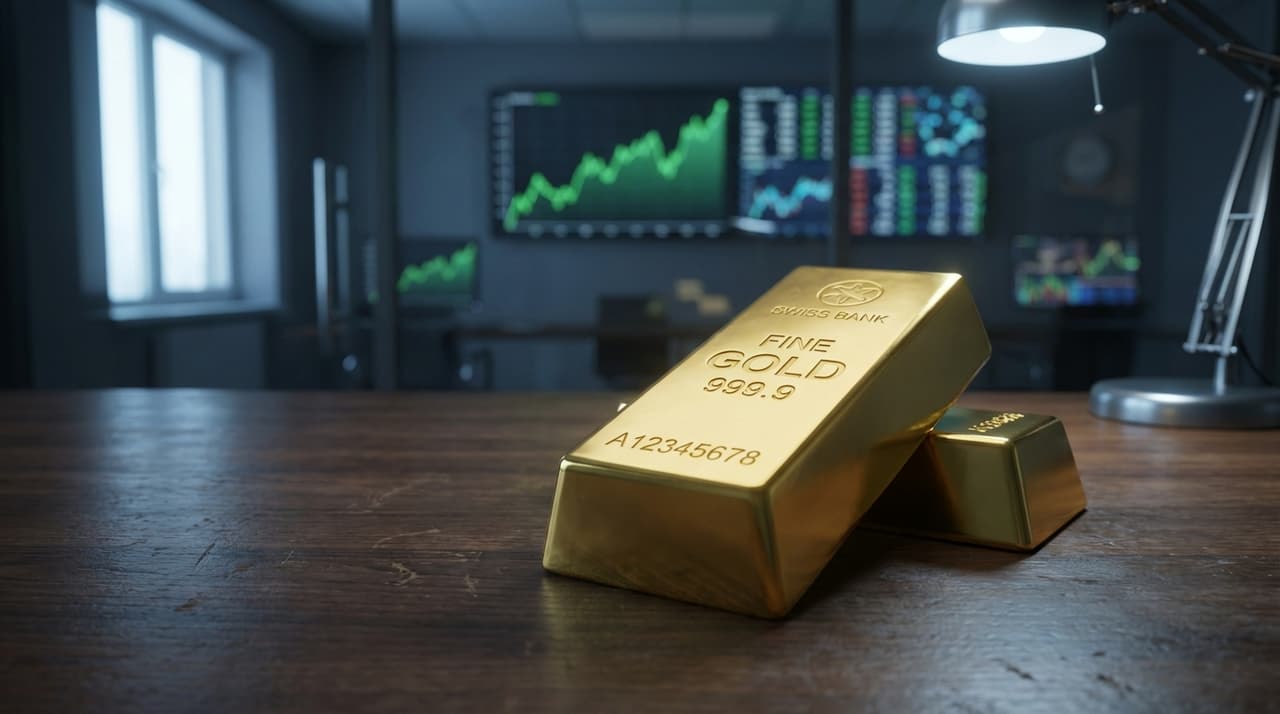
- Gold prices spike over 1% to unprecedented levels above $4,270 per ounce, extending a powerful 2025 rally.
- The surge is driven by escalating geopolitical tensions, persistent inflation concerns, and expectations of monetary easing by major central banks.
- Central banks in emerging markets like China, Turkey, Poland, and India have been buying more than 1,000 tonnes of gold annually since 2022, roughly double the prior decade's average, as they diversify reserves away from the dollar.
Spot gold recently rose about 1% to a record area above $4,270 per ounce, marking a dramatic acceleration in a sustained uptrend that has defined 2025. The move comes as investors flock to the traditional safe haven amid a cocktail of macroeconomic uncertainties and shifting monetary policy expectations. According to people familiar with market flows, the latest push above $4,200 was triggered by a fresh wave of institutional buying late in the trading session, though some traders noted light profit-taking at the highs.
Gold has been in a powerful rally this year, having already broken above $3,500 per ounce in early September 2025 and then moving higher on bets that the U.S. Federal Reserve will cut rates and on a weaker U.S. dollar. Major banks and asset managers now frame gold as being in a “higher for longer” price regime north of $3,000 per ounce for the rest of 2025, with scenarios in which prices test or exceed $4,000 per ounce under stagflation and de‑dollarization conditions. One portfolio manager at a large European asset management firm, who asked not to be named discussing trading positions, said, “We’ve been adding to our gold exposure throughout this quarter. The macro backdrop just keeps supporting it—it’s not just a hedge anymore; it’s becoming a core holding.”
Behind the surge lies a complex web of factors. U.S. public debt and deficits are at unusually high levels in peacetime, raising concerns about fiscal sustainability and supporting demand for non‑sovereign stores of value like gold. A weaker or more volatile U.S. dollar and concerns about its long‑term reserve‑currency dominance have increased gold’s appeal as an alternative reserve asset. This shift is framed by some analysts as part of a gradual “de‑dollarization” of global reserves, with countries using gold to reduce exposure to U.S. financial sanctions and currency risk—a structural rebalancing of the international monetary system where gold is used as a neutral, non‑sovereign reserve asset amid great‑power rivalry.
On the demand side, central banks—especially in emerging markets—have been relentless buyers. Retail and ETF investment demand has strengthened again in 2025 after earlier outflows, contributing to the price acceleration. Meanwhile, on the supply side, rising production costs and various constraints add to the bullish environment by limiting how quickly mine output can respond. Gold mining equities have surged, with reports citing roughly 120% year‑to‑date gains for gold miners in 2025, yet they are still described as undervalued relative to bullion, with strong margins due to high prices.
Analysts note that gold has outperformed major equity indices in 2025 and has become one of the top‑returning global macro assets. Multiple analyses suggest gold may average around $3,675 per ounce in late‑2025 and move toward $4,000 per ounce by mid‑2026, implying the recent spike above $4,200 is at the high end of current projections but within the bullish scenario range. However, there’s ongoing debate about whether the rally reflects waning confidence in fiat currencies and government debt, with some seeing gold’s rise as a warning signal about systemic vulnerabilities. Efforts to reach several major bullion banks for comment on Thursday’s price action were not immediately successful.
Looking ahead, the short-term outlook remains elevated. Even if spot prices spike above current forecasts, gold will likely hold in a high trading range above $3,000 per ounce through the remainder of 2025, with plausible scenarios where it hovers between about $3,100 and $3,500 and can approach or exceed $4,000 if stagflation and de‑dollarization pressures intensify. But it’s not without risks: a stronger‑than‑expected global growth rebound, de‑escalation of trade or geopolitical tensions, and a renewed period of “U.S. exceptionalism” could push investors back toward risk assets and compress gold prices below recent peaks. For now, though, the metal’s record run shows little sign of slowing.