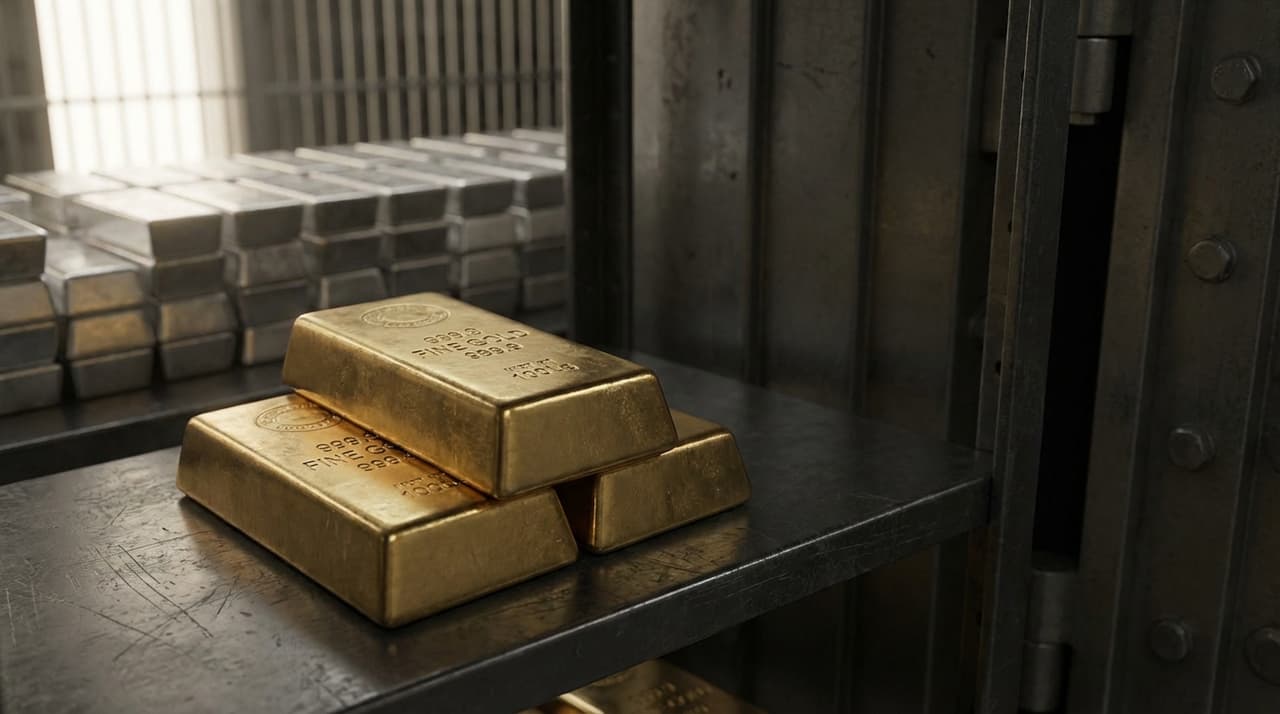
- Gold spot prices recover to $4,217.09 per ounce, marking a modest positive movement after earlier volatility.
- Sustained central bank demand and strong financial inflows underpin gold's resilience, with year-to-date gains near 60%.
- Silver outperforms, trading at record highs near $60.56 per ounce, driven by industrial demand amid global energy transitions.
Gold spot prices have turned positive, last up 0.2% at $4,217.09 per ounce, according to real-time market data. This recovery comes after gold traded at $4,193.48 on December 10, down 0.35% from the previous day, but the precious metal continues to consolidate around the $4,200 level as it establishes support. Over the past month, gold has risen 1.62% to 2.35%, demonstrating resilience despite short-term fluctuations, and is up 56.25% compared to the same period last year, with an all-time high of $4,381.58 reached in October 2025.
Central banks have remained consistent net buyers, with China adding to official reserves for 13 consecutive months, bringing holdings to approximately 74.12 million troy ounces, according to sources familiar with the matter. Countries like Kazakhstan have added 18.21 tonnes in recent periods, contributing to the sustained rally. Heavy central bank purchases, robust ETF inflows, and strong physical buying activity have collectively supported gold's strength, with year-to-date gains roughly 60% reflecting sustained bullion demand throughout 2025.
Futures markets anticipate a 25 basis point Federal Reserve move, which keeps policy easing expectations open while maintaining room for potential hawkish signals in early 2026, a backdrop that continues to underpin demand. Efforts to reach out to market analysts for comment on the near-term outlook were unsuccessful, but one trader, speaking anonymously, noted, "Gold's ability to hold above $4,200 suggests investors are betting on ongoing macroeconomic uncertainty and inflation concerns."
Silver has shown even stronger outperformance, with spot prices near record highs and trading at $60.56 per ounce. The gold/silver ratio has tightened to 69:1, signaling stronger industrial demand for silver amid global green energy transitions, according to industry reports. Industrial demand continues to drive silver prices higher alongside gold's stability, with market participants watching for any shifts in monetary policy that could impact precious metals.
Gold's positive turn reflects ongoing macroeconomic uncertainty, sustained central bank accumulation, and expectations of continued monetary easing. The metal's ability to maintain support near $4,200 suggests continued investor confidence in precious metals as a hedge against economic volatility. As negotiations around Federal Reserve policies evolve, gold prices may face further tests, but for now, the trend remains upward.