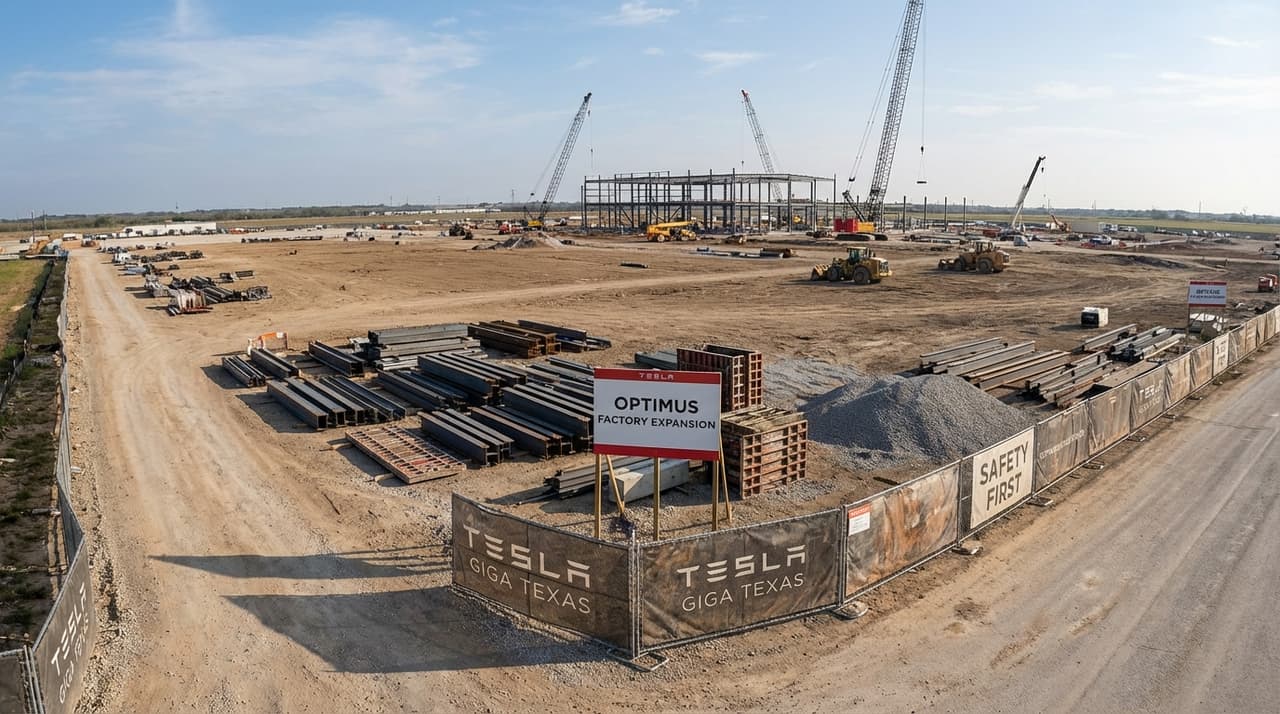
- Tesla (TSLA) is constructing a dedicated Optimus humanoid robot factory at Giga Texas, with mass production expected to begin in 2027.
- The facility aims to produce 10 million units annually, a significant expansion from current limited production in Fremont.
- CEO Elon Musk has cautioned that initial production will be "agonizingly slow," despite ambitious long-term targets.
A Strategic Expansion in Robotics
Tesla is accelerating its push into humanoid robotics with the development of a stand-alone factory at its Giga Texas facility, according to people familiar with the matter. Ground clearing and construction have already begun, with plans to produce third-generation Optimus robots starting in 2027. This move represents a major scaling effort from the current pilot production at the Fremont factory, where Tesla has been training prototypes for over a year.
Musk stated during a recent appearance that Optimus is currently performing "simple tasks" in Tesla factories, with expectations for more complex tasks by the end of 2026. The company recently announced plans to expand training to the Austin Gigafactory by February 2026, leveraging data collectors who record themselves performing factory tasks like organizing parts and working on conveyor belts. These videos are used to teach the robot to mimic movements, a process that will intensify as production ramps.
Production and Market Implications
The Texas expansion is expected to create thousands of manufacturing and engineering jobs, boosting the local economy in the Austin area. Early estimates suggest approximately 1,200 Gen3 robots could be running logistics operations at Giga Texas in 2026, though full-scale production won't hit until the following year. Tesla plans to utilize its new 'Unboxed' manufacturing process for certain production lines, potentially including Optimus, which could streamline assembly.
Musk has expressed confidence in the market potential, stating "there could be tens of billions of Optimus robots out there," positioning this as a multi-decade opportunity. The targeted sub-$20,000 price point aims to make humanoid robots accessible to a broader market, though initial deployment will focus on Tesla's own facilities before public sales begin by the end of 2027. Efforts to reach Tesla for additional comment on the timeline were not immediately successful.
Broader Context and Challenges
This development comes as Tesla simultaneously ramps production of other new products at Giga Texas, including the Cybercab autonomous vehicle and the new Roadster. The company is phasing out Model S and Model X production to allocate capacity to these initiatives, reflecting a strategic pivot toward robotics and AI. However, the humanoid robotics sector is still nascent, with regulatory frameworks for autonomous systems deployment remaining a hurdle.
Industry observers note that while Tesla's aggressive targets could catalyze adoption in manufacturing and logistics, achieving competitive performance and reliability will be critical. Musk has acknowledged the complexity, warning that production will be gradual despite the lofty goals. If executed successfully, Optimus could evolve into a significant revenue stream, potentially generating billions in annual sales by the early 2030s.
Correction: An earlier version of this article misstated the start date for Optimus training in Austin; it is targeted for February 2026, not 2025.