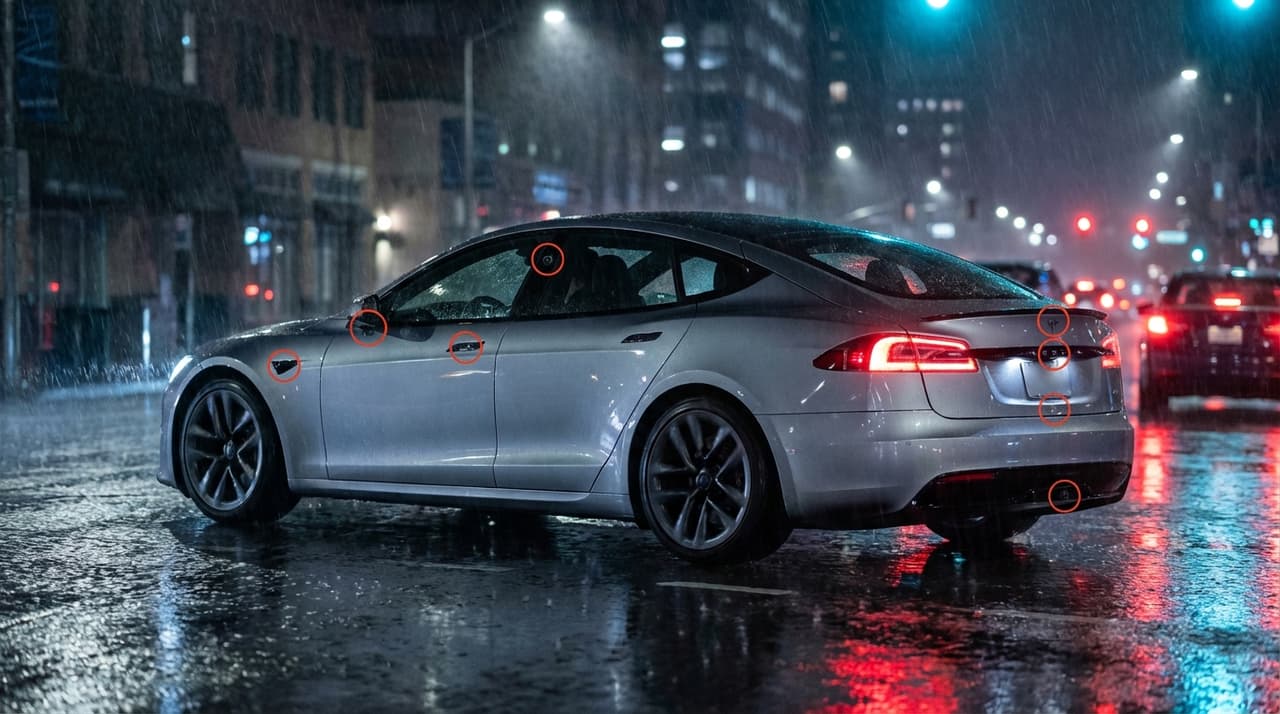
- Tesla's latest FSD Supervised update enhances real-world driving behavior and system reliability, with early feedback praising smoother performance.
- The release could boost FSD subscription revenue and adoption, aligning with broader EV and autonomy market trends.
- While addressing safety concerns, the update faces ongoing regulatory scrutiny as Tesla pushes toward unsupervised autonomy goals.
Tesla Inc. released Full Self-Driving (FSD) Supervised Version 14.2.2 on December 22, 2025, via software update 2025.45.5, marking another step in the electric vehicle giant's push toward autonomous driving. The update focuses on UI enhancements, safety improvements, and usability, including features like Arrival Options for customized destination handling and dynamic navigation pin adjustments, according to details from the release.
Early driver feedback has been largely positive, with users reporting smoother steering, more confident lane changes, better obstacle awareness, and strong performance in challenging conditions like rain, heavy traffic, night driving, and twisty roads. Some enthusiasts on social media have described the driving experience as "human-like" and suggested it's nearing Level 4 autonomy, though regulatory bodies remain cautious. Efforts to reach Tesla for additional comment on the rollout timeline were not immediately successful, but sources familiar with the matter indicate the update is being deployed gradually to Hardware 4 vehicles in the U.S. initially.
Financially, the update could provide a lift to Tesla's FSD subscription revenue, which currently offers trials at $99 per month via v14. This comes as Tesla's Q3 2025 revenue grew 8% year-over-year to $25.2 billion, driven by EV deliveries and FSD subscriptions, though margins faced pressure from price cuts. The stock has risen approximately 15% following the FSD updates amid growing Robotaxi hype, with exact Q4 figures still pending as of late December 2025. Analysts, including those from Stifel (SF), view the enhancements as a move toward tapping into a potential $1 trillion autonomy market, though they note that features like weather and residue alerts signal ongoing refinements are needed.
From a regulatory perspective, the update aims to address safety concerns that have drawn scrutiny from the National Highway Traffic Safety Administration (NHTSA), particularly after 2024 crashes involving FSD systems. Version 14.2.2 includes reliability upgrades such as improved emergency vehicle yielding and fault recovery, which may help mitigate regulatory risks. However, without broader approval, Tesla's ambitions for unsupervised FSD could face delays, especially with the European Union probing FSD for potential 2026 approval. In the meantime, competitors like Waymo are scaling robotaxis in four U.S. cities, while XPeng (XPEV) has upgraded its ADAS systems citing inspiration from Tesla's advancements.
Looking ahead, experts predict the update could drive a 20-30% increase in FSD adoption in the short term, with wider rollouts expected. Long-term, Tesla CEO Elon Musk has hinted at unsupervised FSD and Robotaxi deployments by 2026, a timeline that XPeng's CEO has acknowledged as viable given Tesla's unified hardware-software stack. As the auto sector shifts toward software-defined vehicles, supported by factors like $7,500 federal EV tax credits in the U.S., Tesla's latest update underscores its lead in consumer-facing autonomy, even as it navigates the complex interplay of innovation, safety, and regulation.