- Tesla (TSLA)'s first public compilation of analyst estimates projects a 15% year-over-year drop in Q4 2025 deliveries to 422,850 units.
- Full-year 2025 deliveries are expected to fall 8.3% to about 1.64 million, marking the second consecutive annual decline.
- Despite weaker delivery expectations, Tesla shares are up 14% year-to-date, trailing the S&P 500's 17% gain.
Tesla has taken an unusual step toward transparency by publishing its first-ever official compilation of analyst estimates for fourth-quarter vehicle deliveries on its investor relations website. The move, which includes projections from about 20 analysts such as Morgan Stanley and UBS, sets expectations for 422,850 units—a 15% decline from Q4 2024 and down sharply from Q3 2025's record 497,099 deliveries.
According to people familiar with the matter, the company's decision to share these estimates publicly aims to manage investor expectations ahead of its early January 2026 results announcement. The compiled figures, which fall below the Bloomberg consensus of 445,061 units, suggest Tesla could miss broader market expectations when it reports actual numbers. For the full year, analysts tracked by Tesla forecast approximately 1.64 million deliveries, an 8.3% drop from 2024's 1,789,226 units.
This projected slowdown comes despite a strong third quarter, where Tesla delivered 497,099 vehicles globally, including 481,166 Model 3 and Model Y units. Production in Q3 reached 447,450 vehicles, indicating the company was building inventory ahead of the anticipated fourth-quarter dip. One analyst, who requested anonymity due to firm policies, noted that "seasonal demand patterns and economic headwinds are creating perfect storm conditions for Tesla's volume business."
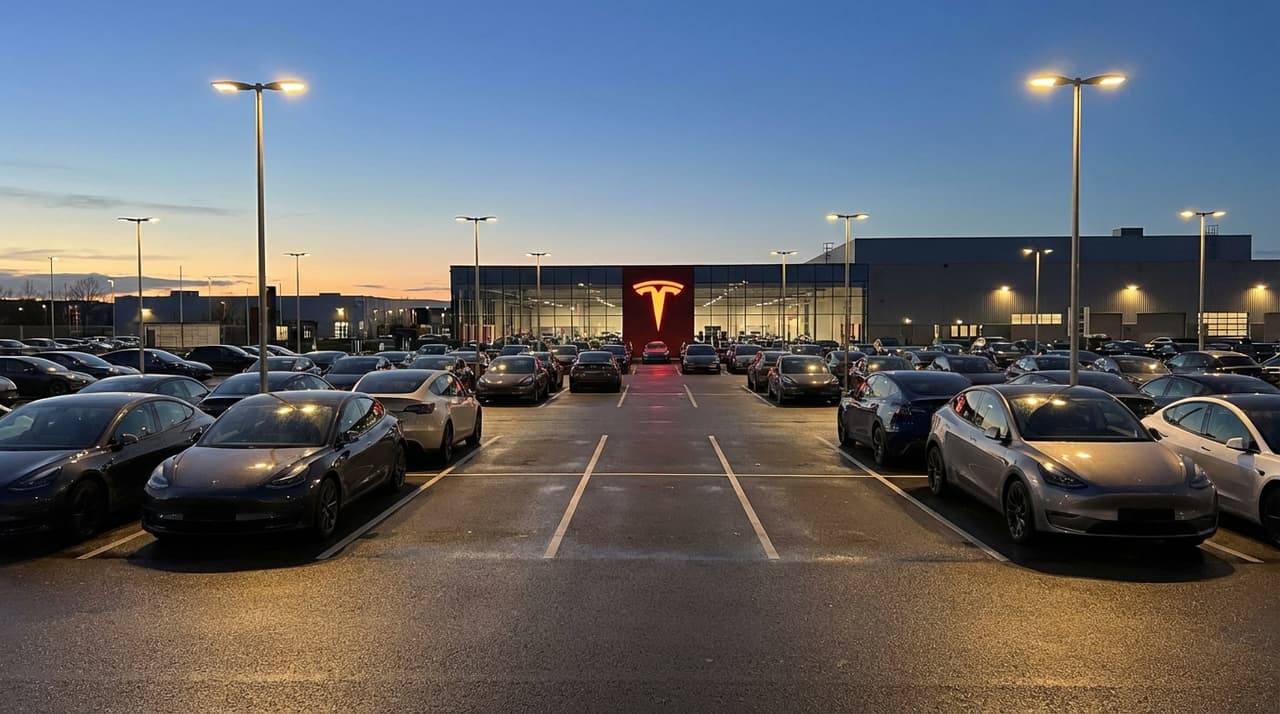
Efforts to counter the delivery decline have included aggressive year-end promotions in key markets like China, where delivery centers reportedly remained packed with Model 3 and Model Y vehicles through late December. However, Tesla's recent expansion into India, launched in July 2025, has delivered under 500 units so far, according to industry sources, highlighting the challenges of scaling in new markets.
Meanwhile, Tesla's energy storage business continues to show strength, with analysts projecting 13.4 gigawatt-hours of deployments in Q4. This segment has become an increasingly important revenue driver as vehicle sales face pressure from high interest rates and intensifying EV competition globally.
Tesla did not respond to requests for comment on the delivery estimates or its strategy for addressing the projected decline. The company's shares, up 14% year-to-date through Monday's close, have lagged the S&P 500's 17% gain, reflecting investor caution despite the stock's recovery from earlier lows.
Looking ahead, analysts predict a rebound to 1.75 million deliveries in 2026, with longer-term forecasts suggesting growth to 3 million by 2029, driven by Gigafactory expansions and new product launches. But for now, all eyes are on whether Tesla can beat its own compiled estimates when Q4 results arrive—a miss could amplify negative narratives around demand and execution.