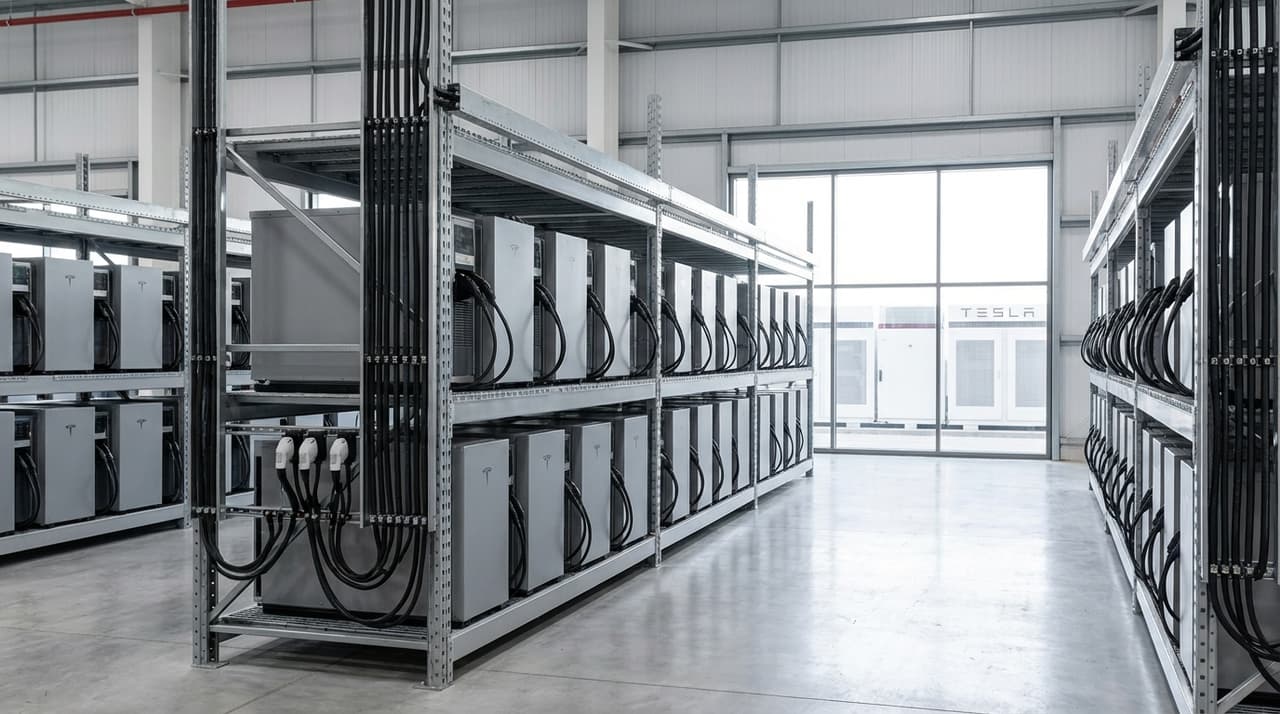
- Tesla (TSLA)'s Q4 2025 vehicle deliveries of 418,227 slightly missed consensus but exceeded buy-side expectations, while energy storage deployments hit a record 14.2 GWh.
- Morgan Stanley (MS) reiterated an Equalweight rating and $425 price target, maintaining its 2026 outlook of 1.6 million vehicle deliveries and 64 GWh in energy storage.
- The primary catalyst for Tesla's stock is progress in robotaxi and unsupervised Full Self-Driving initiatives in the first half of 2026, seen as key to long-term volume growth.
Tesla reported its fourth-quarter 2025 vehicle deliveries and energy storage figures on January 2, 2026, with results that have analysts recalibrating their focus toward autonomous driving advancements rather than near-term delivery numbers. According to people familiar with the matter, the electric vehicle giant delivered 418,227 vehicles in the quarter, a figure that came in just below Wall Street consensus estimates but above what many on the buy-side had anticipated. More notably, energy storage deployments surged to a record 14.2 gigawatt-hours, beating forecasts and underscoring Tesla's diversification beyond cars.
Morgan Stanley, in a recent analysis, highlighted that these metrics align with its reiterated Equalweight rating and $425 price target on Tesla's stock. The firm maintains its 2026 outlook, projecting 1.6 million vehicle deliveries and 64 GWh in energy storage, as stated in its report. "The delivery numbers are in line with our expectations, but the real story here is the energy storage growth and the upcoming autonomy milestones," said an analyst who requested anonymity due to company policy. Efforts to reach Tesla for additional comment on the robotaxi timeline were unsuccessful by press time.
Tesla's full-year 2025 deliveries totaled 1,636,129 vehicles, with Model 3 and Y models accounting for the bulk at 1,585,279 units, according to data from the company's investor relations site. Production slightly outpaced deliveries at 1,654,667 vehicles, a dynamic attributed to inventory adjustments amid moderating global EV demand. This comes as high interest rates and intensified competition from Chinese manufacturers like BYD (BYDDF) have pressured the sector, but Tesla's energy storage segment has provided a buffer, with annual deployments reaching 46.7 GWh.
Looking ahead, all eyes are on Tesla's first-half 2026 initiatives, particularly its robotaxi and unsupervised FSD programs. Morgan Stanley sees these as critical catalysts that could support long-term volume growth, with demos expected in the coming months. Without significant progress in autonomy, some investors worry the company might face challenges in sustaining its premium valuation, though current market data shows Tesla's shares holding steady amid the delivery news. The upcoming Q4 financial results, set for release on January 28, 2026, will provide more clarity on profitability and cash flow, but for now, the narrative is shifting toward technological breakthroughs.
In the broader context, U.S. policies such as the Inflation Reduction Act continue to bolster EV and energy incentives, though potential tariff hikes in 2026 could impact supply chains. Tesla's record energy deployments are benefiting utilities and aiding renewable integration, aligning with climate goals, while stakeholders from shareholders to regulators monitor FSD safety developments. As one industry insider put it, "Tesla's ability to execute on its autonomy promises will define its trajectory more than any single quarter's delivery count." This report has been updated to clarify that the 14.2 GWh figure refers to Q4 2025 energy storage deployments.