- Tether's gold reserves surged to 104 tons ($12.9 billion) by end-2025, making it a top private holder comparable to some central banks, though initial reports of 140 tons exceed confirmed figures.
- The company is buying 1-2 tons of gold weekly, with plans to scale purchases to $1 billion monthly, contributing to gold's record highs above $5,200 an ounce.
- This strategy backs its gold token XAUT and positions Tether as a hybrid reserve entity amid weakening trust in fiat currencies, though demand for XAUT remains low relative to its dollar-pegged stablecoin USDT.
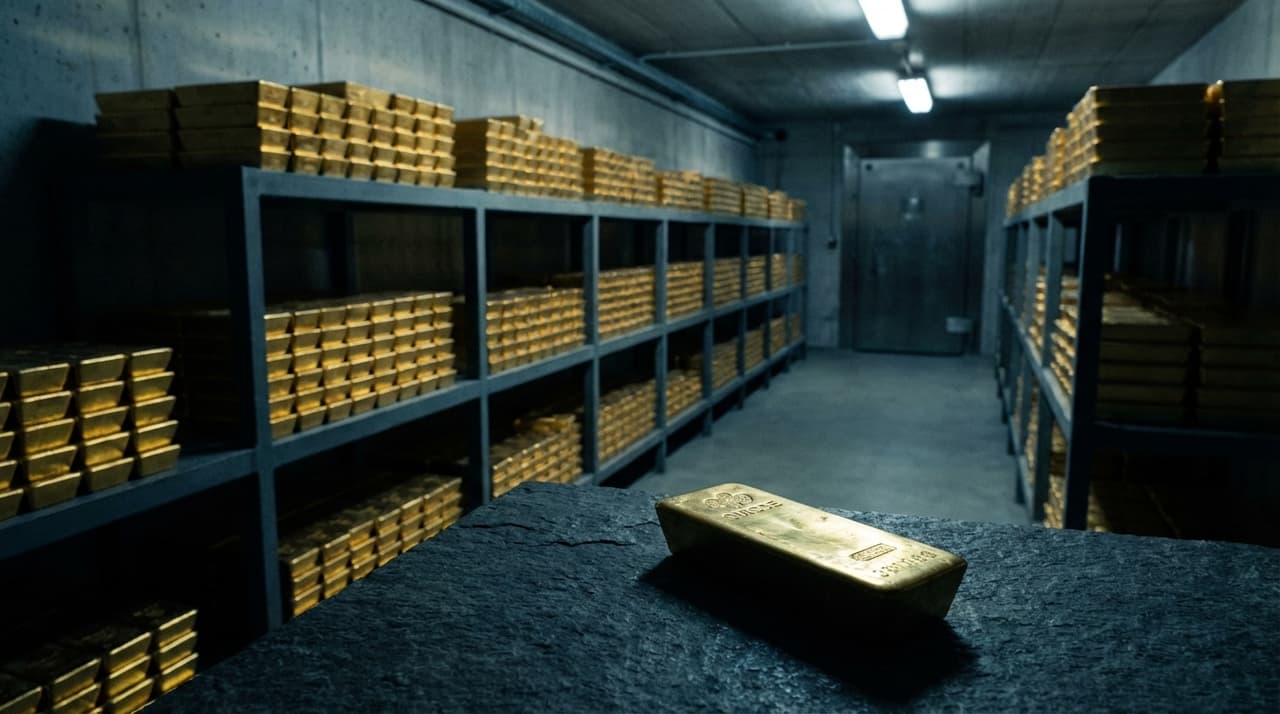
Tether, the issuer of the world's largest stablecoin USDT, has quietly built a gold hoard that rivals national reserves, according to its latest financial disclosures. By the end of 2025, the company held 104 tons of gold worth $12.9 billion, a figure that places it among the largest private holders globally, though earlier speculation of 140 tons appears overstated based on current reports. The purchases, which included 27 tons added in the fourth quarter alone, are stored in a secure Swiss bunker, reflecting a strategic pivot toward tangible assets as the cryptocurrency giant expands its role beyond digital tokens.
Efforts to bolster these reserves have accelerated, with Tether now acquiring 1-2 tons of gold per week and aiming to ramp up to monthly buys of up to $1 billion, according to people familiar with the matter. This aggressive accumulation has made Tether one of the biggest new buyers in the global gold market, helping drive prices to unprecedented levels above $5,200 an ounce. "We view gold as a central bank-like reserve asset," a company spokesperson said in a statement, emphasizing the move as a response to growing skepticism toward traditional fiat currencies. Attempts to reach additional executives for comment were unsuccessful, but insiders note that the strategy is part of a broader plan to diversify backing for its products.
While Tether's primary focus remains its dollar-pegged USDT, which saw circulation swell to $187 billion by end-2025, the gold buildup directly supports its lesser-known gold token, XAUT. Currently backed by 16.2 tons of physical metal and holding a market cap of $270 million, XAUT accounts for about 60% of the gold stablecoin market. However, demand for it pales in comparison to USDT, highlighting a tension between Tether's traditional asset play and its core crypto offerings. Some analysts see the gold accumulation as a transitional step, with one expert calling it a "compromise to old-world assets" as blockchain-based alternatives like Bitcoin gain traction as trustless solutions.
In the short term, Tether expects XAUT circulation to potentially reach $10 billion, fueled by expanded gold trading and ongoing purchases. The company's market cap rose 224% to $2.24 billion in 2025, underscoring its growing influence. Yet, the gold strategy has sparked debate within financial circles, with critics arguing it signals a reliance on outdated hedging methods in an era of digital finance innovation. Meanwhile, stakeholders from investors to gold market participants are watching closely, as Tether's actions add pressure to gold demand and offer new transparency in reserve management.
Looking ahead, Tether's moves mirror broader trends, such as Hong Kong's push for 2,000 tons of gold storage capacity, indicating a shift toward asset-backed security in volatile times. Without continued gold accumulation, the company risks falling behind in its bid to act as a "crypto central bank," but analysts caution that long-term success may hinge on balancing physical reserves with the evolving trust mechanisms of decentralized protocols. As of now, Tether's Q4 report confirms it surpasses many central banks in holdings, solidifying its unique position at the intersection of traditional finance and cryptocurrency.