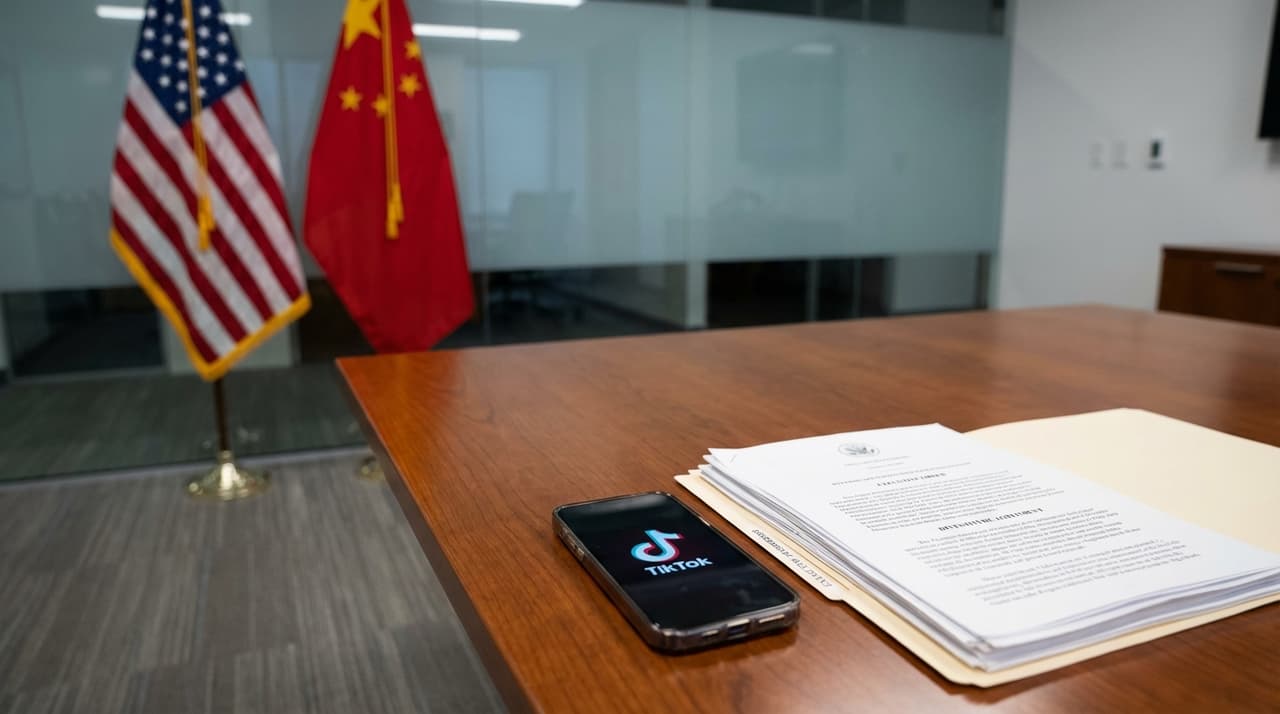
- U.S. Treasury Secretary Scott Bessent confirms China has finalized the TikTok deal, with approval expected soon, resolving the U.S. divestiture requirement under the Protecting Americans from Foreign Adversary Controlled Applications Act.
- President Trump signed an executive order approving a $14 billion deal transferring TikTok's U.S. operations to U.S. investors, with direct approval from Chinese President Xi Jinping, averting a ban after multiple deadline extensions to December 16, 2025.
- The deal involves licensing ByteDance's algorithm, though doubts persist on whether it fully complies with U.S. law barring ongoing ties, with potential legal challenges looming.
Efforts to restructure TikTok's U.S. operations have hit a critical milestone, according to people familiar with the matter. U.S. Treasury Secretary Scott Bessent stated that China has finalized the deal, expecting approval from the Chinese government in the coming weeks, a move that would satisfy the divestiture mandate under the 2024 Act. This development follows repeated deadline extensions, with the latest pushing the cutoff to December 16, 2025, as negotiations between Washington and Beijing intensified.
President Trump's executive order greenlighting the $14 billion transfer of TikTok's U.S. assets to American investors came after direct talks with Chinese President Xi Jinping, sources say. The agreement, which includes licensing ByteDance's algorithm to the new U.S. entity, aims to preserve access for approximately 170 million American users and safeguard an estimated $10-20 billion in annual economic activity tied to digital advertising and e-commerce. Without this deal, the company would have faced a ban, disrupting creators and brands reliant on the platform.
Regulatory hurdles remain, however. The Act explicitly bars ongoing operational ties like algorithm licensing, raising questions about compliance. "We expect approval by the Chinese government soon," Bessent said, but critics argue the arrangement may skirt the law's intent to sever all connections with ByteDance. National security hawks have decried the incomplete separation, warning that it leaves privacy risks unaddressed in the absence of broader U.S. data legislation.
In the background, TikTok has taken steps to address security concerns, appointing an American CEO—formerly of Disney (DIS)—and separating U.S. operations with data centers outside China. Yet, the reliance on ByteDance's technology continues to fuel debates over surveillance, especially as the U.S. Supreme Court prepares to hear arguments on January 10, 2025, regarding the Act's constitutionality. A status report is due by February 14, 2025, which could provide further clarity on implementation.
Internationally, similar tensions are playing out. Australia, with 8.5 million TikTok users, has imposed an under-16 ban effective December 10, 2025, amid data access probes mirroring U.S. fears. Meanwhile, experts predict that the hands-on role of the U.S. government in this deal may shift future focus toward privacy regulation, rather than outright bans. As one industry insider noted, "It's a delicate balance—preserving economic activity while addressing national security, but without a comprehensive data law, risks linger."
Attempts to reach ByteDance for comment were unsuccessful, but sources close to the negotiations suggest that both sides are eager to finalize the agreement to avoid further market uncertainty. The deal, if approved, would mark a significant de-escalation in U.S.-China tech tensions, though it sets a precedent for how such divestitures are handled under evolving geopolitical pressures. For now, stakeholders are watching closely as the clock ticks toward the December deadline, with the potential for last-minute legal challenges still on the table.