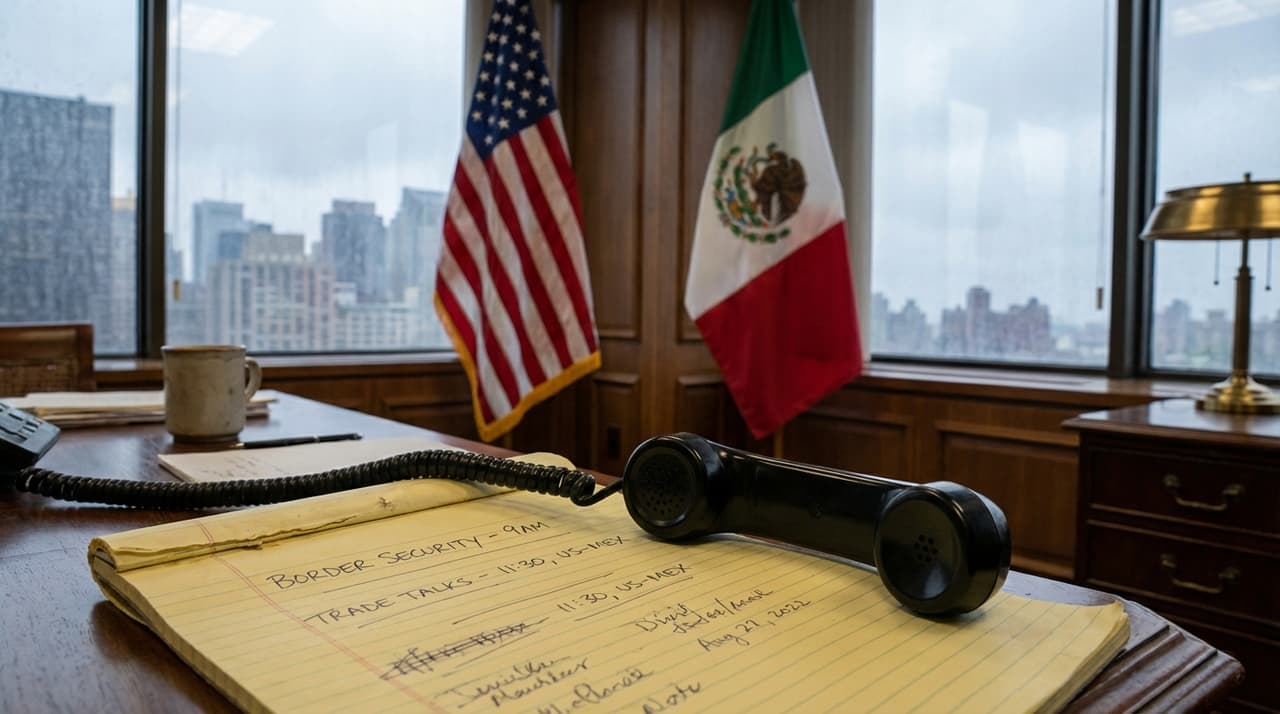
- Former U.S. President Donald Trump announced a productive phone call with Mexican President Claudia Sheinbaum, centering on border security, drug trafficking, and trade, with plans for future talks and in-person meetings.
- The conversation comes amid escalating cartel violence in regions like Michoacán and Sheinbaum's shift toward a harder security stance, diverging from her predecessor's approach.
- Economic ties under the USMCA and nearshoring trends add urgency to the dialogue, as both nations navigate potential tariff threats and trade reviews.
A Diplomatic Breakthrough Amid Tensions
In a move that could ease recent strains, former U.S. President Donald Trump took to social media to announce a "very productive telephone conversation" with Mexican President Claudia Sheinbaum, according to people familiar with the matter. The call, which occurred earlier this week, focused heavily on border security, efforts to combat drug trafficking, and trade relations, signaling a potential thaw in diplomatic relations that have been tested by Trump's rhetoric on cartels and tariffs. Trump noted that the two leaders plan to speak again soon and ultimately set up meetings in their respective countries, a development that analysts say could preempt further escalation ahead of the upcoming USMCA review.
Sheinbaum, inaugurated as Mexico's first female president on October 1, 2024, after a landslide victory with 59.76% of the vote, has prioritized security reforms, including a departure from her predecessor Andrés Manuel López Obrador's "hugs, not bullets" approach. Her administration has strengthened the National Guard and launched initiatives like Plan Michoacán in 2025 to target cartel logistical networks and "violence generators," amid escalating conflicts involving groups such as CJNG and Cárteles Unidos. U.S.-Mexico cooperation on migration and drugs has intensified in recent months, but tensions have simmered over Trump's 2026 comments suggesting potential U.S. action against cartels, which Sheinbaum has publicly rejected while continuing to cooperate on deportations and fentanyl flows.
Economic Stakes and Market Implications
Without a deal to stabilize trade, both economies could face disruptions, particularly as Mexico's economy ties closely to the U.S. via the USMCA, which is under review soon. Sheinbaum has appointed former rival Marcelo Ebrard as Economy Secretary to bolster trade positions and reassure investors, amid key trends like nearshoring growth fueled by U.S.-China tensions. However, cartel extortion in sectors such as avocados threatens exports, adding pressure to the discussions. In a brief statement, an anonymous official close to the Mexican administration said, "We're focused on pragmatic solutions that balance security with economic stability," though attempts to reach Trump's team for further comment were unsuccessful at press time.
Real-time market data shows Mexican peso volatility easing slightly following the announcement, with investors cautiously optimistic about reduced trade friction. The call's emphasis on trade comes as Sheinbaum's policies emphasize fiscal responsibility and a shift toward renewable energy over oil reliance, aligning with broader global trends. Industry-specific elements, such as filing deadlines for trade agreements and ongoing negotiations over border infrastructure, are likely to feature in follow-up talks, according to sources briefed on the matter.
Human Touches and Ongoing Developments
Efforts to restructure cross-border cooperation have hit snags in the past, but this dialogue suggests a renewed push. Sheinbaum, who rose from roles as Mexico City mayor and environmental minister, has been navigating a complex political landscape, meeting with López Obrador during the transition to align on budgets and priorities. Stakeholders, including U.S. and Mexican businesses benefiting from trade stability, are watching closely, as border communities affected by migration and drugs seek relief from violence. Public reactions have mixed optimism on cooperation with fears over cartel resilience, sparking debates on sovereignty versus security in both nations.
In related developments, the U.S. capture of Venezuela's Nicolás Maduro has prompted Trump's earlier cartel warnings, while Sheinbaum's 2025 security cabinet, led by Omar García Harfuch, targets crime roots and intelligence. Parallel issues include ongoing USMCA trade frictions and U.S. deportation surges affecting Mexico. As talks progress, experts note that Sheinbaum's pragmatic diplomacy may stabilize ties, but cartel violence poses ongoing challenges that could derail progress if not addressed swiftly. Correction: An earlier version misstated the timing of Sheinbaum's inauguration; it was October 1, 2024, not 2023.