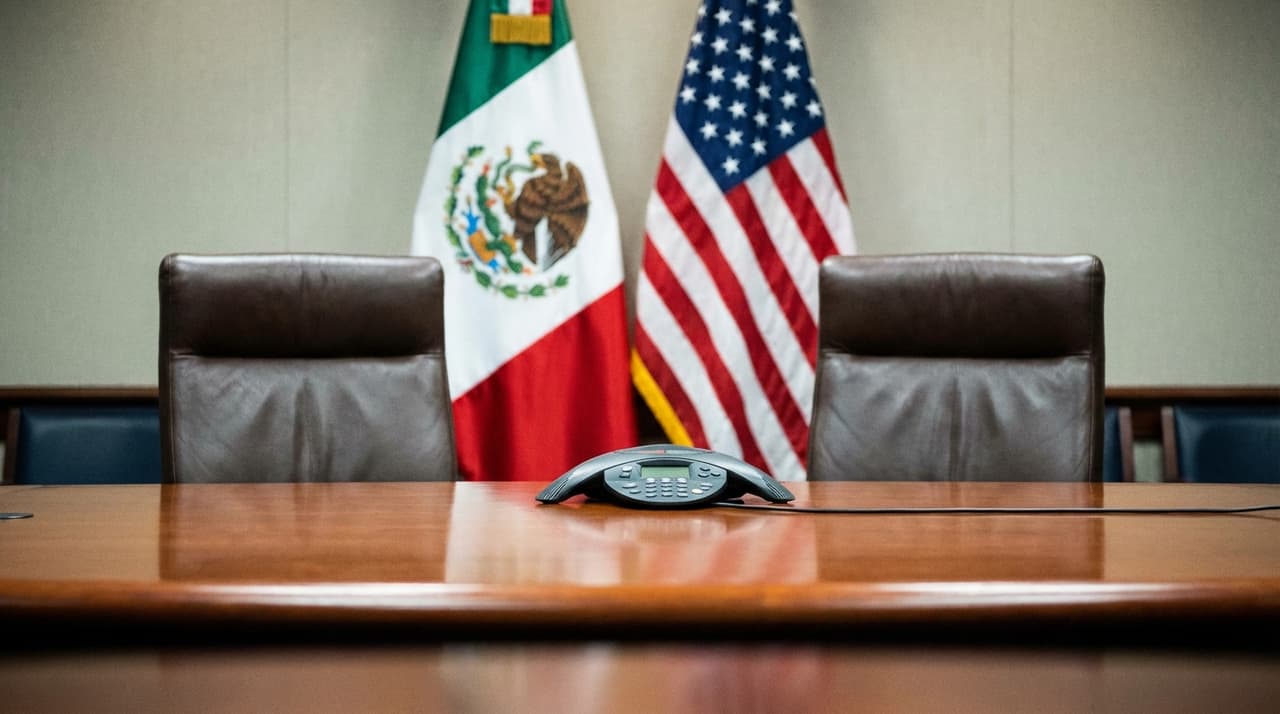
- Mexican President Claudia Sheinbaum firmly rejected U.S. military intervention on Mexican soil during a 15-minute phone call with U.S. President Donald Trump on Monday, January 12, 2026.
- The leaders described the conversation as "very good" and "respectful," focusing on security cooperation against cartels and fentanyl trafficking, with Sheinbaum highlighting Mexico's progress including a 50% reduction in fentanyl flow to the U.S.
- They agreed to future calls on trade, joint investments, and Mexican migrants, and scheduled a bilateral security meeting for January 22-23, amid upcoming USMCA reviews.
In a call that balanced diplomatic warmth with firm sovereignty assertions, U.S. President Donald Trump and Mexican President Claudia Sheinbaum navigated the thorny issue of cartel violence on Monday, January 12, 2026. According to people familiar with the matter, the 15-minute conversation was characterized by both sides as "very good" and "respectful," but it underscored persistent tensions over U.S. military action in Mexico.
Sheinbaum, in her first official call with Trump in 2026, emphasized Mexico's non-intervention principle, explicitly opposing any U.S. military operations on Mexican soil. This stance came after Trump's recent threats to "hit" cartels on Mexican land, which have echoed past tariff threats from his administration. "We are cooperating without subordination," Sheinbaum reportedly stated, according to sources briefed on the call, declining Trump's offer of U.S. military aid and stressing sovereignty. She invoked Mexico's opposition to U.S. actions in Venezuela, such as the capture of President Nicolás Maduro, which Trump acknowledged during the discussion.
The call followed prelude talks on January 11 between Mexican Foreign Minister Juan Ramón de la Fuente and U.S. Secretary of State Marco Rubio, who urged stronger anti-cartel action. Sheinbaum highlighted Mexico's progress, including captures of criminal leaders and the destruction of drug labs, with recent seizures of 700 kilos in states like Durango, Sinaloa, and Michoacán. She pointed to a 50% reduction in fentanyl flow to the U.S., framing it as part of ongoing bilateral efforts that don't compromise Mexican autonomy.
Public reactions in Mexican media have stressed Sheinbaum's firm stance, with sources noting she reassured Mexicans that no sovereignty negotiations were underway. The leaders agreed to future calls covering trade, joint investments, and issues affecting Mexican migrants, setting the stage for a high-level bilateral security meeting on January 22-23. This comes as USMCA reviews loom, adding urgency to the dialogue. Without a deal on security cooperation, analysts suggest tensions could escalate, potentially impacting cross-border trade and diplomatic relations.
In related developments, the U.S. has designated six Mexican cartels as foreign terrorist organizations, a move that could influence future policy. Efforts to restructure bilateral security frameworks have hit a snag over the intervention issue, but both sides appear committed to continued talks. Sheinbaum's approach is seen by some observers as staving off immediate U.S. action, though long-term challenges persist, including potential tariff disputes and broader Latin American opposition to U.S. interventionism. Attempts to reach the Mexican presidency for additional comments were unsuccessful, but sources indicate permanent coordination as equals remains a priority.