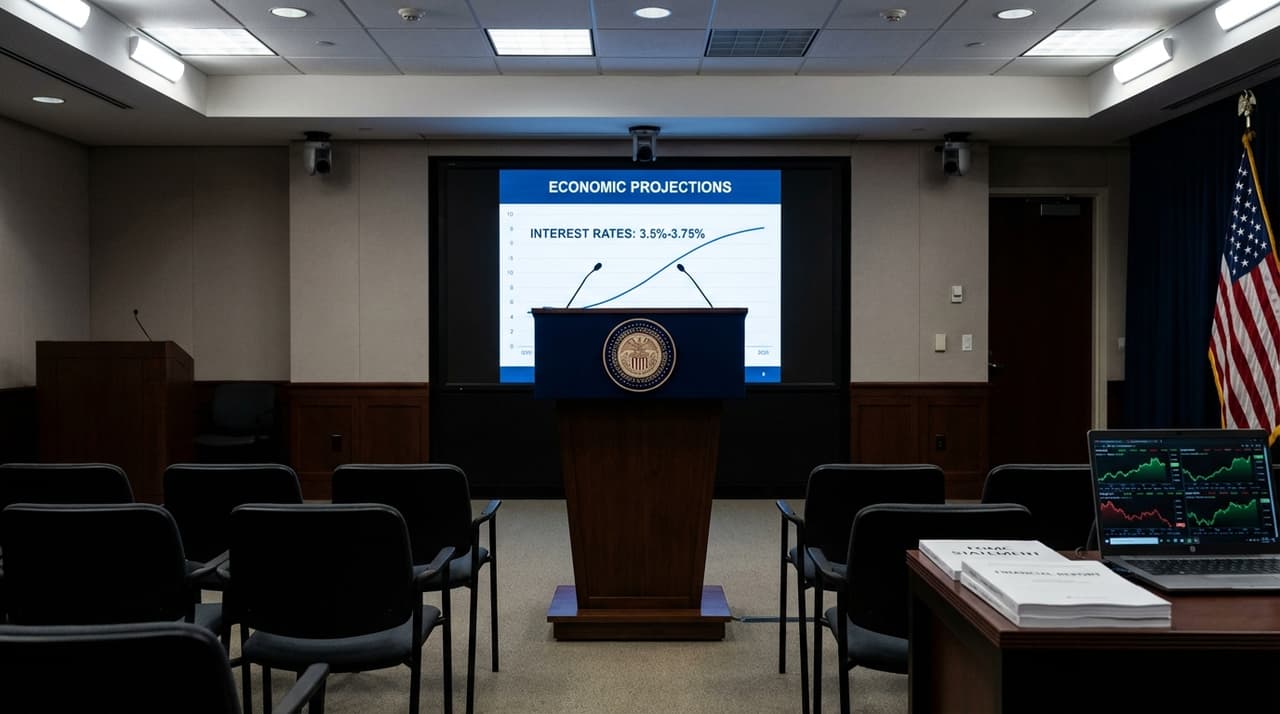
- Trump intensifies calls for Federal Reserve to slash interest rates by 2-3 percentage points from current 3.5%-3.75% target range.
- Political tensions escalate as Justice Department opens criminal investigation into Fed Chair Jerome Powell over congressional testimony.
- Fed maintains cautious stance with only one projected 25-basis-point cut for 2026 despite Trump's aggressive push.
Unprecedented Political Pressure
Former President Donald Trump has dramatically escalated his pressure campaign on Federal Reserve Chair Jerome Powell, publicly demanding interest rates be lowered by 2-3 percentage points from their current 3.5%-3.75% target range. The intensifying conflict represents what people familiar with the matter describe as "the most challenging moment of Powell's eight years at the helm of the central bank," moving beyond policy disagreements into confrontational territory.
In recent public statements, Trump called Powell a "moron" and argued that high rates are "costing America Hundreds of Billions of Dollars a year in totally unnecessary and uncalled for INTEREST EXPENSE." According to sources close to the administration, Trump believes the U.S. should have "the LOWEST INTEREST RATE OF ANY COUNTRY IN THE WORLD," particularly given tariff revenues flowing into government coffers.
Fed's Cautious Stance
The Federal Reserve left the federal funds rate unchanged at 3.5%-3.75% in its January 2026 meeting, with Chair Powell stating that "interest rates right now are appropriate to promote progress toward both of the Fed's goals." Policymakers cited solid economic expansion, stabilizing unemployment, and elevated inflation as factors in their decision, with December projections signaling only one 25-basis-point rate cut for all of 2026.
Market participants currently expect this single cut to materialize in June, according to trading data analyzed this week. The Fed has indicated it will "carefully assess incoming data, the evolving outlook, and the balance of risks" before making further adjustments, maintaining what analysts describe as a "cautiously hawkish" posture despite political pressure.
Legal and Institutional Challenges
The tension between Trump and the Federal Reserve has taken on new dimensions with the Justice Department opening a criminal investigation into Powell over his congressional testimony regarding Federal Reserve building renovations. Powell publicly confirmed the investigation on January 11, describing it as "unprecedented" in comments to reporters.
Meanwhile, the Supreme Court is currently weighing disputes over Trump's authority to remove Federal Reserve board members, a case that could reshape central bank independence. The White House has suggested a potential successor to Powell, according to administration officials who spoke on condition of anonymity.
Economic Context and Market Implications
Current economic conditions present competing pressures that explain the Fed's cautious approach. While economic activity is expanding at a solid pace, job gains have remained low, and inflation persists above the Fed's 2% target. This creates what one Fed official described as a "delicate balancing act" between supporting growth and containing price pressures.
Financial markets have shown limited reaction to Trump's latest comments, with Treasury yields holding steady in Thursday's trading session. However, some traders report increased volatility in interest rate futures, particularly for contracts maturing in the second half of 2026. Attempts to reach representatives from both the Trump campaign and Federal Reserve for additional comment were unsuccessful by publication time.
Correction: An earlier version of this article misstated the timing of the Fed's most recent meeting. It occurred in January 2026, not December 2025.