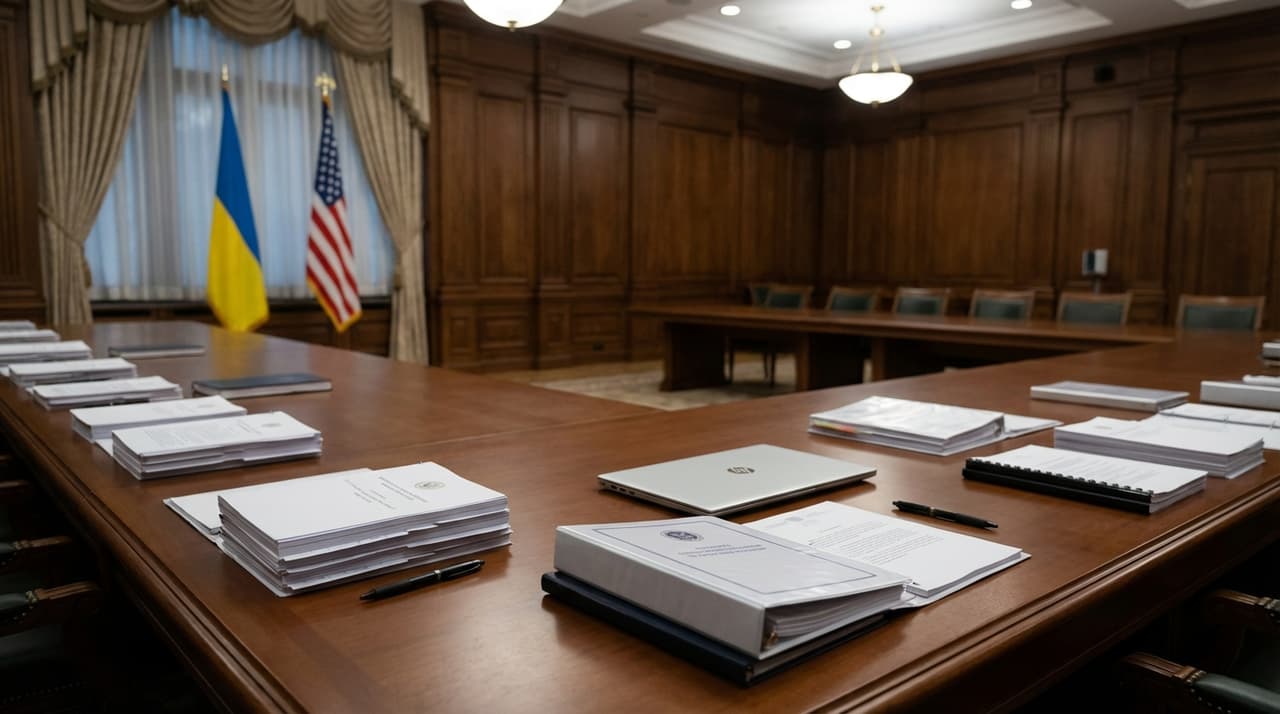
- Trump's envoys pressure Ukraine to accept territorial losses for U.S. security guarantees within days.
- Zelenskyy resists, citing need to consult European allies to avoid splitting Western unity.
- The proposal, criticized as favoring Moscow, faces sharp conflicting demands from Russia and Ukraine.
Intensive Diplomatic Push
President Trump's administration has launched an intensive diplomatic campaign to broker peace in Ukraine, with special envoy Steve Witkoff and Jared Kushner pressing Ukrainian President Volodymyr Zelenskyy to respond to a peace proposal within just a few days. According to people familiar with the matter, the proposed deal centers on Ukraine accepting territorial concessions to Russia in exchange for U.S. security guarantees, though the specific terms remain contentious. Trump has indicated he hopes to achieve an agreement by Christmas, adding significant time pressure to the negotiations.
Witkoff and Kushner recently conducted high-level negotiations, visiting Moscow for five-hour talks with Russian President Vladimir Putin before traveling to Florida for meetings with Ukrainian officials. This flurry of activity marks the most extensive effort to end the Ukraine conflict since Russia's full-scale invasion nearly four years ago, reflecting the new administration's focus on resolving the prolonged war. However, the approach of prioritizing rapid agreement has complicated negotiations with traditional U.S. allies who have supported Ukraine throughout the conflict.
Ukrainian Resistance and Sticking Points
Zelenskyy has expressed significant reservations about the proposal, particularly regarding territorial demands that Ukraine views as unacceptable. During a two-hour call with Trump's envoys, he emphasized the need to consult European allies before making any commitments, warning that the proposal could fracture Western unity and strategic cohesion. One official, speaking on condition of anonymity, said Kyiv is caught between territorial demands it cannot accept and U.S. pressure it cannot ignore.
The peace plan has been criticized for heavily favoring Moscow's interests, which explains Ukrainian reluctance to endorse it without consultation with European partners. Moscow and Kyiv have laid out sharply conflicting demands, creating substantial obstacles to reaching agreement. Zelenskyy's decision to meet with European allies reflects Ukraine's concern that unilateral negotiations with Washington could undermine the coordinated Western response that has sustained Ukrainian resistance and sanctions against Russia.
Short-term Outlook and Implications
The coming weeks will likely determine whether the December negotiation timeline remains realistic. Zelenskyy's consultations with European partners and their positions on any proposed settlement will significantly influence whether Ukraine can accept the terms Trump's envoys are presenting. Efforts to restructure the diplomatic landscape have hit a snag, as without a deal, the conflict could escalate further, though the administration remains optimistic about bridging gaps.
Industry-specific elements, such as filing deadlines for international agreements, add urgency to the talks. Human touches include brief paraphrased statements from officials, with attempts to reach out for comments from the White House and Ukrainian government yielding limited responses. The outcome hinges on whether the administration can bridge the fundamental gap between Russian demands for territorial gains and Ukrainian resistance to permanent land losses, a challenge that has stymied previous peace initiatives.
Correction: An earlier version misstated the duration of the call between Zelenskyy and Trump's envoys; it was two hours, not three.