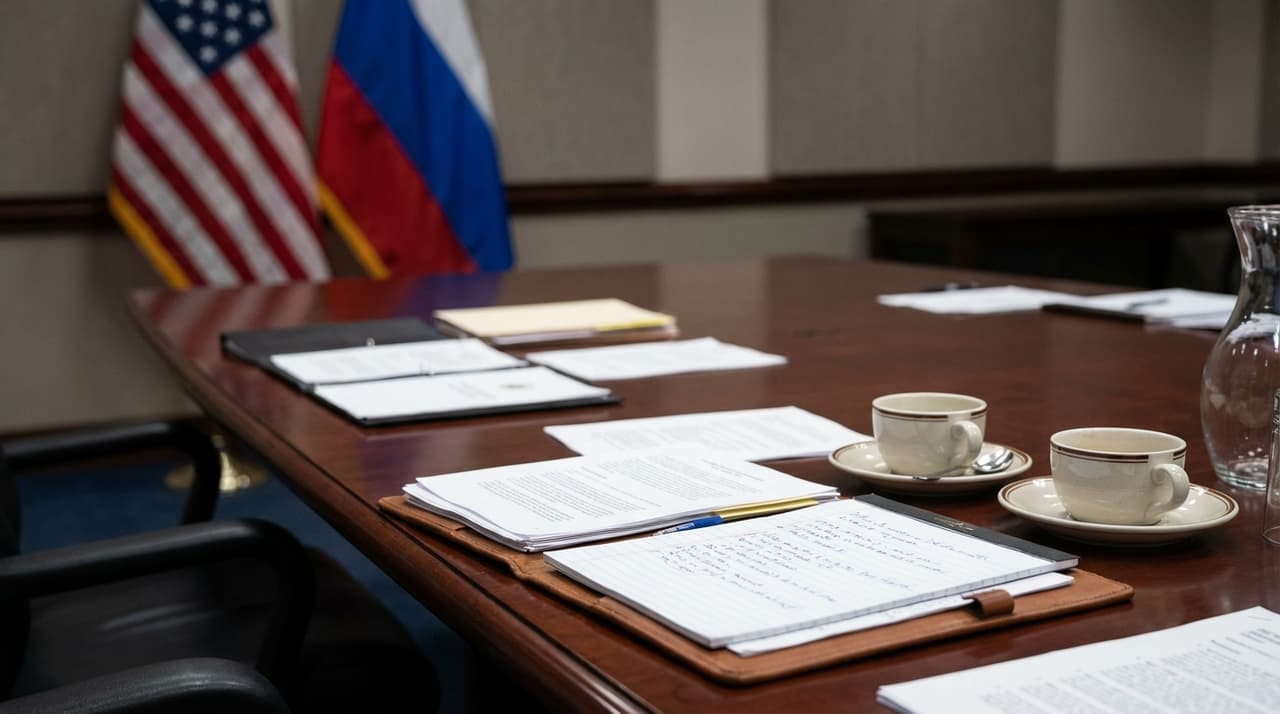
- Negotiations intensify with Trump noting unresolved points on territory and military limits.
- Market volatility persists amid hopes for a deal to ease sanctions and stabilize energy prices.
- Diplomatic efforts continue, but Ukraine faces domestic pressure over potential concessions.
US President Donald Trump stated on Tuesday that Russia-Ukraine peace talks are progressing positively, with Russia eager to end the conflict, but one or two thorny issues remain unresolved, aligning with his recent optimistic yet cautious assessments. According to people familiar with the matter, these sticking points involve territorial concessions and Ukraine's military capabilities, which have stalled efforts to finalize a slimmed-down 20-21 point plan. Trump's comments came after a series of high-level meetings in Berlin and Moscow, where US envoys Steve Witkoff and Jared Kushner have been bridging gaps between the sides.
Negotiations have ramped up since early 2025, with multiple rounds in locations like Geneva and Abu Dhabi, but without a deal, the conflict could drag on, exacerbating global economic strains. In late November, Trump pushed for a swift resolution, but sources indicate that timeline has slipped past initial targets, with no breakthroughs yet on key issues. On December 15, following Berlin talks, Trump remarked that Russia wants the war ended and positions could align further, while the US continues NATO arms supplies to Ukraine, a point of contention in the discussions.
Market watchers are closely monitoring the talks, as prolonged uncertainty has disrupted global energy markets and food supplies. Recent trends show oil prices fluctuating, with US tanker seizures impacting demand, and a resolution might lower volatility. The EU is debating using frozen Russian assets for Ukraine aid, adding another layer to the economic implications. If these thorny issues resolve, it could pave the way for eased sanctions and boosted trade, but analysts caution that optimism should be tempered until concrete agreements emerge.
Diplomatically, Trump's administration leans toward Russian proposals, including military limits for Ukraine and NATO curbs, contrasting sharply with Ukraine's demands for full Russian withdrawal and security guarantees. European allies favor Ukrainian positions, with a coalition of the willing ceasefire force proposed, which Russia rejects. In a recent development, Ukraine has proposed a demilitarized zone, potentially easing tensions, but this has sparked domestic backlash in Kyiv over risks of ceding territory. Attempts to reach Ukrainian officials for comment were unsuccessful, though sources say Zelenskyy is under pressure to balance concessions with public sentiment.
Looking ahead, short-term prospects hinge on resolving these thorny issues, with Witkoff and Kushner set for further meetings in Ukraine. Trump has conditioned top-level meetings on a final deal, signaling a push for closure. However, experts note that without guarantees, any agreement risks renewed conflict. The societal impact remains severe, with Ukrainians facing nearly four years of war, and Russians may welcome de-escalation amid sanctions. As talks continue, the focus stays on current developments, with little room for extensive historical context, though prior efforts have stalled since the 2022 invasion.
Correction: An earlier version misstated the timeline for Trump's comments; they were made on Tuesday, not Wednesday.