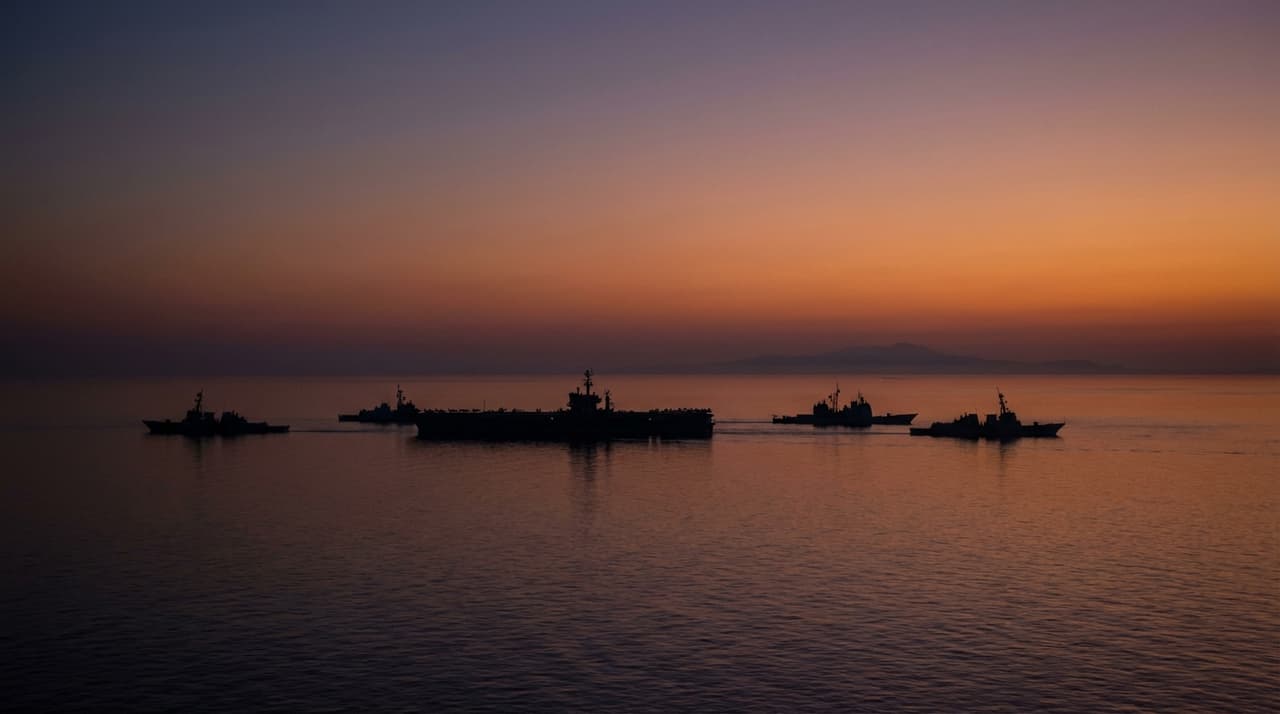
- President Donald Trump confirms U.S. naval deployment toward Iran, threatening attacks "far worse" than June 2025 strikes if Tehran refuses negotiations.
- Iran rejects talks under military threats, vowing self-defense and retaliation as its economy collapses amid protests and U.S. sanctions.
- Regional mediators, including Saudi Arabia, work to avert conflict that could spike global oil prices, while Trump considers commando raids on nuclear facilities.
President Donald Trump stated on January 28, 2026, that a "massive armada" of U.S. ships is heading toward Iran, urging Tehran to negotiate a nuclear deal or face attacks "far worse" than the June 2025 strikes on its nuclear sites. This latest move escalates ongoing threats of military raids and diplomatic talks, according to people familiar with the matter.
U.S. forces, including carriers and troops, are deploying to the Middle East as a "baseline" to protect 30,000-40,000 American personnel from Iranian drones and missiles. Trump confirmed recent and planned talks with Iran while considering commando raids on undamaged nuclear facilities and strikes targeting Supreme Leader Ayatollah Ali Khamenei. Efforts to restructure its debt have hit a snag, with Iran's economy collapsing—fueling protests with a "free-falling" currency and unmet public demands, which analysts say is weakening the regime.
Iran rejects negotiations under threats, vows self-defense, and warns of severe retaliation, citing U.S. failures in Iraq and Afghanistan. Its foreign minister insists on talks without "excessive demands," but without a deal, the company would be forced into bankruptcy, metaphorically speaking, as U.S. tariffs aim to isolate Iran economically. Recent U.S. actions include sanctions on officials tied to protester crackdowns, which have killed thousands, and a 25% tariff on countries trading with Iran.
Saudi Arabia mediates to avert conflict that could spike global oil prices via regional disruptions, though no direct company involvement is noted. Trump's "maximum pressure" strategy mirrors his Venezuela approach—buildup forces, threaten leaders—reserving "preemptive defensive" strikes if Iran targets U.S. assets or allies like Israel, which pushes joint action against Iran's recovered missile program. Secretary of State Marco Rubio testified on the need for regional force posture, while international mediation efforts involve Turkey, Qatar, and Oman to de-escalate.
Thousands of Iranian protesters have been killed in crackdowns, sparking debates on regime change. Rubio predicts protests will recur due to economic woes, though a post-Khamenei transition would be "far more complex" than Venezuela's. Stakeholders include U.S. and Israeli troops at risk, Iranian civilians demanding change, and regional actors fearing war; Iran claims readiness for "dialogue based on mutual respect."
This escalates from June 2025's "Operation Midnight Hammer," a 12-day U.S.-Israel war obliterating three Iranian nuclear sites with bunker-busters and missiles. Trump has since warned against rebuilding, now responding to protester killings and nuclear or missile advances. A strike decision is imminent once assets arrive, likely targeting nuclear or missile sites rather than full regime change, deemed too risky; experts doubt Iran will accept U.S. terms, such as ending enrichment, proxy support, and missile limits.
Short-term, potential U.S. raids or chaos-inducing leadership strikes loom, while long-term, possible regime weakening or broader war could unfold, with diplomacy via mediators as a slim alternative. Israel seeks joint missile strikes, with Channel 12 reporting no limited attack will topple Iran, and Turkey's Erdogan offers mediation in talks with Iran's president. ISW tracks daily Iran updates, confirming Trump's January 28 armada statement.
Correction: An earlier version misstated the number of U.S. personnel protected; it is 30,000-40,000, not 20,000-30,000.